Government leaders are considering whether to recall the Dáil ahead of schedule as renewed instability in the Middle East raises concerns about fuel prices.
Temporary excise reductions introduced in April are due to be withdrawn gradually from September. The relief amounts to 32 cent per litre of diesel and 27 cent per litre of petrol and formed part of a €750 million package of business supports and cost-of-living measures.
Enterprise Minister Mr Peter Burke indicated that the timetable is being actively reassessed. The international outlook has worsened since the withdrawal schedule was agreed, with developments around the Strait of Hormuz contributing to uncertainty in global energy markets.
The Dáil is currently scheduled to return on September 16th next,. however, an earlier sitting may be required if the Government decides that legislation is needed to postpone the planned excise increases. Rising costs are already placing additional pressure on agriculture and the wider economy. The net price of marked gas oil, commonly known as green diesel, has increased from about 94 cent to €1.24 per litre, a rise of approximately 30%. Any extension of the fuel-tax relief would also have budgetary implications. The Government is preparing an overall Budget 2027 package worth more than €8 billion, including €1.5 billion for income-tax measures and an anticipated spending increase of around 6%.
Ministers are also examining ways to lower grocery prices by reducing transport, production and distribution costs. Because fuel expenses affect farming, manufacturing and the movement of goods, further increases could feed through to prices paid by consumers.
No final decision has been made on either the excise timetable or an early Dáil recall. Both options remain under consideration as the Government monitors international developments and prices at Irish fuel pumps.
Pre-deceased by her husband Frank, sisters Betty (Johnson), Margaret (Ryan) and Pauline (Taylor) and brother Con; Mrs Barrett passed away peacefully while in the care of staff at Tipperary University Hospital, South Tipperary.
Her passing is most deeply regretted, sadly missed and lovingly remembered by her sorrowing family; daughter Fiona (Mulcahy), sons Shane, Emmet, Proinsias and Pádraig, adored grandchildren, great-grandchildren, son-in-law Kevin, daughters-in-law Anke, Maria and Julie, sister Mary (Murphy), brothers Austin and PJ, nephews, nieces, sisters-in-law Bridget and Maureen, brother-in-law John (Dolan), extended relatives, neighbours and friends.
For those persons who would wish to attend Requiem Mass for Mrs Barrett, but for reasons cannot, same can be viewed streamed live online, HERE.
The extended Barrett and Broderick families wish to express their appreciation for your understanding at this difficult time, and have made arrangements for those persons wishing to send messages of condolence, to use the link shown HERE.
Solas na bhflaitheas agus leaba i measc na n-aingeal di.
Predeceased by her parents Denis and Mary, brothers Denis and Seamus; the passing of Sr Mary will be most deeply regretted, sadly missed and lovingly remembered by her sorrowing family; loving sisters Breda (St John, Cabra, Thurles) and Anne (Hobbs, Cork), brothers Terry, Noel, Austin (Ard Mhuire, Thurles) and Joe, her many nieces, nephews, extended relatives, neighbours and friends.
Requiescat in Pace.
Funeral Arrangements.
Requiem Mass will be offered for Sr Mary at 12:00 noon on Tuesday, August 25th 2026 at St George’s Park, Sussex, UK.
The extended Dunne family wish to express their appreciation for your understanding at this difficult time, and have made arrangements for those persons wishing to send messages of condolence, to use the link shown HERE.
Solas na bhflaitheas agus leaba i measc na n-aingeal di.
Mr John Downey was not merely someone whom Sinn Féin defended from a distance. He was publicly described by the party’s own newspaper as a “popular Donegal Sinn Féin member,” while senior party figures repeatedly campaigned on his behalf.
In December 2019, the High Court found, on the civil standard of proof, that Mr Downey was an “active participant” in the IRA’s 1982 Hyde Park bombing. The attack killed four Household Cavalry soldiers: Lieutenant Anthony Daly, Squadron Quartermaster Corporal Roy Bright, Lance Corporal Jeffrey Young and Trooper Simon Tipper. Thirty-one other people were injured and seven horses were killed. Downey denied involvement.
Also linked to this atrocity was the late Tipperary-born Fr Patrick “Paddy” Ryan, who admitted to BBC investigative journalist Jennifer O’Leary that he “had a hand in the Hyde Park bomb.” Ryan, who assisted the Provisional IRA by sourcing funds, weapons and bomb components, was not accused of planting or detonating the device and was never convicted in connection with the attack; nevertheless, his own admission and the evidence concerning the electronic component he procured establish his involvement in supporting the operation.
Mr Downey’s earlier criminal prosecution collapsed in 2014; not because he was acquitted on the evidence, but because the British government had mistakenly assured him that he was no longer wanted. The judge ruled that proceeding with the prosecution would therefore be an abuse of process. Sinn Féin had played a direct role in securing consideration of Downey’s status. An official parliamentary investigation records that his name was submitted to the Northern Ireland Office on January 10th 2002 as part of what became known as “Sinn Féin list two.” Sinn Féin representatives, including Mr Gerry Kelly, were subsequently kept informed about his case.
The party’s association with Downey continued publicly:
Sinn Féin’s newspaper described him as a party member and long-time supporter of the peace process.
Senior figures visited him in prison and spoke in solidarity with him.
Sinn Féin President Mary Lou McDonald said in 2019 that the party would continue supporting Downey and his family.
Pearse Doherty condemned Downey’s arrest and extradition as “vindictive.”
Sinn Féin speakers paid tribute to him at the party’s 2019 conference.
There are also serious questions concerning Downey’s property. Irish Land Registry documents reportedly showed that in June 2017; while victims’ relatives were pursuing civil proceedings, he removed his name from the ownership of the family home in County Donegal. Other land was reportedly transferred to his wife. The timing prompted allegations that assets were being placed beyond the claimants’ reach.
However, an important distinction must be maintained: no reliable evidence located so far proves that Sinn Féin owned, received or helped transfer these properties. The documented connection is political, personal and organisational; not a proven link to the movement of Downey’s assets.
The established facts are nevertheless significant; a court found Mr Downey civilly responsible as an active participant in an IRA bombing that killed four soldiers. Sinn Féin submitted his name to the “on-the-runs” process; the party identified him as a member; and successive senior Sinn Féin figures publicly supported him.
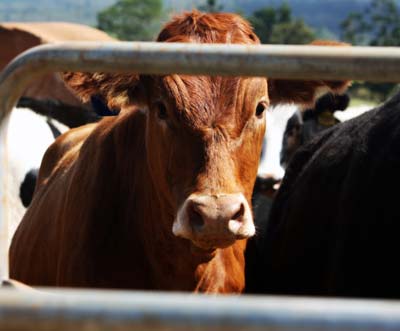
The Minister for Agriculture Mr Martin Heydon has agreed to reconvene the National Fodder and Food Security Committee amid mounting concern about the impact of prolonged dry weather on fodder supplies.
The decision followed a meeting in Celbridge, Co Kildare, with Teagasc and representatives from leading farm organisations, including the Irish Farmers’ Association, the Irish Creamery Milk Suppliers Association and Macra.
Farm representatives warned that drought conditions have severely affected grass growth, forcing some farmers to use fodder originally reserved for winter. Farms in parts of Carlow, Laois and Kilkenny are understood to be among those experiencing significant pressure. The committee will assess the national and regional fodder situation and consider what measures may be needed. A Teagasc fodder survey is also expected to provide a clearer picture of stocks across the country.
Minister Heydon acknowledged that the conditions are increasing costs and causing stress for affected farmers. He encouraged anyone experiencing cash-flow difficulties to engage with their banks, merchants and co-operatives.
“The Government is committed to supporting the sector in what has been a difficult year,” he said. “The call from farm organisations for additional supports will be considered when the full picture is available and in the context of Budget 2027.” Requests from farm organisations for greater flexibility across a range of agricultural measures will also remain under review.
IFA president Mr Francie Gorman welcomed the reconvening of the committee, but said farmers now need firm proposals and practical action to address the worsening situation.
The prolonged dry spell has also affected parts of continental Europe, potentially limiting Ireland’s ability to source additional fodder from other EU countries if domestic shortages deepen.
This website uses cookies to improve your experience. We'll assume you're ok with this, but you can opt-out if you wish.AcceptRead More
Privacy & Cookies Policy
Privacy Overview
This website uses cookies to improve your experience while you navigate through the website. Out of these, the cookies that are categorized as necessary are stored on your browser as they are essential for the working of basic functionalities of the website. We also use third-party cookies that help us analyze and understand how you use this website. These cookies will be stored in your browser only with your consent. You also have the option to opt-out of these cookies. But opting out of some of these cookies may affect your browsing experience.
Necessary cookies are absolutely essential for the website to function properly. This category only includes cookies that ensures basic functionalities and security features of the website. These cookies do not store any personal information.
Any cookies that may not be particularly necessary for the website to function and is used specifically to collect user personal data via analytics, ads, other embedded contents are termed as non-necessary cookies. It is mandatory to procure user consent prior to running these cookies on your website.






Recent Comments