Waterford’s Allianz Hurling League survival bid ended in bitter fashion at Azzurri Walsh Park, as they squandered a commanding half-time lead and crashed to relegation, with Tipperary roaring back, on a windy afternoon, to secure their own Division 1A status.
Tipperary won 2-24 to 1-23 after trailing by eight points before the break, with John McGrath starring on his first start of 2026 and Gearóid O’Connor grabbing a crucial second-half goal.
Waterford began with real intent and looked in complete control for long stretches of the opening half. Driven by a dominant display around the middle and sharp attacking movement, the Déise repeatedly found gaps in the Tipp defence. Dessie Hutchinson hit the ground running with a string of early points, while Shane Bennett was hugely influential, surging forward to clip over four superb scores.
By the 24th minute, Waterford had built a powerful platform. Seán Walsh’s goal, taken brilliantly after latching onto a huge delivery, injected even more life into the home crowd and pushed the margin wider. With Reuben Halloran, Darragh Lyons and Mark Fitzgerald all adding scores, Waterford appeared to be cruising as Tipp struggled to cope with their pace and intensity.
Yet the visitors found a lifeline before half-time. A couple of late scores trimmed the gap and offered a hint that all was not lost. That sliver of momentum became a tidal wave after the restart.
Backed by the strong wind, Tipperary returned with purpose and aggression. S. Tobin, impressive throughout, made a big contribution, while Conor Stakelum and Eoghan Connolly also helped swing the momentum. Waterford, so fluent before the break, suddenly found scores far harder to come by. Crucially, neither Hutchinson nor Bennett managed to add to their tallies in the second half.
The turning point arrived in the 58th minute. John McGrath flicked possession into the path of Jake Morris, who burst through the heart of the defence before teeing up Gearóid O’Connor to finish calmly to the net. In one sweeping move, Tipp had turned the contest on its head.
Although Halloran briefly kept Waterford alive with placed balls, Tipp finished the stronger side. Bryan O’Mara produced a vital intervention at the back, and late scores from Oisín O’Donoghue, Andrew Ormond and McGrath ensured the comeback was complete.
For Waterford, it was a collapse that will sting deeply. For Tipp, it was a rescue mission completed in style.
Tipperary:R. Shelly; R. Doyle, R Maher, M. Breen; O. O’Donoghue (0-01), B. O’Mara, E. Connolly (0-02) [1 x 65, 1 x f ]; C. Morgan, C. Stakelum (0-01); J. Caesar, K. McCarthy, J. Morris (0-02); J. McGrath (1-04 (7pts)), J. Forde (0-06), [5 x f ], S. Tobin (0-04).
Subs: A. Ormond for K. McCarthy, G. O’Connor for J. Caesar, D. Stakelum for C. Morgan, D. McCarthy for J. Forde, and S. Kenneally for S. Tobin.
At first glance, that can make insulation, heating upgrades, or a heat pump seem like poor value. But that would be the wrong conclusion, especially in a county like Tipperary, where many homes are older, more rural, more exposed to weather, and more likely to depend on oil, solid fuel, or outdated heating systems. The same CSO data that raised eyebrows also shows that better-rated homes generally use less energy per square metre, which remains one of the fairest ways to compare homes of very different sizes. In 2023, A and B rated homes using electricity for heating consumed 39 kWh per square metre, compared with 66 for C-rated homes and 58 for F and G rated homes.
That matters in Tipperary because house size and dwelling type play a big role in energy demand. Detached houses use far more energy overall than mid-terrace homes simply because there is more space to heat. The CSO found detached homes had the highest mean electricity consumption in 2023, at 7,388 kWh, 77% higher than mid-terrace houses. For a county with a large stock of detached and one-off rural homes, that makes efficiency upgrades especially relevant.
There is another reason this matters locally. CSO figures published in 2025 showed that Tipperary had one of the highest proportions of G-rated homes in the country, at 10%. That suggests a significant number of households in the county are living in homes that are harder and more expensive to keep comfortable. In practice, many families in lower-rated homes are not “saving” energy in a meaningful sense. They may simply be under-heating rooms, avoiding turning the heat on, or living with draughts and cold spots, because the cost of comfort is too high. That is very different from saying an upgrade has no value.
This is the key point often lost in the national argument: retrofitting is not only about cutting a bill on paper. It is also about comfort, health, resilience, and future-proofing. A warmer, drier home is easier to live in. It is healthier for children and older people. It is less exposed to fossil fuel price shocks. And it is more attractive in the property market. The BER is not a perfect measure of human behaviour, but it is still a useful measure of the building itself: its insulation, airtightness, and heating potential.
For Tipperary homeowners, the smarter question is not “Are upgrades worth it at all?” but “Which upgrades make sense for my house, my budget, and my timeline?” A full deep retrofit may not be realistic for every household. Nationally, the government supported 53,984 home energy upgrades in 2024, and more than €1.2 billion has been invested in 186,000 homes since 2019. Low-cost retrofit loans are also now available to help with upfront funding. That means households can often take a phased approach: attic insulation first, then wall insulation, then heating controls, solar PV, or eventually a heat pump.
And heat pumps should not be dismissed. SEAI says they use less than a third of the energy of an oil or gas boiler and work well in cold climates, which is why they are so common in countries like Sweden and Norway. In Tipperary Town, the local Sustainable Energy Community is already backing projects involving solar upgrades, public housing retrofit, and an air-to-water heat pump for a sports centre redevelopment.
So yes, the headlines deserve scrutiny. BER ratings do not tell the whole story. But for many homeowners in Co. Tipperary, energy upgrades are still a sound investment. Not because every retrofit instantly transforms the numbers, but because a better home is about more than a spreadsheet. It is about comfort, control, and making older Tipperary houses fit for the future.
The Health and Safety Authority has launched an investigation following the death of a man in his 40s at a meat processing facility in Roscrea, Co. Tipperary.
Mr Patrick Gleeson, who was from Youghal, Co. Cork, was pronounced dead after an incident at the Roscrea factory at approximately 3:00pm on Monday last, March 9th 2026. Gardaí and emergency services attended the scene, and the local coroner was notified.
Mr Gleeson, a father of one, was laid to rest following his funeral Mass. His family said they have been left devastated and are trying to understand the circumstances surrounding his death. Gardaí confirmed that the Health and Safety Authority was notified and is carrying out its own investigation into the incident.
No further details on the circumstances of the death have been made public at this stage.
According to provisional figures published by the Health and Safety Authority, 58 people died in work-related incidents in Ireland during 2025, up from 36 in 2024.
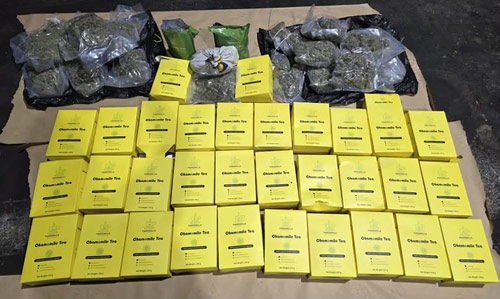
A man in his 30s has been arrested after drugs, with an estimated value of €280,000, were seized in Co. Tipperary.
€280,000, estimated value of drugs seized in Co. Tipperary on Thursday last.
The discovery was made in the Birdhill area of Tipperary on Thursday last, after gardaí attached to Nenagh Garda Station responded to an incident involving a van on the M7. During a search of the vehicle, officers recovered suspected cannabis worth approximately €280,000, along with €20,000 in cash. A small quantity of suspected cocaine was also seized.
The arrested man was taken to a Garda station in Tipperary for questioning, while investigations into the incident remain ongoing.
The seizure underlines the ongoing impact of illegal drugs on communities across Ireland. Drug trafficking is closely linked to organised crime and can bring intimidation, violence, addiction and deep social harm. Beyond those directly involved, the drugs trade places a heavy burden on families, neighbourhoods and local services, damaging the sense of safety and wellbeing in society.
Gardaí have continued to stress the importance of disrupting the supply of illegal drugs and protecting communities from the serious dangers associated with the trade.
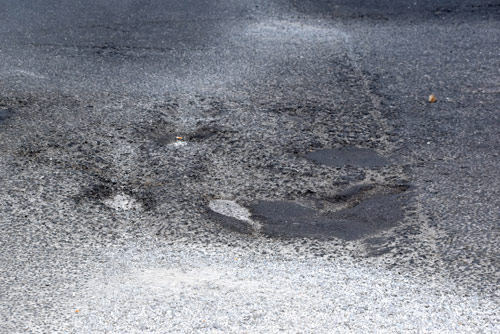
Fresh figures showing compensation paid to motorists for pothole damage underline the continuing burden poor road conditions are placing on drivers across county Tipperary.
Tipperary County Council has paid out €50,105 in compensation for pothole-related vehicle damage since 2023. While this is below the very highest totals seen elsewhere in our emerald isle, it still places Tipperary among the more significant local authority payouts and points to a persistent problem on our counties roads.
These figures must be seen in the wider national context. Local authorities paid approximately €1.3 million in compensation to motorists over the past three years for pothole-related damage. That is a serious cost to the public purse, but it is also a direct cost to families, workers and business owners, latter who rely on safe and passable roads every day.
What is particularly concerning in Co. Tipperary is that the claims issue does not appear to be isolated or short-term. Council management reports have shown an ongoing stream of pothole claims during 2024 and 2025, reinforcing the view that this is a recurring roads maintenance issue, rather than a once-off spike.
There is also concern that some motorists feel they were deliberately ignored or did not receive adequate responses, after raising road damage issues. That only adds to public frustration. When people take the time to report hazardous road conditions or seek redress for damage caused, they are entitled to clear communication, fair treatment and timely follow-up.
It is important to state that councils are not automatically liable for every pothole-related incident. In general, compensation arises where there is evidence of negligence or where repairs or interventions may have been carried out to an insufficient standard. However, that makes it all the more important that repairs are durable, properly inspected and carried out before defects worsen and place more motorists at risk.
The real issue here is not only compensation after the fact. The real issue is prevention. Tipperary needs a stronger and more proactive road maintenance programme, faster response times to reported defects, better quality control on repairs, and greater transparency for the public on how complaints and claims are handled.
Real Costs of getting behind the wheel of a vehicle here in Ireland. Irish motorists continue to face an escalating financial burden, with basic motoring-related taxes and charges estimated to generate some €6.2 billion annually for the State. From high fuel costs driven by excise duty, carbon tax, VAT and additional levies, to Vehicle Registration Tax and annual motor tax, drivers are contributing at every stage of car ownership and use. On top of these standard charges, motorists must also absorb insurance levies, tolls, NCT fees, parking charges and a growing range of fines and penalties for road traffic and parking offences, all of which add to the overall cost of getting behind the wheel. Yes, and I haven’t mentioned property tax which is partially associated in housing same vehicle. While electric vehicle owners currently benefit from reduced rates in some areas, concern is mounting that further measures, including a proposed weight-based tax on heavier vehicles such as SUVs, could place even more pressure on drivers in the years ahead. Motorists should therefore not be left paying the price for road failures that could and should have been addressed months earlier.
Motorists are calling on Tipperary County Council to:
prioritise lasting repairs on known problem routes,the streets of Thurles town being one neglected area
improve response systems for motorists reporting potholes and road damage,
ensure all complainants receive timely acknowledgement and follow-up,
publish clearer local data on pothole complaints, repairs and claims outcomes.
People across Tipperary deserve safer roads, better accountability, and a council response that is effective, transparent and fair.
This website uses cookies to improve your experience. We'll assume you're ok with this, but you can opt-out if you wish.AcceptRead More
Privacy & Cookies Policy
Privacy Overview
This website uses cookies to improve your experience while you navigate through the website. Out of these, the cookies that are categorized as necessary are stored on your browser as they are essential for the working of basic functionalities of the website. We also use third-party cookies that help us analyze and understand how you use this website. These cookies will be stored in your browser only with your consent. You also have the option to opt-out of these cookies. But opting out of some of these cookies may affect your browsing experience.
Necessary cookies are absolutely essential for the website to function properly. This category only includes cookies that ensures basic functionalities and security features of the website. These cookies do not store any personal information.
Any cookies that may not be particularly necessary for the website to function and is used specifically to collect user personal data via analytics, ads, other embedded contents are termed as non-necessary cookies. It is mandatory to procure user consent prior to running these cookies on your website.








Recent Comments