Why Accountability Must Now Rest at the Top of Inland Fisheries Ireland.
Once held up as a model of best practice, Inland Fisheries Ireland (IFI) is now facing one of the most serious governance controversies in recent Irish public sector history. So what went wrong, and how did it go unchecked for so long?
A Reputation Built on Safety Leadership Back in 2018, IFI stood as a benchmark for excellence. The organisation earned national recognition for its fleet safety standards, with its Logistics Manager receiving a prestigious Road Safety Authority “Leading Light” award. Alongside this, IFI secured a “Van Safe” award, reflecting strong operational controls across a fleet of approximately 200 vehicles supporting critical environmental and enforcement work. At the time, IFI wasn’t just compliant; it was leading.
A Very Different Picture Emerges Fast forward to recent years, and that reputation has been fundamentally challenged. Investigations by the Comptroller and Auditor General and scrutiny from the Public Accounts Committee (PAC) have revealed deep-rooted issues, raising serious questions about governance, transparency, and leadership.
The Uninsured Vehicle Incident At the centre of the controversy is a 2021 road collision in County Donegal involving an IFI vehicle that was not insured. The fallout has been significant, with the employee involved not informed that the vehicle lacked insurance and An Garda Síochána not notified of the issue. The employee only discovered the truth later through legal correspondence. Even more concerning, multiple uninsured vehicles were also identified during the same period
Misleading Information and “Drip-Feeding” of Facts. IFI’s engagement with oversight bodies has also come under sharp criticism. The PAC was told that the organisation provided “inaccurate” evidence, while committee members raised alarm about incomplete disclosures and a pattern of withholding information. This has led to serious concerns about credibility at senior levels.
A Breakdown in Governance. What initially appeared to be an isolated incident has instead exposed systemic failures. A “near-total collapse of governance” was highlighted during PAC hearings. Internal controls were found to be inadequate, undermining confidence in IFI’s operations. Governance issues have persisted for years, prompting multiple investigations and repeated committee hearings. In short, this is not a one-off error, it is a structural problem.
Potential Legal and Financial Consequences. The implications extend beyond governance. A protected disclosure report linked to the incident has, we understand, been referred to the Garda Commissioner. The uninsured collision alone resulted in repair costs of approximately €230,000. However, the reputational cost may be even greater.
Where the Responsibility Lies. It is increasingly difficult to view these failures as administrative oversights. Instead, they point to:-
A breakdown in risk management.
A failure of duty of care toward staff.
A lack of transparency with statutory oversight bodies.
And most critically, a failure of leadership at senior management and board level. These are the individuals responsible for ensuring compliance, safeguarding employees, and maintaining public trust. Yet, as PAC hearings have shown, confidence in IFI’s leadership has been significantly eroded, with elected representatives openly questioning the organisation’s honesty and competence.
Rebuilding Trust: What Must Happen Next. IFI now faces a defining moment. Restoring credibility will require more than procedural fixes, it demands decisive action:-
Clear accountability at senior level.
Full transparency with oversight bodies and the public.
Structural reform to prevent recurrence.
Without these steps, trust cannot, and will not, be restored.
Final Thought. The contrast is stark. From a “leading light” in road safety, to an organisation under scrutiny for governance failures, uninsured vehicles, and misleading disclosures. The real question now is not just how this happened, but why it was allowed to continue for so long without intervention at the highest levels.
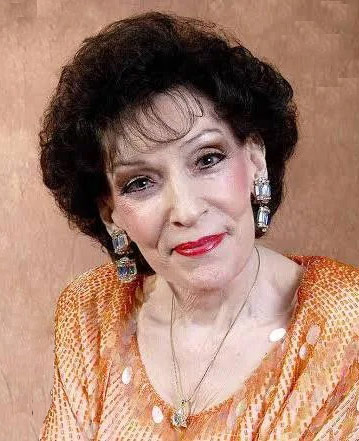
Lyrics and Vocals: American gospel singer and songwriter, the late Dottie Rambo, (1934–2008).
The late Dottie Rambo.
It’s Me Again Lord.
It’s Me Again Lord.
Troubles come and I can’t find an answer. Lonely nights I spend in agony. I have no other friend that I can turn to, So here I am Lord back upon my knees.
It’s me again Lord I’ve got a prayer that needs an answer. It’s me again Lord I’ve got a problem that I can’t solve. And I don’t mean to worry you, but here I am facing something new. And I need help that only comes from You. It’s me again Lord.
I know You’re mighty busy in Your heaven, Forming worlds and hanging stars to shine. But You promised if I’d ask that I could see them, So here I am Lord asking one more time.
It’s me again Lord I’ve got a prayer that need an answer. It’s me again Lord, I’ve got a problem that I can’t solve. Well I don’t mean to worry you, but here I am facing something new. And I need help that only comes from You. It’s me again Lord.
I don’t mean to worry you but here I am facing something new. And I need help that only comes from You. It’s me again Lord.
During the first 48 hours of the Easter bank holiday road safety operation in Ireland, over 1,400 drivers were caught speeding, highlighting serious concerns about driver behaviour.
The nationwide operation, led by An Garda Síochána, began at 7:00am on Thursday and will continue until 7:00am on Tuesday, with increased checkpoints and enforcement measures in place.
In addition to speeding: Nearly 170 motorists were caught using a mobile phone or not wearing a seatbelt while 66 drivers were arrested for driving under the influence of alcohol or drugs.
Some of the most serious speeding incidents recorded include:
73 km/h in a 50 km/h zone
81 km/h in a 60 km/h zone.
115 km/h in an 80 km/h zone.
141 km/h in a 100 km/h zone.
Authorities, along with the Road Safety Authority, are urging all road users to slow down and remain alert, especially around pedestrians and cyclists.
Why Speeding Is So Dangerous Speeding is one of the leading causes of road accidents and fatalities. Even small increases in speed significantly raise the risk of serious injury or death.
Reduced Reaction Time
The faster a vehicle travels, the less time a driver has to react to unexpected hazards—such as a pedestrian stepping onto the road or sudden braking ahead.
Increased Stopping Distance
Higher speeds dramatically increase stopping distance. This means even if a driver reacts quickly, the car may not stop in time to avoid a collision.
Greater Impact Force
Crashes at higher speeds result in much more severe impacts. This increases the likelihood of fatal or life-changing injuries for drivers, passengers, and others on the road.
Risk to Vulnerable Road Users
Pedestrians and cyclists are especially at risk. Even a small increase in speed can mean the difference between survival and fatal injury in a collision.
Loss of Vehicle Control
Driving too fast reduces control, particularly on bends, wet roads, or in heavy traffic—making accidents more likely.
Final Message The high number of offences recorded in just two days shows how widespread dangerous driving behaviours remain. Gardaí stress that road safety operations are not just about penalties—they are about saving lives.
Slowing down, staying focused, and obeying road rules can make a critical difference this Easter weekend and beyond.
Pre-deceased by his parents Aidan and Lena, brothers Thomas and Frankie; Mr Medley passed away peacefully, following an illness most bravely borne, while in the care of staff at Sacred Heart Nursing Home, Crosspatrick, Co. Kilkenny.
His passing is most deeply regretted sadly missed and lovingly remembered by his sorrowing family; loving sisters Geraldine, Helen. Noreen and Mary, brothers-in-law Chris, Pat and Seamus, nieces, nephews, cousins, extended relatives, neighbours, colleagues in Óglaigh Náisiúnta na hÉireann (O.N.E. Veterans) and friends.
For those persons who would wish to attend Requiem Mass for Mr Medley, but for reasons cannot, same can be viewed streamed live online, HERE.
The extended Medley family wish to express their appreciation for your understanding at this difficult time, and have made arrangements for those persons wishing to send messages of condolence, to use the link shown HERE.
As unsettled conditions develop, localized wind impacts expected across Tipperary.
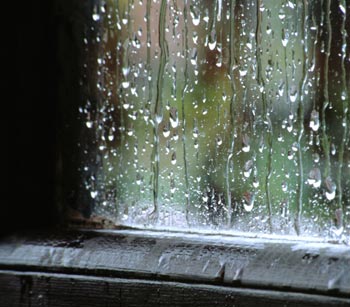
Met Éireann’s latest forecast indicates a markedly unsettled and breezy day across County Tipperary, with conditions varying locally between Clonmel, Thurles, and Nenagh as a band of rain clears and strong, gusty winds develop through the afternoon and evening.
Overview – Tipperary Today According to Met Éireann, the day will begin wet and overcast, with rain clearing eastwards, followed by sunny spells and scattered showers. Winds will increase from the south to southwest, becoming fresh to strong and gusty, before veering westerly later.
Local Breakdown. Thurles(Mid Tipperary) – Early conditions: Rain clearing around midday. Afternoon – evening: Frequent showers with sunny intervals. Wind: Noticeably gusty, especially in open areas. Key risk: Rapid changes in conditions, calm spells followed by sharp gusts. Thurles sits in a transition zone, experiencing both the clearing rain and strengthening winds.
Clonmel(South Tipperary)–Early conditions: Persistent morning rain, clearing early afternoon Afternoon: Brighter spells with showers. Wind: Strong and gusty, but somewhat moderated by more sheltered inland terrain Key risk: Sudden squally showers bringing brief bursts of strong wind. Clonmel is likely to see more rain early, but slightly less exposed wind than northern areas.
Nenagh(North Tipperary)– Early conditions: Rain clearing earlier than the south. Afternoon – evening: More persistent showers. Wind: Strongest inland gusts across the county, due to more exposure. Key risk: Blustery westerly winds and reduced visibility in showers. Nenagh is expected to feel the strongest wind impacts locally, particularly later in the day.
Peak Impact WindowTiming: Late afternoon through evening. Conditions: Strong, gusty winds Heavy, fast-moving showers, rapid shifts between bright and squally conditions. Met Éireann highlights that such a pattern brings “scattered showers, some heavy… with gusty winds”, typical of an unstable Atlantic airflow.
Key Risks Across Tipperary: Difficult driving conditions on exposed routes. Sudden strong gusts, especially during showers. Reduced visibility in heavy bursts of rain. Localised surface water on roads.
Summary: Morning: Wet across all areas. Afternoon: Improving but increasingly windy. Evening: Most disruptive period with strong gusts and showers.
Local variation: Thurles: Mixed and changeable. Clonmel: Wetter earlier, slightly more sheltered. Nenagh: Windiest and most exposed.
This website uses cookies to improve your experience. We'll assume you're ok with this, but you can opt-out if you wish.AcceptRead More
Privacy & Cookies Policy
Privacy Overview
This website uses cookies to improve your experience while you navigate through the website. Out of these, the cookies that are categorized as necessary are stored on your browser as they are essential for the working of basic functionalities of the website. We also use third-party cookies that help us analyze and understand how you use this website. These cookies will be stored in your browser only with your consent. You also have the option to opt-out of these cookies. But opting out of some of these cookies may affect your browsing experience.
Necessary cookies are absolutely essential for the website to function properly. This category only includes cookies that ensures basic functionalities and security features of the website. These cookies do not store any personal information.
Any cookies that may not be particularly necessary for the website to function and is used specifically to collect user personal data via analytics, ads, other embedded contents are termed as non-necessary cookies. It is mandatory to procure user consent prior to running these cookies on your website.







Recent Comments