|
|
“Judge not, that ye be not judged. For with what judgment ye judge, ye shall be judged: and with what measure ye mete, it shall be measured to you again.” St. Matthews Gospel Chapter 7: v 1-2
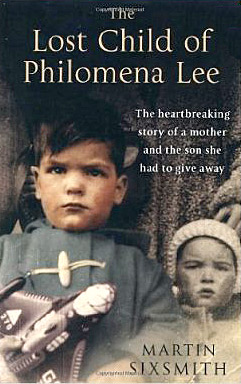 Regularly we receive requests, mainly from Tipperary expatriates, inviting us to recommend titles to books about Tipperary, its past history and its undoubted scenic beauty. Regularly we receive requests, mainly from Tipperary expatriates, inviting us to recommend titles to books about Tipperary, its past history and its undoubted scenic beauty.
In relation to our past, one such compelling book comes highly recommended, from the pen of ex-BBC correspondent Martin Sixsmith, published some three years ago. It is “The Lost Child of Philomena Lee,” now also about to be launched as a new film directed by Stephen Frears and entitled ‘Philomena.’
In the film version the main role of Philomena Lee, an Irishwoman in her 70’s, is played by the Oscar-winning actress Dame Judi Dench, supported by actor, comedian and producer Steve Coogan.
Both the book and film tell the heart rending story of Anthony Lee, a three year old boy who was born in the mother and baby home, run by the nuns and known as Sean Ross Abbey, here in Roscrea, Co Tipperary. It details in particular the trials of his unwed mother Philomena, who was forced to give up her baby for adoption, a few years after his birth.
At the time of Anthony’s birth, readers must understand that the democratically elected Irish government of the period were paying the church £1 a week for every woman in its care, and two shillings and sixpence for every baby in similar circumstances. This same Irish government, however, were not so generous to the babies born of unwed mothers, who choose to run this gauntlet of assumed shame while remaining outside this prescribed ‘mother and baby home,’ system.
In the 1950’s young unwed mothers were harshly judged by the vast majority of Irish society, not just Roman Catholics. As horrible and tragic as this compelling story will read, one must remember that society, the nuns and the church who undertook this social remedy, did not perceive themselves as evil, instead the motivation behind their actions, while misguided, was mostly seen from the point of view as being for a child’s future betterment.
The girls’ parents, because of perceived social family shame and secrecy, together with these nuns truly believed that these adopted children would possibly be better off with the stability of a two parent family. The nuns firmly believed as did unnecessarily embarrassed families that by hard work in these religious establishments girls would somehow atone for their sexual transgressions and thus redeem themselves morally in their lifetime. Of course these actions undertaken did not take into account the feelings of the mother and child. Both then and even in more recent times, with the church’s role in these adoptions emerging and with much of the incriminating paperwork disappearing in somewhat unexplained circumstances, the church continues to guard itself in its role played in these adoptions.
When she became pregnant as a teenager in the Ireland of 1952, Limerick native Philomena Lee, aged 19, was sent to Sean Ross Abbey convent in Roscrea Co. Tipperary, to be cared for as a ‘fallen,’ woman. Having given birth, she was permitted to care for her new born for three years until the Church took him from her and sold him, like countless others, to America for adoption.
After giving birth, these ‘fallen women,’ mere girls, were allowed to leave the convent, but only if they or their family could afford to pay the nuns £100. Those who couldn’t afford this substantial sum, which were the vast majority, had to leave these girls in the convent for three years, where the latter occupied themselves in kitchens, laundries, greenhouses or making rosary beads and religious artefacts, while the church kept the profits from their labours.
Like all the other girls in similar circumstances, Philomena Lee would be made to sign a ‘Renunciation Document,’ agreeing to give up her son, while swearing on oath: “I relinquish full claim for ever to my child and surrender him to Sister Barbara, Superioress of Sean Ross Abbey. The purpose is to enable Sister Barbara to make my child available for adoption to any person she considers fit and proper, inside or outside the state.” From the end of the Second World War until the 1970s, such oaths would now entitle these children born out of wedlock to be the property of the church and now with or without the consent of their mothers, these babies could be sold. In fact the only condition laid down by the then Archbishop McQuaid was that adopting parents should be acknowledged as fully practising Roman Catholics.
Philomena cried when Anthony was taken from her that Christmas period of 1955. She was not told he was being taken and it was felt that it was in her best interests that she should not be allowed to say goodbye.
Philomena’s son Anthony would now vanish from Ireland; sold to an American couple from St Louis, Missouri, USA, to re-emerge under the adoptive name of Michael Hess. Anthony (Michael Hess) would go on become a Senior Counsel to both the George Bush Snr and Ronald Reagan administrations. Philomena and Anthony, despite much searching for each other, would never be reunited, though both he and his mother visited Sean Ross Abbey, Roscrea, Co Tipperary several times over the decades, both individually inquiring about the whereabouts of each other.
Truly a heart rending remarkable true story and a ‘must read‘, for all book lovers in Tipperary and further afield.
Highly recommended as a stocking filler for all those loving dedicated mothers out there, with Christmas just some eight weeks away.
Fr. Christy O’Dwyer And Alumni Priests Are Honoured In St. Patrick’s College, Thurles
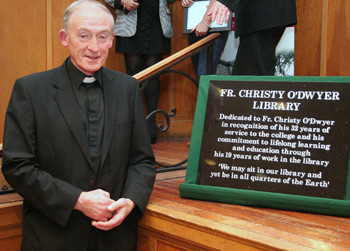 Fr. Christy O’Dwyer and all former student priests were honoured in St. Patrick’s College in a special ceremony held on Tuesday, October 8th last. Fr. Christy O’Dwyer and all former student priests were honoured in St. Patrick’s College in a special ceremony held on Tuesday, October 8th last.
Following the annual Student Scholarship and Awards evening a special tribute was paid to Fr. Christy and former student priests.
The East Wing of the College was re-christened as the “Alumni Wing,” and the Student Library is now to be known as “The Fr. Christy O’Dwyer Library.” Two commemorative plaques to mark this occasion were unveiled to those in attendance on the night and patron of the college, His Grace Archbishop Dr Dermot Clifford, blessed both plaques.
The library was renamed in recognition of Fr. Christy’s enormous contribution to the College down through the years. He gave in excess of thirty years of service to the college, 19 years of which was spent working as the College Librarian.
Fr. Fogarty in paying tribute to this “humble and unassuming man,” stated that he knows “with absolute certainty – all alumni would be very pleased to hear that this library will be called after Fr. Christy O’Dwyer. He gave sterling service to the college here for over thirty years.”
On accepting the honour Fr. Christy stated that he was “so taken aback,” on hearing that he was to be honoured in this fashion. “On an occasion such as this, one doesn’t expect to be present at it,” he humorously commented; “you expect to be in a very different place! I am very honoured and very grateful.”
Our gratitude and congratulations go to Fr Christy.
The Office of the Irish Attorney General has appointed a leading Senior Counsel to independently review the conviction of Tipperary farmer Harry Gleeson, 72 years after he was hanged. Justice Minister Alan Shatter has sanctioned a cold-case review following a request by Gleeson’s surviving relatives and friends, who have amassed what is believed to be new forensic evidence and which they believe will now clear Gleeson’s name.
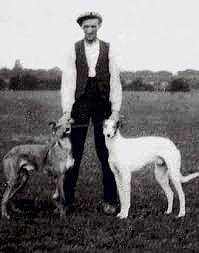 Harry Gleeson, a bachelor, whose favourite pastime was hare coursing, was found guilty of the murder of his neighbour, Mary (Moll) McCarthy, whose mutilated body he found on November 21st 1940, in a remote spot on his uncle’s farm near New Inn, Co Tipperary. Miss McCarthy had been shot twice, once in the face by her assailant or assailants . Harry Gleeson, a bachelor, whose favourite pastime was hare coursing, was found guilty of the murder of his neighbour, Mary (Moll) McCarthy, whose mutilated body he found on November 21st 1940, in a remote spot on his uncle’s farm near New Inn, Co Tipperary. Miss McCarthy had been shot twice, once in the face by her assailant or assailants .
A fresh pathologist’s report has been conducted which may undermine the prosecution’s case regarding the timing of the death of Miss McCarthy, who was decried from the altar by a local priest, because she was an unmarried mother.
The Justice for Harry Gleeson Group based at Dublin’s Griffith College, turned to the Irish Innocence Project, part of the global wrongful conviction organisation, to help strengthen its exoneration case. The Innocence Project, wrote to Mr Shatter last year seeking a pardon after reviewing Gleeson’s case.
Dean of Law at Griffith and director of the Irish Innocence Project Barrister David Langwallner stated that he believed the new evidence was now sufficient to establish that the Harry Gleeson case was a miscarriage of justice.
Previously this story was documented by the late broadcaster and journalist Cathal O’Shannon (1928 – 2011) in a TV series entitled “Thou Shalt Not Kill, ” back in 1995.
Henry “Harry” Gleeson was born in 1897 at the family homestead at Galbertstown Lower, Holycross, Thurles, Co. Tipperary. He was the ninth child of farmer Thomas Gleeson and Catherine (Maiden name Caesar). His parents were married in 1883 and had a family of 12 children. Harry went to work for his mother’s brother John Caesar, at Marlhill Farm, near New Inn. Harry’s younger brother Patrick would ultimately inherit Marlhill after John Caeser’s death, aged 83, in 1951.
According to a fictional Novel The Dead Eight by Carlo Gebler, Moll McCarthy’s story truly begins with her mother, who was reportedly a woman of ‘ill repute,’ and who sold sex to improve her impoverished lifestyle during a sojourn in Dublin city. Moll, her daughter, lived in a children’s home here in Thurles for the first sixteen years of life and was never acquainted with her actual father. Carlo Gebler paints Moll, like her mother, as somewhat of a promiscuous woman, even by the then standards of her time, having had numerous relationships with local men, both married and unmarried and also used these encounters to gain basic economic support, e.g. Unexplained Loads of Turf, Bags of Spuds, Groceries paid for at local shop etc..
“Foxy Moll’s” believed demise appears to have begun with a new discreet tryst with one Sergeant Anthony Daly, a married man, almost immediately upon his arrival to a new post at New Inn Garda station early in 1940. According to the novel Moll had been previously in a relationship with a local IRA activist, one Mr Johnny (JJ) Spink. He reportedly had possibly fathered her seventh and last child, latter who died as an infant and as with possibly previously relationships, this pregnancy appears to have ended her affair, due possibly to the scandal which almost certainly would have surrounded it.
Sergeant Daly’s then role in the Gardaí was to find and eradicate the remnants of the IRA who were still active in the Tipperary area. The Sergeant had been stationed at several locations over the course of his career and was notorious for the rough justice he had previously handed out. His now relationship with Moll presented a threat to Spink, who possibly feared that pillow talk might be passed on about the latter’s activities, thus this may have provided a motive for murder.
The novel suggests that Spink and two of his IRA associated brought Moll to a deserted house near Marlhill on the Wednesday evening, got her drunk, shot her and then planted her body where they knew Harry Gleeson would stumble on it the following morning. Spink then may have blackmailed Sergeant Daly, threatening to reveal his relationship with the deceased unless Sergeant Daly was prepared to frame Harry Gleeson. Sergeant Daly stands accused of coaching one of Moll’s sons to say that Harry Gleeson was the father of Moll’s last child and the whole case now pointed to Gleeson as having a motive for murder.
Early in 1941, Harry “Badger” Gleeson was convicted of Moll McCarthy’s murder. It appeared that justice had been done however everyone in New Inn was aware that Gleeson had never had a relationship with Moll McCarthy, they also knew that Moll McCarthy never had a child by him. Harry also had a cast iron alibi in the company of others. Her killer, as was also widely speculated on and was more than likely the father of her seventh child.
British Hangman Albert Pierrepoint (1905 – 1992) executed Harry Gleeson in Mountjoy jail in April 1941. Pierrepoint executed at least 433 men and 17 women during his time as a hangman.
A decision on a pardon, based on new believed evidence, is expected to be made within a matter of months.
 TIME TIME
By Kathleen Blanchfield
No time to stop in this world, no time to stare awhile
At the beauty of a budding rose, or the warmth of a smile.
No time to watch the summer skies or rainbow’s pretty hue.
No time to stop and listen to the pigeon’s husky coo.
No time to linger silently and view the stars at night.
No time to stroll on moonlit strands and watch the oceans might.
No time to gaze at meadows, swaying in the summer breeze.
No time to quietly listen to the gently rustling trees.
No time to linger wistfully at soil so neatly planted.
No time for God’s own beauty, all’s taken now for granted.
No time. No time. No time.
We featured a music video recently, performed by singing star Nora Fogarty and entitled, “Shattered Dreams.” The lyrics of this wonderful song were written by Kathleen Blanchfield a poet and song writer, residing here on the borders of Tipperary and Kilkenny.
Kathleen, now enjoying her middle years, has always enjoyed writing, but back in her early years due to the then pace of living, she found little opportunity. She began taking her rare talent more seriously following the Pat Kenny “All Write” Letter-writing competition in 1995 and 1996 gaining huge recognition for her work. Gay Byrne gave her a welcome prize for an old fashioned Christmas story back in 1998, and being a great fan of both, and now finding more time on her hand, she was encouraged to write short stories, poems, song lyrics, letters and articles.
The song “Shattered Dreams,” was conceived by her observations of this atrocity on T.V. The sheer thought of people dying in this inhuman and evil way drew her to write down her feelings of grief, with the chorus becoming a real prayer from the heart. “Perhaps it is really a lament,” Kathleen explains as she thinks back to those dreadful days of 2001.
All of Kathleen’s current work is based on real life stories and family events. Many more celebrate nature and the community and are formed in a profoundly simple style, hopefully holding as she states, “the music of the everyday.”
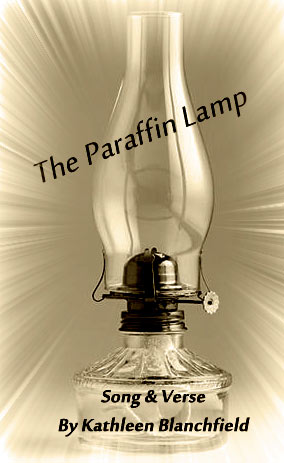
Kathleen’s latest book of Song & Verse is entitled “The Paraffin Lamp.” Same includes the poem shown above which she has kindly permitted us to reproduce. This excellent read came about while she lived in a temporary, tiny, snug, but charming house for one year, while her main dwelling was being renovated. This same temporary dwelling ensured much less house work and gardening, latter which she greatly enjoys. Now surrounded, as this tiny dwelling was, by a haunting natural serenity, more poems and songs began to trickle down to the point of her pen, ending up materialising on paper.
Kathleen hopes to publish another similar book of poetry in the not too distant future. Her current publication “The Paraffin Lamp,” may be purchased from “The Book Centre,” O’Connell Street, Clonmel, Tipperary, or most other reputable bookshops or we can put you in direct contact with the Authoress, should you use the “Contact Us,” tag latter situated on the top of this page, after all a signed copy is always nice to own.
 Thurles Library Tipperary Libraries are running their short story competition again this year, in conjunction with their ever popular “Tipperary Reads Festival,” latter supported by a €1,500 grant from the Arts Council.
The competition, which is open, not just to adults, but also to Senior Cycle secondary school students, can be written on any theme, depending on the writers own creative juices at the time of writing.
Your story must strictly be between 2,000 and 3,000 words maximum and very importantly all entries must be the original work of the author.
There will be one prize of €200 for the best story, with the winners name being announced during Stuart Neville’s visit to Tipperary Libraries in November.
Stories may be submitted by email to thurles@tipperarylibraries.ie or sent as hard copy to any local branch of Tipperary Libraries.
Closing Date: Closing date for submissions is 01/11/2013.
Further Info: For further details drop into your local library or simply Telephone 0504- 29720.
|
Support Us Help keep Thurles.info online by donating below. Thank you.
Total Donated 2026: €40.00
Thank You!
Daily Thurles Mass Livestream
|





Recent Comments