The True Story of Villa Emma – The Village That Chose to Save Children.
At a time when Israel’s very presence on the football field is again the subject of protest, including the disruption of Ireland’s friendly against Qatar in Dublin over upcoming fixtures with Israel, the story of Villa Emma carries a particular force. The protests are framed by many as opposition to Israel’s conduct in Gaza, but for Jews and Israelis they also echo a longer and painful history: a people repeatedly attacked, excluded, and told that even their children, athletes, and symbols of ordinary national life are not entitled to safety or normality. From the Jewish children hidden in Nonantola in 1943, to the children killed at Majdal Shams, to Jewish children reportedly targeted in Skokie, the question is not only political but moral: when Jewish or Israeli children and communities are made vulnerable, do bystanders turn away, join the hostility, or choose protection?
In the summer of 1942, a group of Jewish refugee children arrived in the small Italian village of Nonantola, near Modena.
They had already been on the run for years, fleeing Nazi persecution across Central and Eastern Europe. Most came from Germany, Austria, and the Balkans. Many had lost their families.
An Italian Jewish aid organisation, DELASEM, arranged for them to stay in an abandoned countryside mansion known as Villa Emma.
By the spring of 1943, their number had grown to around 70–73 children and teenagers, cared for by a small group of adult educators.
A fragile refuge.
For about a year, life in Nonantola was unexpectedly peaceful. The children attended lessons, worked, and gradually adapted to village life. Local residents helped furnish the villa, brought food, and supported daily life.
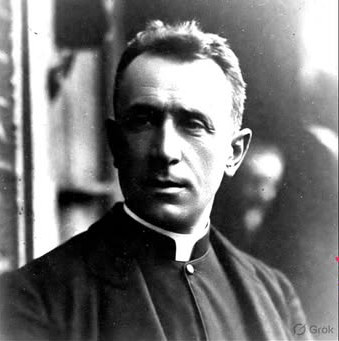
Two local figures became especially important, namely Don Arrigo Beccari, a Catholic priest and teacher, and Dr. Giuseppe Moreali, the village doctor. Both formed close ties with the children and helped organise their care.
At this stage, despite anti-Jewish laws, Italy had not yet begun systematic deportations in the same way as Nazi-occupied territories but that would soon change.
By September 1943: everything shifts. On September 8th, 1943, Italy surrendered to the Allies. German forces quickly occupied northern Italy.
The danger was immediate and clear. Within hours, the people responsible for the children realised that staying at Villa Emma would likely lead to arrest and deportation.
What happened next was decisive. A village acts. In less than two days, often described as under 36 hours, the children were dispersed and hidden. Younger children were sheltered in the local seminary Others were taken in by families across the village and countryside
Around 30–35 families, along with clergy and others, participated in hiding them.
This was not a centralised operation directed by a government or military. It was a coordinated local response involving priests, doctors, educators, and ordinary villagers.
Forged identities and a dangerous plan
Hiding the children was only a temporary solution. German patrols were active, and a search could happen at any time.
Beccari, Moreali, and others began preparing an escape. They obtained blank identity documents and created false papers to disguise the children’s identities. The plan was to move them north, across the Alps, into neutral Switzerland.
The escape.
Between early and mid-October 1943, the children left Nonantola in small groups. They travelled by train and on foot, guided through checkpoints using forged papers, and eventually crossed the Swiss border, often at night.Most of the group made it safely. One known exception was Salomon Papo, a boy who had been too ill to travel. He was later arrested and deported to Auschwitz, where he died.
Aftermath and consequences
The rescue did not go unnoticed. Don Arrigo Beccari was later arrested and imprisoned by Fascist authorities. He was interrogated and beaten but did not reveal information about the network that had helped the children.
He survived the war and returned to his life as a priest in the same community.
What this story really represents
The rescue of the Villa Emma children was not the work of a single hero. It involved Jewish organizers who arranged the children’s refuge – Local clergy and medical professionals and dozens of ordinary families willing to take risks. Together, they protected and ultimately saved the lives of dozens of young people.
After the war, many of those children emigrated to Palestine and later Israel, where they built new lives.
Why, then, are so many Christian communities silent? Perhaps because Israel has become politically contentious, and many fear that defending Jews or Israelis from hatred will be treated as taking a side in every aspect of the Middle East conflict. But this is a false moral trap. One can grieve Palestinian suffering and still condemn antisemitism. One can criticise Israeli policy and still defend Jewish children from intimidation, exclusion, and violence. The legacy of Villa Emma should make Christians especially uneasy about silence. When Jewish children were in danger, Don Arrigo Beccari and others did not hide behind complexity. They protected life. That remains the standard.
A legacy of quiet courage.
In 1964, Don Arrigo Beccari and Giuseppe Moreali were recognized by Yad Vashem as Righteous Among the Nations for their role in the rescue.
Today, the story of Villa Emma is remembered not just as an act of individual bravery, but as an example of collective moral choice. In a time of fear and occupation, a small rural community chose to help. and because of that, dozens of children survived.





Leave a Reply