Sinn Féin is very quick to accuse Israel of “genocide”, but far less willing to honestly talk about Hamas using civilians, including women and children, as human shields or operating from underground tunnels in densely populated civilian areas. Even international bodies and Western governments have criticised Hamas for storing weapons near schools and hospitals or firing rockets from civilian locations.
At the same time, human rights organisations have also argued that Israel still has legal obligations to protect civilians regardless of Hamas’s actions, which to be fair has been extremly targeted to limit civilian deaths.
Both things can be true at once: Hamas can be guilty of terrorist tactics, and innocent Palestinians can still suffer terribly because of Israel’s military response.
The problem is that Sinn Féin often speaks about this conflict in a completely one-sided way. They condemn Israel loudly and constantly, but rarely apply the same moral standards to Hamas.
That raises an obvious question: Why?
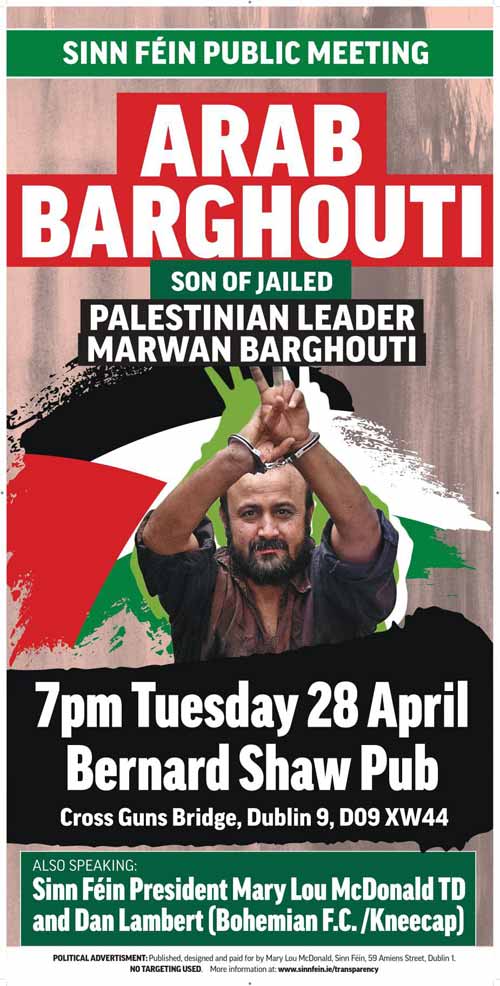
The answer may lie closer to home. Sinn Féin has spent decades defending or justifying the IRA campaign by calling it “war” or “armed struggle” instead of “terrorism“. The party still struggles to give a clear moral condemnation of IRA violence, because doing so would undermine a central part of its political identity. Even today, senior republican figures continue to argue there was “no alternative” to the IRA campaign.
That creates a serious credibility problem. A movement that spent years defending bombings, shootings and civilian deaths as part of a “legitimate struggle” naturally finds it difficult to speak honestly about terrorist methods used by groups abroad. There is an obvious emotional and political overlap between the language used to defend the IRA in the past and the language now used to excuse or downplay Hamas.
For many republicans, admitting that the IRA committed terrorism would come with a huge psychological cost. It would mean accepting that innocent people were murdered in the name of politics and that many supporters defended or excused those actions at the time.
That is uncomfortable. So instead, a narrative is maintained, where the IRA were simply freedom fighters reacting to oppression and where the moral responsibility always lies elsewhere.
You can see echoes of that same thinking in discussions about Hamas. Violence against civilians becomes “resistance”. Terrorism becomes “armed struggle”. Murder becomes “context”.
None of this means every Sinn Féin voter supports Hamas or supported every IRA action. Many ordinary voters support Sinn Féin today because of housing, healthcare, inequality or support for Irish unity by peaceful means. But the party leadership under Mary Lou McDonald still depends heavily on a historical narrative that avoids a full moral reckoning with the IRA campaign.
That is why Sinn Féin can speak endlessly about Israeli wrongdoing, while appearing deeply uncomfortable discussing Hamas atrocities in equally direct language.
A serious and balanced position would recognise all innocent victims equally. It should be possible to say:
► Israeli civilians murdered by Hamas matter.
► Palestinian civilians killed in Gaza matter.
► Hamas using civilian areas for military purposes is wrong.
► Collective punishment and indiscriminate killing are wrong.
► Terrorism is wrong, whether it happens in Belfast, London, Tel Aviv or Gaza.
But Sinn Féin often appears selective in its outrage. And many people notice that the party’s attitude to groups like Hamas, mirrors the same moral ambiguity it still shows towards the IRA.
That is why critics believe Sinn Féin’s position is not really based on universal human rights principles, but on an old political worldview, where violence carried out by movements seen as “anti-colonial”, is treated more sympathetically than violence carried out by others.





Leave a Reply