Mr Martin Mansergh, former Irish Minister of State and key Irish peace process adviser, sadly dies aged 78 years.
Martin George Southcote Mansergh, former Minister of State, historian, and one of the most influential advisers in the Northern Ireland peace process, has died at the age of 78 years, while on a trip to the Sahara with fellow retired parliamentarians.
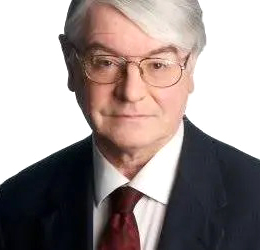
Born in Surrey, England, in December 1946, Mr Mansergh was the son of historian and Oxford academic Nicholas Mansergh, a renowned authority on Anglo-Irish relations, and Diana Mary Mansergh. He was educated at The King’s School, Canterbury, before going on to study at Christ Church, Oxford, where he obtained a doctorate in history. His academic background and deep interest in Irish and European affairs shaped both his intellectual outlook and his later political career.
Although English-born, Mr Mansergh made Ireland his home and dedicated his professional life to Irish public service. His historical awareness, combined with a sharp political mind, made him a trusted adviser to Fianna Fáil Taoisigh Charles Haughey, Albert Reynolds, and Bertie Ahern. He was regarded as a central figure in the complex and often secret efforts to open dialogue with Sinn Féin from the late 1980s, laying the groundwork for the negotiations that led to the Good Friday Agreement in 1998.
Elected to Seanad Éireann in 2002, he served until 2007, when he was elected TD for Tipperary South. In government, he was appointed Minister of State with responsibility for the Office of Public Works. While his parliamentary career was significant, it was his quiet, steadfast role in shaping government policy on Northern Ireland and his contribution to peace that most defined his public legacy.
Tributes following his death have described him as a man of integrity, intellect, and generosity. His early negotiations on behalf of successive Taoisigh, his resilience during years of painstaking dialogue, and his commitment to reconciliation earned him the respect of political leaders across divides. “Few on the Irish side were more crucial to the Peace Process,” one tribute reflected, “whether through his role as an intermediary or in crafting a new political and intellectual framework for peace.”
He is recalled as being a key figure in establishing contacts and building trust in the years leading to the Good Friday Agreement. His contribution, alongside that of Mr John Hume, senior government officials, and Sinn Féin representatives, was pivotal in transforming the political Irish landscape.
Away from politics, Mr Mansergh was known as a historian and writer, contributing to Irish and European scholarship and offering reflections on politics and history that drew on both his academic training and his practical experience.
He is remembered as a warm and thoughtful man, generous with his time, devoted to his family, and proud of his roots in County Tipperary, where he lived for many years.
Mr Mansergh is survived by his wife, Elizabeth and their five children. His passing marks the loss of a figure whose intellect, dedication, and quiet determination were instrumental in securing peace in Ireland and whose life leaves behind a proud legacy of service and reconciliation.
In ár gcroíthe go deo.





Leave a Reply