The Revolutionary Innovation That Could Transform The Future Of Plastics.
Could Microorganisms Help Solve The World’s Plastic Pollution Problem?
Plastic pollution is one of the biggest environmental problems facing the world today. Most plastics are made from fossil fuels and can take hundreds of years to break down. Over time, they can turn into tiny pieces called microplastics, which pollute our oceans, rivers, soil and even our food.
But a British company called Shellworks is developing an exciting alternative.
Its new material, called VIVOMER, looks and works much like ordinary plastic. However, instead of being made from oil, it is produced using naturally occurring microorganisms and plant-based materials.
The most exciting part? It is designed to break down naturally after use, rather than remain in the environment for hundreds of years.
In October 2026, Shellworks received international recognition when it was included in the Norrsken100, a list of 100 promising startups working to solve some of the world’s biggest problems.
How Does VIVOMER Work?
The idea behind VIVOMER is surprisingly simple. Instead of using oil to make plastic, Shellworks uses tiny living organisms known as microorganisms. These microorganisms are fed plant-based materials, including by-products from farming and industry. As they feed and grow, they naturally produce a substance called PHA, which can be used to make packaging. This material is collected, processed and shaped into products such as bottles, containers and cases.
One major advantage is that VIVOMER can be made using many of the same machines already used to manufacture plastic products. This could make it easier for businesses to switch to more environmentally friendly packaging.
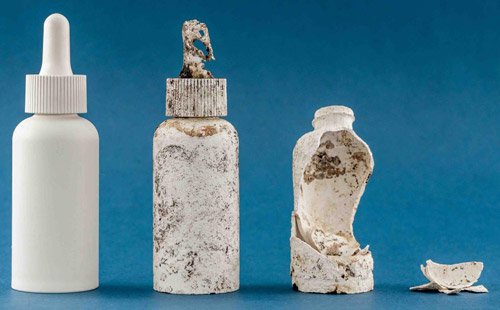
Strong Enough to Use, but Able to Break Down Naturally
One of the most interesting things about VIVOMER is that it is designed to be strong and long-lasting while being used. According to Shellworks, the material is waterproof, can handle moisture and is suitable for everyday products.
It can also be made in different shapes, colours and finishes.
This makes it useful for products such as:
Skincare and cosmetics containers
Shampoo and beauty packaging
Deodorant cases
Refillable bottles and everyday packaging
But unlike ordinary plastic, VIVOMER is designed to be broken down by microorganisms when the right conditions are present.
Shellworks says the material has received TÜV AUSTRIA home-compostability certification, meaning it has passed recognised tests for breaking down in home composting conditions.
However, this does not mean it will disappear immediately if thrown into the countryside or ocean.
How quickly it breaks down depends on factors such as temperature, moisture, thickness and the presence of microorganisms.
Growing International Recognition
Shellworks is already attracting attention from businesses and investors. In October 2026, it was selected for the Norrsken100, which highlights startups developing new solutions to major global challenges. More than 1,400 companies were nominated, with Shellworks recognised in the Circular Economy and Materials category.
Its technology is also being used by well-known beauty and personal care brands, including Wild, Sonsie and Hair by Sam McKnight. This shows that the material is no longer simply an interesting scientific idea. It is already being used in real products.
In March 2026, Shellworks also secured US$15 million in investment, led by French investment firm Alter Equity. The funding will help the company increase production and bring its materials to more businesses around the world.
Could This Create Opportunities for Ireland?
This technology could also offer interesting opportunities for Ireland. Ireland has strong farming, food-processing, biotechnology and manufacturing industries. These sectors could potentially work together to develop new materials using agricultural by-products and other renewable resources.
For example, materials left over from food production might one day become useful ingredients for making environmentally friendly packaging. This could help reduce waste while creating new business opportunities and jobs.
What Are the Challenges?
Although VIVOMER is promising, there are still challenges to overcome. Producing these materials on a large scale must become affordable enough to compete with ordinary plastics.
Businesses also need reliable supplies of raw materials, while consumers need clear information about how to dispose of the packaging correctly.
It is also important to study the full environmental impact of producing, transporting and disposing of these materials. Just because something is made from plants or can biodegrade, does not automatically mean it is better for the environment in every situation.
Independent testing will help show where VIVOMER offers the greatest benefits.
A Small Material with Big Potential
VIVOMER offers an exciting example of how nature and modern technology can work together.
Instead of making packaging from fossil fuels that can remain in the environment for centuries, Shellworks is showing how microorganisms can help produce useful materials designed to break down after use.
Of course, no single invention will solve the world’s plastic pollution problem. We still need to reduce unnecessary packaging, reuse products where possible and improve waste management. However, developments such as VIVOMER show that better alternatives are becoming possible.
Perhaps the most exciting lesson is this: some of the answers to our biggest environmental problems may already exist in nature. We simply need to find smarter ways to use them.





Leave a Reply