Ireland’s wild Atlantic salmon are in serious decline.
Scientific estimates indicate that well over one million salmon returned to Irish rivers annually during much of the 1970s; in recent years that figure has fallen below 200,000. Inland Fisheries Ireland’s Technical Expert Group says the decline reflects pressures both at sea and in freshwater.
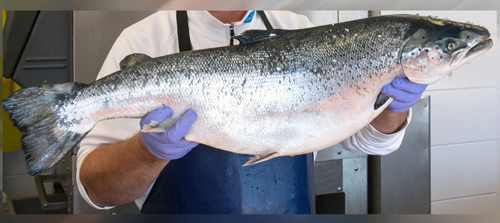
For Tipperary and the River Suir, this is not an abstract national problem. The Suir is one of Ireland’s great salmon rivers and Atlantic salmon is a protected qualifying species within the Lower River Suir Special Area of Conservation, which extends through Tipperary, and Waterford.
The latest scientific assessment for the 2026 season groups the Suir, with the river Clodiagh near Holycross, and river Lingaun latter part of the border between Kilkenny and Tipperary, and Waterford Blackwater. At the standard 75% probability of achieving its conservation limit, the stock was recommended for catch-and-release fishing only, rather than having a harvestable surplus. Under more precautionary probability thresholds, the advice is now to close it.
What is happening to our salmon?
There is no single cause. Poor survival at sea certainly is a major part of the national decline, with changing ocean temperatures, food availability and wider changes in the North Atlantic affecting salmon after they leave Irish rivers.
But what happens inside rivers such as the Suir also matters enormously. Salmon need clean, cool, well-oxygenated flowing water and clean gravel beds in which to spawn. The female buries her eggs among the stones. Water must circulate freely through that gravel to supply oxygen.
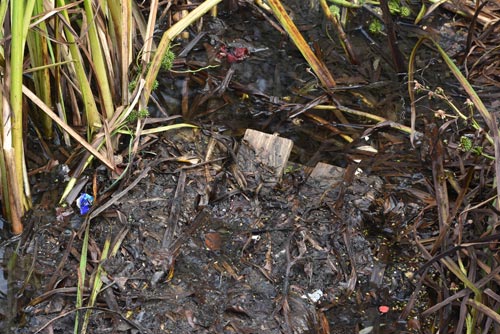
When fine soil, silt and other sediment fill the spaces between the stones, the gravel can become clogged. Water circulation falls and the supply of oxygen to salmon eggs can be reduced. In badly affected spawning beds, eggs and newly hatched fish can die even though the surface of the river may look relatively normal.
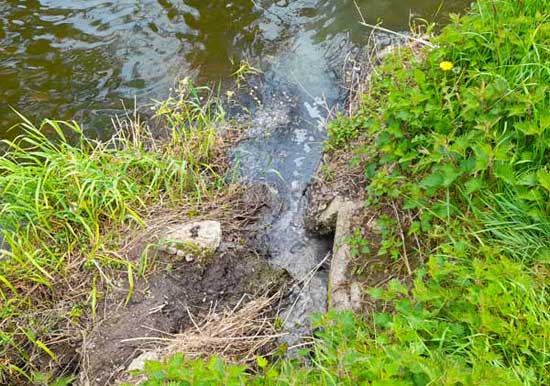
Pollution and excessive nutrients are therefore important concerns. The EPA says agriculture and wastewater remain the greatest challenges to Irish water quality, with nitrogen and phosphorus still too high in many waters. In 2026 the EPA also reported that nitrogen remains particularly high across much of the south and southeast, with agriculture the main national source of nitrogen entering rivers. Environmental Protection Agency Tipperary has had direct examples of pollution affecting the Suir. In 2025 Inland Fisheries Ireland secured a conviction following a September 2024 incident at Holycross, where harmful matter entered the River Suir and approximately 400 metres of river bed was reported as having a yellowish-cream deposit. IFI warned that aluminium sulphate entering a river poses a major threat to aquatic ecosystems. Inland Fisheries Ireland
That incident should not be taken as the explanation for the long-term decline of the Suir salmon stock, but it demonstrates how vulnerable the river remains to individual pollution events on top of longer-term pressures.
Barriers are another major issue on the Suir Weirs, dams, culverts and other structures can prevent or delay salmon reaching spawning grounds. They can also change river flows and alter the natural movement of gravel and sediment.
A very relevant Tipperary example is Bakery Weir in Cahir. IFI assessed the structure in 2018 and found it to be a significant barrier to migrating salmonids, as well as lamprey and coarse fish. Eight years later, a project is now being progressed to partially remove the weir and improve the natural river channel and fish passage.
IFI explains more generally that barriers can stop fish reaching breeding habitat, increase the energy salmon need to expend during migration and interfere with the movement of the gravels and sediment needed to create healthy spawning beds.
So is pollution, lack of oxygen and clogged gravel responsible?
They are certainly a large part of the problem and they are factors we can actually do something about locally.
But the scientific evidence points to several pressures acting together:
- poor survival of salmon at sea;
- agricultural and wastewater pollution;
- excess nutrients;
- fine sediment clogging spawning gravel;
- loss and alteration of river habitat;
- barriers such as weirs and culverts;
- warmer water, drought and extreme floods associated with climate change;
- and other pressures including disease, predation and aquaculture.
The worrying point for Co. Tipperary is that we cannot control what happens to salmon throughout the North Atlantic, but we can improve the River Suir and its tributaries.
That means protecting spawning gravel from excessive silt, reducing nutrient and pollution losses, improving sewage and wastewater treatment, restoring damaged river habitat, protecting river banks and riparian vegetation, and removing or modifying unnecessary barriers so that salmon can once again reach as much good spawning habitat as is possible. If young salmon leave the Suir in greater numbers and in better condition, they have a better chance of surviving the increasingly difficult journey at sea.
The River Suir has supported wild Atlantic salmon for thousands of years. Their decline should be treated as a warning about the health of the entire river system, not simply as an angling issue.
Protecting the salmon means protecting the River Suir, its tributaries, its spawning gravels and its water quality throughout County Tipperary and beyond.





Leave a Reply