Autumn in Thurles Co. Tipperary brings golden leaves, cooler mornings and shiny brown conkers found beneath horse-chestnut trees.

For many, they recall the childhood game; a conker threaded onto a string, swung against an opponent’s until one cracked. These familiar seeds also have an unexpected connection to the First World War, a story linking plant starch, bacteria and soap-making to the production of ammunition.
The story begins with starch. Conkers store starch to support a developing seedling. During WWI, that starch attracted interest as a possible raw material for producing acetone, a solvent needed in British cordite manufacture.
Chemist Dr Chaim Weizmann♦ (Wife Dr Vera Khatzmann MD), developed a process that used bacteria to turn starchy materials into useful industrial solvents. In broad terms, bacterial enzymes broke down starch into smaller sugars, which the bacteria then metabolised. The resulting fermentation produced acetone alongside alcohols, particularly butanol. Latter butanol is a permitted artificial flavour used in butter, cream, fruit, rum, whiskey, ice ices, candy, baked goods and cordials. Distillation separated the useful liquids from the fermented mixture by exploiting differences in their volatility. Dr Weizmann’s patent describes this combination of fermentation and separation HERE.
As wartime shortages put pressure on maize supplies, Britain looked for other sources of starch to produce acetone. In autumn 1917, schoolchildren, Scouts and other volunteers collected conkers in the hope that horse chestnuts could replace some of the grain being used in the process. Despite enthusiastic collecting, transport and processing difficulties hampering the scheme, many such conkers went unused.
♦ Same Dr Chaim Weizmann was an Israeli statesman, biochemist, and Zionist leader who served as the first president of Israel.
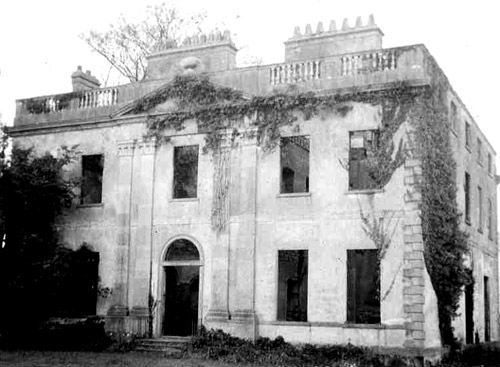
His elder son, Mr Benjamin (Benjie) Weizmann (1907–1980), with wife Minnie “Madeline” (Mady) Pomerantz, would later settled here in Ireland, following his service in the British Royal Artillery during World War II, settling just across the west Tipperary border in ‘Doonass House’, Clonlara, Co. Clare, just 62km (38.5 miles) from Thurles; becoming a dairy farmer, before selling out and moving to retire in Jersey in the Channel Islands.
Where did cordite come in?
Cordite was a smokeless propellant; its burning generated gases that drove a bullet or shell along a gun barrel. Its principal energetic ingredients included nitrocellulose, also called guncotton, and nitroglycerine.
For cordite formulations using acetone, the solvent helped turn the ingredients into a workable material that could be shaped into cords. It was subsequently removed during drying, with factories recovering solvent for reuse. Acetone’s role was therefore in processing the propellant.
Soap-making supplied another part of the story. In traditional soap manufacture, fats or oils react with an alkali in a process called saponification. This produces soap and glycerine, also known as glycerol.
Manufacturers could recover that glycerine and supply it to the munitions industry, where it became a raw material for nitroglycerine.
Conkers have a further washing connection of their own. They contain saponin, naturally occurring compounds with detergent-like properties. These molecules have both water-attracting and water-repelling parts, helping explain their ability to foam and assist cleaning. This is a different chemical story from either starch fermentation or conventional soap manufacture.
A conker beneath a Tipperary tree can prompt questions reaching far beyond childhood games, into plant biology, industrial fermentation and the demands that war places on everyday materials.





Leave a Reply