A troubling controversy is developing around honey being sold in Ireland.
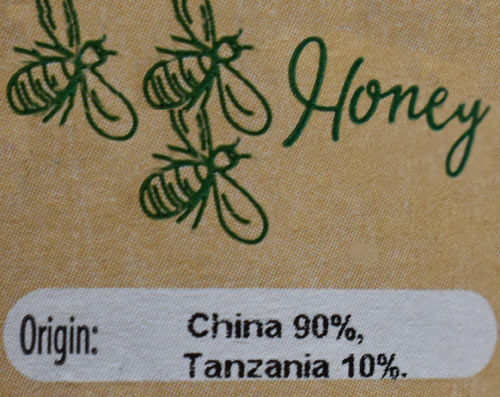
Many jars carry Irish-sounding names, familiar imagery or references to long-established Irish businesses. Yet the honey inside may be entirely imported. Until recently, labels could simply state “a blend of EU and non-EU honeys,” without identifying the countries involved or the proportions used.
Even more concerning is the possibility that some imported products are not pure honey at all.
A major European Commission investigation tested 320 consignments of honey entering the EU. It found that 147 or 46% of those tested, were suspected of containing added sugar syrups. Investigators also uncovered fraudulent practices involving additives and colourings, pollen removal and the falsification of information intended to conceal honey’s true origin.
This does not mean that 46% of every jar sold in Ireland is fake. The results concerned imported consignments tested during a particular investigation, and “suspected” adulteration is not automatically proof of fraud. Nevertheless, the findings expose a serious weakness in the honey supply chain.
Is adulterated honey dangerous?
It is important to be accurate about the risk. The European Commission considers the direct health risk from added sugar syrup to be very low, provided the syrup is food-grade and safe for human consumption. Honey is already naturally high in sugar, so adulteration with ordinary syrup does not normally make it acutely poisonous.
However, there are still legitimate concerns:
If undeclared additives, colourings or other substances are used, consumers cannot know exactly what they are eating.
False origin records and removed pollen weaken traceability, making it more difficult to identify suppliers or recall a product if contamination is discovered.
Consumers with diabetes or those controlling their sugar intake may purchase honey believing it to be an authentic natural product when it could contain cheaper added syrups. All honey should, of course, be consumed carefully by anyone managing blood glucose.
Adulterated products may not provide the composition, flavour or other qualities for which consumers deliberately choose genuine honey.
Food fraud shows that someone in the supply chain is deliberately evading controls. Even where the adulterant itself is relatively harmless, that disregard for regulation damages confidence in the safety system.
There is also a separate safety warning applying to all honey, whether Irish or imported: it must never be given to a baby under 12 months old, because it can contain spores associated with infant botulism. Cooking or pasteurising honey does not provide a reliable safeguard for infants.
The danger to Irish beekeepers
Ireland produces only a small proportion of the honey consumed in this country. Genuine Irish beekeepers face the impossible task of competing against extremely cheap imports, particularly when imported honey is packaged in a way that may leave shoppers believing they are supporting an Irish product.
Foreign honey is not inherently unsafe or inferior, and importing it is entirely lawful. The problem is misleading presentation, concealed origins and the possibility of adulterated products being passed off as pure honey.
New EU labelling rules, effective from June 14th 2026, should improve transparency. Labels on newly produced blends must identify the countries of origin and their percentage shares, although older stock may remain on sale until exhausted.
Consumers should look beyond the brand name and imagery. Read the small print and look specifically for “Irish honey” or “100% Irish honey,” along with a clearly identified producer and place of origin. Remember, however, that consumers cannot reliably detect sophisticated adulteration by appearance, taste or whether the honey crystallises. Proper oversight and laboratory testing remain essential.
Irish consumers deserve honesty. Irish beekeepers deserve fair competition. And when a jar is sold as honey, its contents should be exactly that: genuine, traceable honey.





Leave a Reply