On 7th October 2023, terrorist group Hamas and other Palestinian armed groups attacked Israel. According to Israeli authorities as reported through UNICEF, 37 children were killed in Israel.
The Israeli military campaign in Gaza that followed has produced a vastly larger child death toll. UNICEF reported that, by 30 June 2026, at least 21,700 Palestinian children had been reported killed in Gaza.
These figures need to be described carefully. The Gaza total is a reported conflict casualty figure and does not constitute an individual legal determination that every child’s death was directly attributable to a particular IDF action.
But whatever one’s politics, the death of an innocent child is a tragedy, and Ireland’s own history should make us particularly conscious of that principle.
The Commission of Investigation into Mother and Baby Homes found that approximately 9,000 children died in the institutions it investigated; around 15% of all the children who passed through them. The Irish State subsequently acknowledged that exceptionally high infant mortality rates were known to authorities and that there was little or no evidence of an adequate Irish State response.
At the Bon Secours Mother and Baby Home in Tuam, the deaths of 796 children were recorded during its 36 years of operation. Investigations confirmed the presence of significant quantities of human remains in underground chambers at the site, although it was not established that all 796 children were buried there.
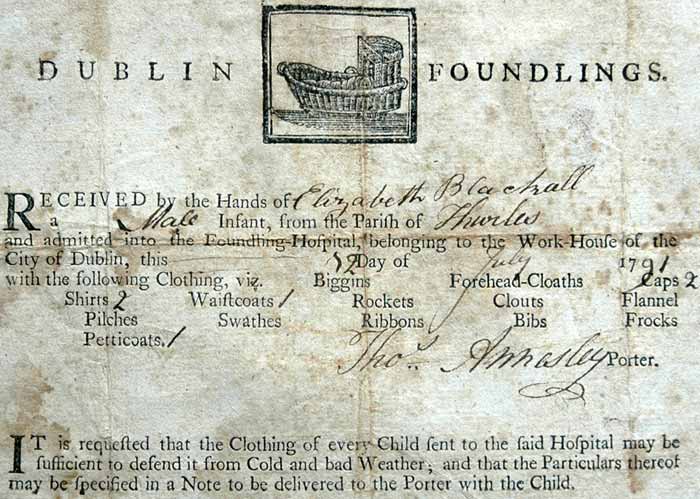
Ireland also has to confront how vulnerable children were used in medical research. Here, the Mother and Baby Homes investigation examined compliance with ethical and regulatory standards relating to vaccine trials conducted on Irish children in institutions. The Commission’s final report contains a dedicated chapter on those trials.
That history gives Ireland a painful lesson: society can fail vulnerable children through violence, neglect, institutional indifference and failures to recognise their human dignity.
Today Ireland rightly expresses horror at children killed in Israel and Gaza. But another difficult moral question exists here at home.
Since abortion services commenced in January 2019, tens of thousands of pregnancies have been legally terminated in Ireland. The Department of Health reported 10,600 terminations in 2025 alone, of which 10,445 were early-pregnancy terminations.
The documented annual notification figures total approximately 57,461 between 2019 and 2025.
One estimate places the total at 65,602 by June 2026, but that figure includes an estimated 5,300 procedures for the first half of 2026 and therefore should not be presented as an official Department of Health cumulative total.
And What About The Financial Consequences For The Irish State?
There is no official Government figure showing how much public expenditure has been saved because abortions occurred rather than births.
However, it is possible to construct a limited estimate. The 2026 maximum One-Parent Family Payment is €254 per week, with an additional €58 per week for a child under 12. The payment is means-tested, applies to parents who are not cohabiting and normally ends when the youngest child reaches seven.
It would be wrong simply to assume that all 65,602 pregnancies would have produced a live birth and that every mother would have become a maximum-rate lone-parent welfare claimant.
Using more conservative assumptions discussed in the underlying analysis and allowing for pregnancies that would not have resulted in live birth, estimating only a minority of births as lone-parent households, applying a further eligibility/take-up adjustment and assuming an average of roughly 4½ to 5 years on One-Parent Family Payment , same produces an estimated gross One-Parent Family Payment (OFP) expenditure avoided of approximately €475 million to €525 million. Under wider but still plausible assumptions, the range is approximately €330 million to €780 million.
It is only an estimate of one category of hypothetical social-welfare expenditure that might otherwise have arisen.
It does not include Child Benefit, housing support, education, healthcare or Jobseeker’s Transitional Payment.
Equally importantly, it does not count the taxes, PRSI, VAT, employment, economic activity or other contributions those additional people might later have generated for the Irish State . So a genuine lifetime net fiscal calculation could be very different.
Nevertheless, it raises another uncomfortable question:
Should financial savings to the State ever enter the moral consideration of whether a developing human life should continue?
- A child killed by Hamas is dead.
- A child killed during warfare in Gaza is dead.
- A child who died through neglect in an Irish institution never had the opportunity to live the life that should have followed.
- And in an abortion, a living developing human organism that existed before the procedure no longer exists afterwards.
These circumstances are obviously not identical.
A born child is universally recognised in law as a person possessing full legal rights. The central abortion debate concerns whether, when and to what degree an embryo or fetus possesses comparable moral status, and how that status should be balanced against the rights and bodily autonomy of the pregnant woman.
Those who believe unborn human life possesses essentially the same inherent moral worth as born human life will therefore see a serious inconsistency.
They may ask:
If we rightly condemn the ending of innocent human life in Israel and Gaza, and if we rightly condemn the neglect of children in institutions such as Tuam, why should the deliberate ending of developing human life before birth be judged according to an entirely different moral principle?
Supporters of legal abortion give a different answer. They may believe moral status develops during pregnancy, that viability or birth creates an important moral distinction, or that pregnancy creates competing rights that do not arise in the case of an independently living child and that is where the genuine moral disagreement lies.
Ireland’s history makes the question particularly difficult to ignore.
We now look back with horror at a society in which approximately 9,000 children died in Mother and Baby Homes and related institutions investigated by the Commission, while extraordinarily high mortality was known to authorities.
We look back at the 796 recorded child deaths in Tuam and ask how those circumstances were tolerated.
We look back at institutionalised children being involved in medical research and ask whether vulnerable human beings were given the protection and dignity they deserved.
And today we look at children killed in Israel and Gaza and insist that innocent human life deserves protection.
Should The Irish Football Team Wear Black Armbands For Lives Ended By Abortion?
On Sunday September 27th 2026, the Republic of Ireland men’s team wore black armbands during its match against Israel, which the FAI said were in recognition of “all lives lost in the conflict.”
That raises a difficult moral question; If black armbands are appropriate to mourn innocent lives lost in war, should there also be acknowledgement of the tens of thousands of developing human lives ended through legal abortion in Ireland since 2019?
Those who believe unborn human life has the same fundamental moral value as born human life will see an obvious inconsistency.
Others will argue that abortion is morally different because of bodily autonomy, pregnancy and the disputed moral status of the fetus.
But the central question remains; Why should the stage or location of a human life determine whether its loss is publicly mourned?
Perhaps, therefore, the most uncomfortable question is also the simplest:
Does the value of a human life depend upon where that human being is; in an Israeli community; beneath the rubble in Gaza; inside an Irish institution, or still developing in the womb?
And if our moral protection changes between those situations, society should be willing to explain clearly, what moral distinction justifies the difference and should the financial cost or saving to the Irish State have any place in that decision at all?





Leave a Reply