Homeowners across Co. Tipperary could be forgiven for feeling mixed messages about retrofitting right now.
A new ESRI review has sparked debate by highlighting that actual household energy use does not always match what BER ratings predict.
Put in simple terms, some highly efficient homes use more energy than expected, while many low-rated homes use less than the models suggest. The ESRI says this helps explain why average real-world consumption can look surprisingly similar across BER bands.
At first glance, that can make insulation, heating upgrades, or a heat pump seem like poor value. But that would be the wrong conclusion, especially in a county like Tipperary, where many homes are older, more rural, more exposed to weather, and more likely to depend on oil, solid fuel, or outdated heating systems. The same CSO data that raised eyebrows also shows that better-rated homes generally use less energy per square metre, which remains one of the fairest ways to compare homes of very different sizes. In 2023, A and B rated homes using electricity for heating consumed 39 kWh per square metre, compared with 66 for C-rated homes and 58 for F and G rated homes.
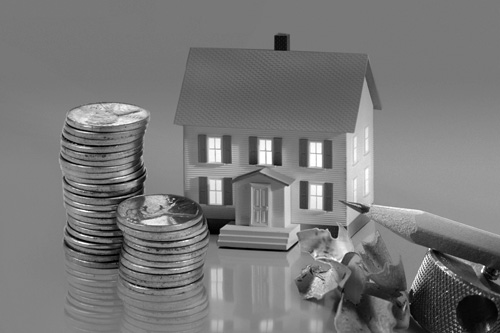
That matters in Tipperary because house size and dwelling type play a big role in energy demand. Detached houses use far more energy overall than mid-terrace homes simply because there is more space to heat. The CSO found detached homes had the highest mean electricity consumption in 2023, at 7,388 kWh, 77% higher than mid-terrace houses. For a county with a large stock of detached and one-off rural homes, that makes efficiency upgrades especially relevant.
There is another reason this matters locally. CSO figures published in 2025 showed that Tipperary had one of the highest proportions of G-rated homes in the country, at 10%. That suggests a significant number of households in the county are living in homes that are harder and more expensive to keep comfortable. In practice, many families in lower-rated homes are not “saving” energy in a meaningful sense. They may simply be under-heating rooms, avoiding turning the heat on, or living with draughts and cold spots, because the cost of comfort is too high. That is very different from saying an upgrade has no value.
This is the key point often lost in the national argument: retrofitting is not only about cutting a bill on paper. It is also about comfort, health, resilience, and future-proofing. A warmer, drier home is easier to live in. It is healthier for children and older people. It is less exposed to fossil fuel price shocks. And it is more attractive in the property market. The BER is not a perfect measure of human behaviour, but it is still a useful measure of the building itself: its insulation, airtightness, and heating potential.
For Tipperary homeowners, the smarter question is not “Are upgrades worth it at all?” but “Which upgrades make sense for my house, my budget, and my timeline?” A full deep retrofit may not be realistic for every household. Nationally, the government supported 53,984 home energy upgrades in 2024, and more than €1.2 billion has been invested in 186,000 homes since 2019. Low-cost retrofit loans are also now available to help with upfront funding. That means households can often take a phased approach: attic insulation first, then wall insulation, then heating controls, solar PV, or eventually a heat pump.
And heat pumps should not be dismissed. SEAI says they use less than a third of the energy of an oil or gas boiler and work well in cold climates, which is why they are so common in countries like Sweden and Norway. In Tipperary Town, the local Sustainable Energy Community is already backing projects involving solar upgrades, public housing retrofit, and an air-to-water heat pump for a sports centre redevelopment.
So yes, the headlines deserve scrutiny. BER ratings do not tell the whole story. But for many homeowners in Co. Tipperary, energy upgrades are still a sound investment. Not because every retrofit instantly transforms the numbers, but because a better home is about more than a spreadsheet. It is about comfort, control, and making older Tipperary houses fit for the future.







Leave a Reply