Shannon-to-East Water Pipeline – Why Tipperary Communities Along the River Are Pushing Back.
Objections are mounting in Ireland’s mid-west region over plans by Uisce Éireann to take more than 300 million litres of water a day from the River Shannon and pipe it to the Midlands, the east, and the greater Dublin Area. The utility lodged its planning application in December last for what it describes as the largest water infrastructure project in the State’s history; a 170km underground steel pipeline, linked to new treatment and storage infrastructure, designed to bolster supply for a region that includes almost half the population.
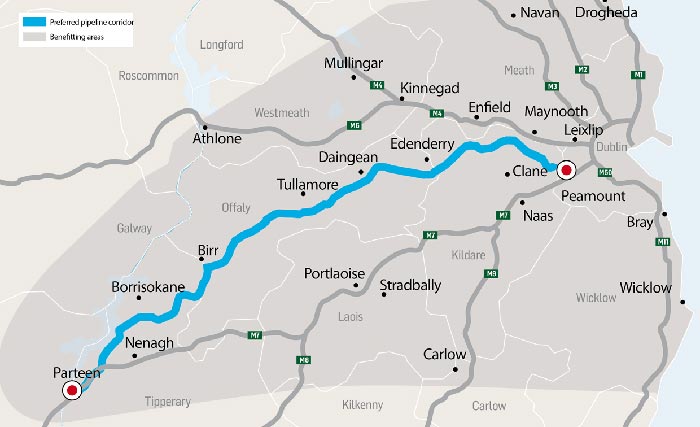
At the centre of the debate is a familiar national tension; how to secure reliable water for the country’s fastest-growing urban areas, without placing unacceptable pressure on the communities and ecosystems where that water is sourced.
Uisce Éireann says the scheme is essential to reduce the greater Dublin Area’s dependence on existing sources and to provide resilience in the face of climate pressures and rising demand. It argues that leakage reduction is necessary, but not sufficient on its own, and that a major new supply route would help prevent restrictions and large-scale outages, while supporting much needed housing delivery and further economic growth.
Opponents, however, reject the idea that the Shannon must become the answer to the east’s water challenges. Community and environmental campaigners in the mid-west region contend the project is unnecessary, premature, and risky, especially during drought periods, when the Shannon system is under pressure too. Their core claim is straightforward; if leakage and inefficiencies were tackled more aggressively, particularly in the Irish capital, the scale of abstraction being proposed would not be needed. They also argue that long-term water security should come from a wider mix of measures, including demand management, smarter network operation, and exploring alternative sources, rather than relying on a single mega-project.
While Uisce Éireann states it will abstract a maximum of 2% of the long-term annual average flow at the Parteen Basin, critics say averages can be misleading. What matters most, they argue, is what happens during prolonged dry spells, exactly when Dublin’s demand spikes and river flows can be low. In those conditions, local groups fear that removing additional water upstream could reduce downstream availability and strain an already complex system balancing navigation, ecology, drinking water needs, and hydropower operations.
Environmental concerns are a major flashpoint. Local stakeholders warn of potential impacts on habitats and water quality, and they point to sensitivities around the Parteen Basin area and the broader Lough Derg–Shannon network. Angling and river-based recreation interests have also raised alarms, stressing that changing flows, even subtly, can affect fish migration patterns, spawning success, and the ecological health of tributaries and lake edges. In response, the utility maintains that modelling has focused heavily on low-flow and drought scenarios, and that statutory flow requirements and fish passage arrangements would remain protected under the proposal. It says it has submitted environmental assessment documentation as part of its application.
Cost is another source of contention. The project has been framed publicly as a multi-billion-euro investment, with estimates in the range of roughly €4.6 billion to nearly €6 billion in recent official statements, while critics warn the final bill could escalate significantly over time. For opponents, the price tag strengthens the case for exhausting cheaper, quicker measures first, especially leak repair, targeted upgrades, and region-by-region resilience projects, before committing to decades of debt and disruption. Supporters counter that, given the scale of the population and economic activity reliant on secure water in the east, claiming the long-term benefits justify the spend.
The planning process is now the arena where these arguments will be tested. The public consultation period is now closed, with local authority submissions due by 30th March. An Coimisiún Pleanála is required to decide within 48 weeks. If permission is granted, Uisce Éireann has indicated construction could begin in 2028, with completion within five years.
Whether the pipeline proceeds as proposed or is reshaped by conditions, the controversy highlights a bigger challenge Ireland cannot avoid: building a water system that is climate-ready, regionally fair, and environmentally credible, while restoring public confidence that “fixing leaks” and planning for growth are happening at the same time, not as competing priorities.







Leave a Reply