“Where Tipperary leads, Ireland follows” is attributed to Thomas Davis (1814–1845), a writer, poet, and prominent figure in the Young Ireland movement. He used this phrase in the 1840s in his “The Nation” newspaper, to praise the counties intense nationalistic spirit, earning it the title of “The Premier County”, thus highlighting Tipperary’s role in both political and social movements.
Dr. Robert Emmet M.D., the father of Irish Republican, orator and rebel leader Robert Emmet (1778 – 1803), was born in Tipperary town on November 29th 1729, the younger of two sons in a family where medicine was already a calling. While no biographical sources name a townland or house, a carefully researched account helps narrow the scene; his father’s Will referred to “the house where he resided in Tipperary”, with family interests tied to the town’s trade and market life. In other words, the Emmets belonged to the working, improving fabric of Tipperary town, not some anonymous dot on a map.
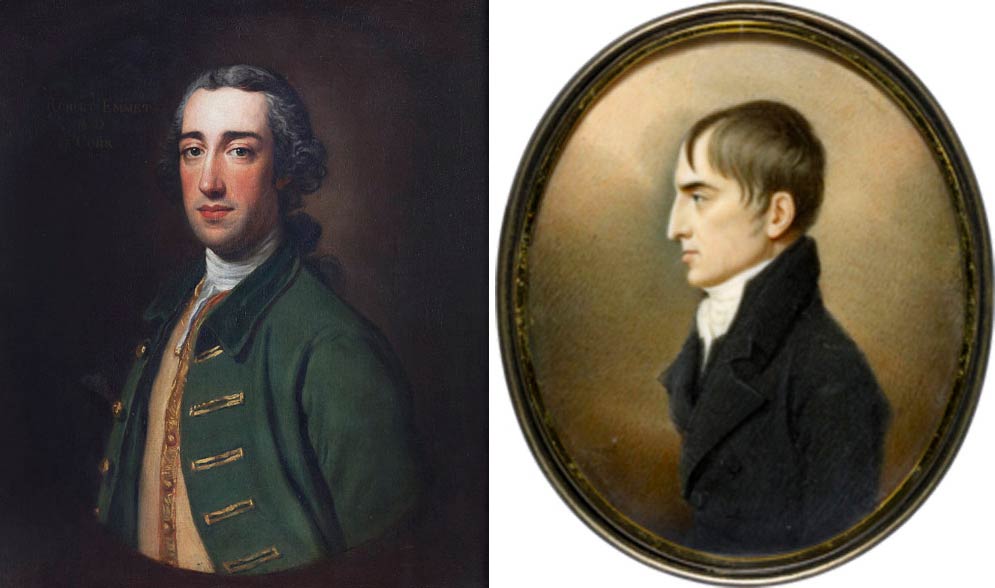
His rebel leader son today has three towns in Co. Tipperary with streets named after him :
In Thurles: Emmet Street (L-4021) connecting Barry’s Bridge and Thomond Road, is most often incorrectly spelt, by Tipperary Co. Council, as “Emmett Street”. His rebel son is also commemorated on the 1798 memorial, visible standing in Liberty Square today, and locally referred to as the “Stone Man”.
In Tipperary Town: Emmet Street is one of the main streets laid out connecting Dillon Street, and it’s still an everyday address in use today.
In Clonmel: Emmet Street is a more central street (for example, Tipperary County Council lists its Civic Offices there, and An Post lists Clonmel Post Office as being on Emmet Street).
“Where Tipperary leads Ireland follows”.
That line, by Thomas Davis, fits him surprisingly well, because the Emmet story becomes a pattern seen again and again in Irish life; provincial beginnings, serious education, success in a southern city, and finally the pull of Dublin’s institutions and power.
A doctor, made in Edinburgh and shaped by Europe.
To study medicine properly in the 18th century was to look outward, and Robert Emmet did just that. He graduated at the University of Edinburgh, one of the then great medical schools of that era. A letter he wrote to a Cork newspaper, in 1763, even suggests time spent studying in Paris, the kind of continental polish ambitious doctors prized.
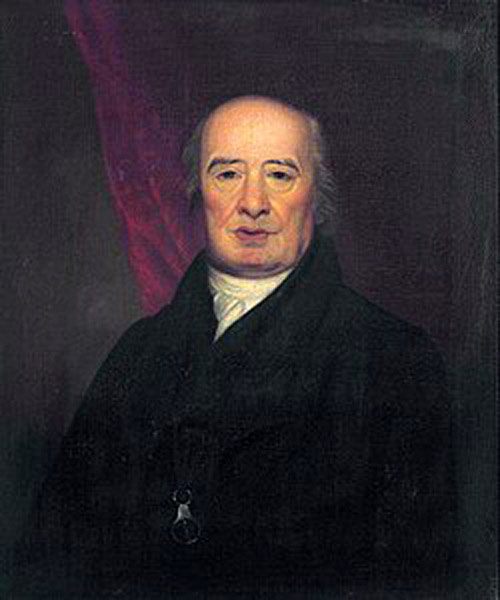
By the time he returned to Ireland, he was not simply a local practitioner, he was the sort of physician who could move between worlds, rural and urban, Irish and European, private practice and public appointment.
Cork years: Reputation, Marriage, and a growing household:
Emmet settled down to practise in Cork, and it was here that his name began to carry weight. The board of Cork’s Charitable Infirmary would later formally thank him for “the great care” he took of patients, the kind of public endorsement that tells you a doctor was not merely competent, but trusted.
In November 1760, he married Ms Elizabeth Mason, linking him to another established family network (the Masons of Munster). Some of their children can be identified clearly in sources, and they anchor the family’s Cork chapter.
Christopher Temple Emmet, born in Cork in 1761. He married Anne Western Temple, daughter of Robert and Harriett (Shirley) Temple.
Thomas Addis Emmet, born in Cork on April 24th 1764. He married Jane Patten (1771–1846), a daughter of John Patten and Jane (née Colville) Patten, in 1791.
Emmet was also a man of projects. The Munster account shows him involved in property and land, advertising holdings and opportunities in the countryside, a reminder that professional families often broadened their income in practical ways, through farms, leases, and investments.
The turning point – Dublin and the post of State Physician:
Then came the step that changed everything. In March 1770, Emmet took up office in Dublin as state physician, after purchasing the office from the widow of the former holder for £1,000; a role that required presence in the capital and placed him close to the heart of administration. The move was abrupt enough that he was winding down Cork affairs and property as he departed; the record even notes the precise start, March 6th 1770.
Dublin was not just a new address. It was a new scale of life, bigger circles, bigger expectations, and a household that would become famous for reasons he could not control.
The sources are blunt about the family’s size and its sorrow; their son Robert was the seventeenth child, but only the fourth to ever survive. That single line captures both prosperity and loss; the realities of family life even among the comfortable classes in the 1700s.
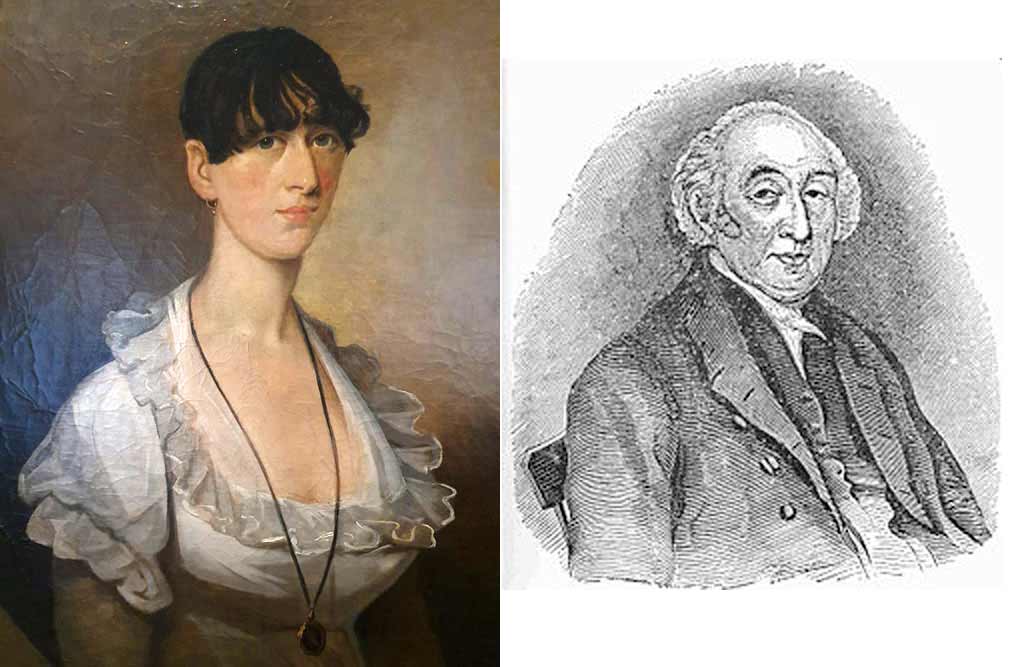
The four surviving children are identifiable:
Christopher Temple Emmet, born Cork, 1761, and a distinguished barrister and poet, who died aged 27 years, in 1788, followed some months later by his wife.
Thomas Addis Emmet, born Cork, April 24th, 1764 and a leader of the United Irishmen, before being forced into exile and later becoming a renowned lawyer in New York city.
Mary Anne Holmes, (née Emmet) writer and poet, wife of barrister Robert Homes, former born in Dublin, on October 10th, 1773.
Robert Emmet, (Executed Rebel in 1803), born March 4th, 1778 at 109/110, St Stephen’s Green, Dublin.
The family’s Dublin story is inseparable from that address: a prosperous, educated household in the capital, and the cradle, ultimately, of one of Ireland’s most remembered names.
Final years and death:
Dr. Emmet lived long enough to see his children grown and their talents emerging, and long enough, too, to sense that Irish politics were shifting underfoot. He died on December 9th 1802, and accounts of the period record his burial in the Churchyard of St Peter’s Church, Aungier Street Dublin.
He did not live to witness the family’s most dramatic and tragic chapter, that came less than a year later, when his youngest surviving son Robert junior, stepped into Irish history. It was on his death, that rebel Robert, using the £2,000 left to him by his father, laid preparations for a failed rising against what he described as “the cruel English government and their Irish ascendancy”, on July 23rd, 1803.
Chief Justice Lord Norbury sentenced the rebel Emmet to be hanged, drawn and quartered, as was customary for conviction of treason. On September 20th, 1803, Emmet was executed in Thomas Street in front of St. Catherine’s. He was hanged and then beheaded once dead. Today, his actual burial place is still unknown, thus inspiring the phrase, “Do not look for him. His grave is Ireland.”
Still, step back from the legend and the Emmet story comes into sharp focus; a birth in Tipperary, a medical education in Edinburgh, professional success in Cork, a state appointment in Dublin, and a family whose “only four surviving” children would go on to shape Irish public life, literature, law, and rebellion.







Leave a Reply