We’re used to seeing Imbolc pinned neatly to 1st February. Handy, yes, but it can blur what these festivals originally were: not fixed diary dates, but season-markers tied to what people could observe overhead and around them.
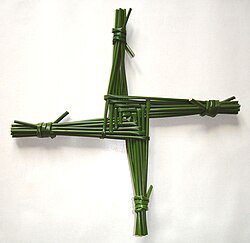
In the old Gaelic seasonal rhythm, four great festivals sit at the “hinges” of the year, Samhain, Imbolc, Bealtaine and Lughnasadh, each signalling the beginning of a season. Imbolc, in particular, sits in that brightening stretch about halfway between the winter solstice and the spring equinox.
So when is Imbolc in 2026?
If you define Imbolc astronomically as the midpoint between the December solstice and the March equinox, it doesn’t always land on the same calendar day. In fact, it generally falls somewhere between 3rd–6th February, depending on the year.
For 2026, we can anchor the calculation using the exact solstice/equinox instants:
- December solstice (2025): 21 Dec, 15:03 UTC. [ UTC– Co-ordinated Universal Time ]
- March equinox (2026): 20 Mar, 14:46 UTC.
That places the midpoint in the early hours of today 4th February 2026 (UTC), which means: 4th February in Ireland, while it can still be 3rd February in parts of the Americas, depending on time zone.
And if you’re reading this “down under”; some modern seasonal calendars flip the Wheel-of-the-Year festivals to match local seasons, so you’ll sometimes see Lughnasadh (the harvest hinge) marked instead.
Why does it “clash” with St Brigid’s Day?
Because modern life likes fixed dates. Over time, Imbolc became closely associated with early February observances such as St Brigid’s Day (1st Feb) and Candlemas (2nd Feb), a blending of seasonal tradition and church calendar that made sense culturally, even if the astronomical midpoint drifts a little year to year.
What does “Imbolc” actually mean?
Here’s the honest and interesting answer; we’re not 100% sure, and scholars have offered more than one plausible thread.
“In the belly”: A common explanation traces Imbolc/Imbolg to Old Irish i mbolg (“in the belly”), often linked to pregnancy in livestock and the returning promise of life.
Milk: Cormac’s Glossary (early 10th century) offers Oímelc, explaining it as “ewe milk”, though modern linguists often treat that as a later “made-to-fit” explanation rather than a definitive origin story.
Cleansing: Another scholarly proposal links the word to ideas of washing/purification, which fits neatly with late-winter customs like tidying, clearing out, and preparing for spring work.
Either way, the feel of the season is clear; this is the turn toward light, the first real loosening of winter’s grip, a time of readiness, renewal, and “getting things in order”.
Stone Age Ireland was watching too:
One of the most striking things about these seasonal hinge-points is how deep they seem to go in the Irish landscape, beyond medieval texts, beyond “Celtic” labels, and back into the Neolithic.
At the Mound of the Hostages on the Hill of Tara, the passage alignment is such that the rising sun illuminates the chamber around Imbolc and again around Samhain.
And the monument itself is ancient, built between roughly 3350 and 2800 BC, long predating the later royal and mythic fame of Tara, and long predating the arrival of Celtic culture in Ireland.
Whatever name people used, whatever language they spoke, they were clearly paying close attention to the turning year.
A simple way to mark “astronomical Imbolc”.
If you want to honour the sky-timed moment (without arguing with the calendar), try something easy and meaningful:
- Step outside at dawn (or just early morning) and notice the light, even a few minutes.
- Do one small “spring clean”: a drawer, a shelf, the car, the inbox.
- Light a candle, a nod to returning brightness and to the season’s links with Brigid and Candlemas.
Happy Imbolc, whenever you mark it, and happy hinge-of-the-year to anyone celebrating the season from the other side of the world.







Leave a Reply