Switzerland didn’t “get lucky” with clean rivers. It decided, in law, in funding, and in enforcement, that clean water is basic infrastructure. After decades when wastewater and industrial pollution badly damaged waterways, Switzerland eventually hard-wired wastewater treatment into national policy. By 2005, some 97% of the population was connected to a central sewage treatment plant.
And Switzerland didn’t stop at “good enough”. A revised waters protection law took effect on January 1st 2016, requiring many treatment plants to add extra purification stages to tackle trace pollutants.
Today, Switzerland’s own federal assessment says bathing water in lakes and rivers is generally very good, with more than 97% of assessed bathing waters at least “sufficient”.
That’s the core lesson; clean rivers don’t come from speeches. They come from a system that measures, funds, upgrades, and insists on outcomes.
Now let us look at the Suir in Thurles.
A river described as “disgraceful” in a town that should be proud of a God given assett.
Indeed, the positioning of the River Suir should be one of Thurles’s defining assets. Instead, the public record reads like a running argument, frustration, photos, political rows, and a river that locals and officials say is fast “slipping away”.
Video hereunder shows one area of River Suir in the heart of Thurles town.
At a Tipperary County Council meeting, one councillor described the Suir running through Thurles as “disgraceful, embarrassing and shocking”, alleging rubbish, trolleys and “raw sewerage”.
Local radio carried similar comments in 2024, calling the river an “eyesore” and “an embarrassment to the town”.
This is not just “bad optics”, it’s a signal to the people on the ground that local government, charged with keeping essential infrastructure working and keeping the environment protected, is now seriously broken.
Tipperary County Council says it has a remit. Residents are asking, “Where are the results?”
A national newspaper reported that EPA sampling, at Thurles Bridge in 2023, found the river “poor”, and quoted the council saying it has “a statutory remit to maintain and protect the water quality status of rivers” and works with the Local Authority Waters Programme (LAWPRO).
Fine, but “remit” isn’t recovery. LAWPRO’s own reporting at a public meeting in Templemore captured what many locals believe is happening in the Suir catchment around Thurles; declines in water quality, impacts on fish and aquatic life, and “river weed growth” and “general neglect”, much of it linked to excessive nutrients.
So the public isn’t imagining that something is wrong. Multiple sources, local reporting, stakeholder meetings, and the council’s own statements about responsibility, all point back to the same uncomfortable truth; the river needs a plan that delivers measurable improvement.
The wastewater system is a known pressure point, and the utility admits it
Here’s the part that should end the “who’s to blame” merry-go-round. Uisce Éireann’s own project page for Thurles states plainly that “the current wastewater infrastructure in the town is inadequate” and that upgrades are required to meet environmental compliance and “alleviate flooding issues”.
When your own infrastructure provider says the network is inadequate, it’s no longer credible to treat river decline as a mystery. It becomes a delivery question, what is being done, by when, and how will the river show improvement?
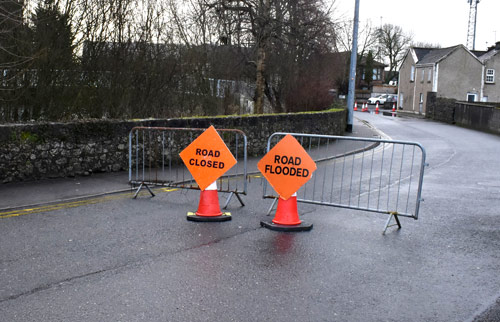
Flooding, when the river rises, the same arguments return.
This week, Tipperary County Council issued an operational update noting elevated levels on the Suir and overtopping in parts of the catchment area. Local press also reported flood scenes in South Tipperary, with the council saying water levels had risen and overtopping had occurred at several points.
Thurles residents are familiar with what follows: the river rises, pinch points show up fast, and the anger sharpens around a simple claim, basic river management and preventative maintenance are not being done consistently enough.
A Thurles.Info article (November 2025) illustrates the Emmet Street riverside walkway and describes it as unserviceable due to flooding, arguing that repeated warnings over a 13-year period have not been matched by the maintenance needed to prevent blockages and overflow.
To be clear, the precise causes of any single flooding incident, whether reeds, silt, debris, undersized drainage, or all of the above, require engineering assessment. But the political point is unavoidable, if people can’t see routine, transparent upkeep and enforcement, they assume it isn’t happening.
And here’s the paragraph Ireland can’t ignore: we have the money
What turns this from local frustration into national hypocrisy is the scale of spending Ireland is willing to contemplate elsewhere.
The Irish Government has backed the Water Supply Project for the Eastern and Midlands region, intended to bring a new long-term water source from the Shannon system towards the greater leaking Dublin area.
RTÉ reported the proposal would take about 2% of the average flow and was estimated to cost €4–€6 billion. The Department’s own press release gives a preliminary cost estimate of €4.58bn to €5.96bn (verified through an expert review process).
So yes: Ireland can mobilise billions for water infrastructure for Dublin when it chooses.
Which makes the Suir question harder to dodge: how can we plan to move vast volumes of water across Ireland while towns like Thurles are still fighting over basics; river health, monitoring, enforcement, and routine maintenance?
Switzerland vs Thurles: the difference is measurable accountability
Switzerland’s lesson isn’t “be rich” or “buy better technology”. It’s this, treat water quality as a deliverable.
If Thurles wants a Suir that supports biodiversity, recreation, tourism, and doesn’t become a recurring source of anger, then the county needs to stop treating the river like a PR problem and start treating it like infrastructure with a public scoreboard:
- Quarterly updates on the Thurles stretch (water quality trend points, incident reporting, actions taken).
- A clear, named lead for publishing progress locally, one place the public can check.
- Transparent milestones for the wastewater upgrades already acknowledged as necessary.
- A preventative maintenance programme that is visible, scheduled, and publicly reported, so people aren’t left guessing until the next flood.
Switzerland didn’t fix its rivers by talking. It fixed them by building a system that delivers, and proving it, year after year. Thurles deserves the same axtion and seriousness.







Quarterly updates and publicly available reports from the council? Council’s thinking is much better to have same behind a stony wall of silence.
I think pigs will fly before the council put themselves forward for scrutiny unfortunately.