- At the current level of progress, Ireland will fail to meet the EU and national goal of restoring all waters to good or better status by 2027.
- Excess nutrients from agriculture, urban wastewater and other human activities remains the biggest challenge, followed by changes to physical habitat conditions.
- Just over half (52%) of our surface waters are in satisfactory ecological condition, which is a deterioration from the previous assessment for 2016-2021, where 54% of surface waterbodies met their water quality objectives.
- There is evidence that nutrient levels are reducing in areas where actions are being targeted, which is very welcome. The scale and pace of implementation need to be increased.
The Environmental Protection Agency (EPA) has today published their flagship Water Quality in Ireland Report 2019-2024, which provides the latest, 3-yearly assessment of the quality of Ireland’s rivers, lakes, estuaries, coastal waters, canals and groundwaters. This assessment includes multiple water quality parameters that are monitored and assessed to give an integrated picture of the condition of our waters.
The report shows that, despite improvements in some areas, water quality in Ireland is not as good as it should be and is continuing to decline overall:

Pic: G. Willoughby.
- 52% of rivers, lakes, estuaries and coastal waters are in a satisfactory ecological condition, which means in good or high ecological status. This is a decline since the 2016-2021 assessment when 54% of surface waters were satisfactory.
- Transitional waters, including estuaries and coastal lagoons, are in the poorest condition of any waterbody type, with 70% in an unsatisfactory condition, up from 64% in the last assessment.
- 92% of groundwaters are in good status. Canals are also in relatively good condition with 87% achieving their water quality targets.
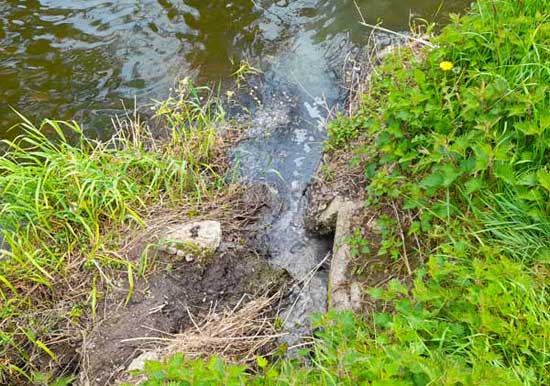
Pic: G. Willoughby.
Commenting on the report, Dr Eimear Cotter, Director of the EPA’s Office of Evidence and Assessment, said: “Our rivers, lakes and estuaries are the lifeblood of our landscape and support our ecosystems, and our health and wellbeing. But they are struggling. They do not have the resilience to cope with the challenges they face, now and in the future. Surface water quality overall has been in decline since before the first of these assessments was carried out by the EPA in the late 2000s.
It is very disappointing to report that water quality is not improving despite the many actions that are underway, across all sectors. It’s clear the scale and pace of implementation needs to be increased and sustained.”
The main pressures impacting on water quality are excess nutrients coming mainly from agriculture, urban wastewater discharges, and damage to the physical condition of water habitats from activities such as land and river drainage, forestry and urban development.
The report highlights that there have been improvements in phosphorus levels in our surface waters in areas prioritised for action where the right measures are implemented in the right places to target interventions. There were also reductions in nitrogen levels in many river monitoring sites in recent years, which is welcome. Further reductions will be needed to reach levels that will support healthy ecosystems.
Dr Jenny Deakin, EPA Programme Manager added: “The decreases in phosphorus levels in areas prioritised for action are very welcome. While further reductions will be needed as well as reduction in nitrate levels, this report shines a light on the progress that can be made when actions are targeted. It is essential that better information is collected by all stakeholders, on when and where the actions are being implemented on the ground, to provide better information on how the progress can be accelerated.”
Information about local water quality and the pressures impacting it is available at www.catchments.ie







Ban slurry spreading on lands beside rivers and lakes, only allow dung to be used. Eventually include land beside smaller streams as well. This would have a positive effect on nitrates getting into watercourses. Farmers will be unhappy but water quality must be the priority. Offer subsidies to farmers if they can show that the reduction of slurry usage is reducing their income.
Certainly would be a start Matt, but governments have given massive grant aid to farmers for the short term benifits of pit construction. Unlikely now they will introduce such restrictions. Anyway we are far more interested in foreign affairs, than looking after our own country and its needs. Soon we will be paying huge sums to EU for our transgressions.