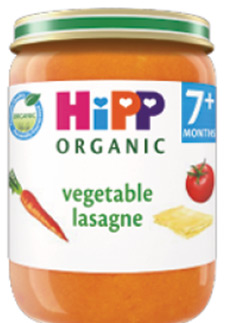
Incorrectly declared celery in a batch of Hipp Organic 7+ Months Vegetable Lasagne.
Alert Summary dated Monday, 27 April 2026.
Allergy Alert Notification: 2026.A13. Allergen: Celery. Product Identification: Hipp Organic 7+ Months Vegetable Lasagne; pack size: 190g. Batch Code: B49311; best before date: 31.1.2027. Country Of Origin: United Kingdom.
Message: Celery is not emphasised in the ingredients list of the above batch of Hipp Organic 7+ Months Vegetable Lasagne. This may make this batch unsafe for consumers who are allergic to or intolerant of celery and therefore, parents, guardians and caregivers are advised not to feed the implicated batch to young children.
First U.S. Inhalation Products Manufactured in Tipperary, Marks Major Milestone for Cashel Facility.
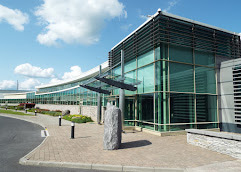
Cashel, Co. Tipperary / Bridgewater, New Jersey– Amneal Pharmaceuticals, located on Cahir Road in Cashel, Co. Tipperary, has officially launched two respiratory inhalation products in the United States, following approval by the U.S. Food and Drug Administration in 2025, confirming the accuracy of recent reports and underscoring a significant milestone for both the company and its Irish manufacturing base.
The newly launched products; Albuterol Sulfate Inhalation Aerosol and Beclomethasone Dipropionate HFA Inhalation Aerosol, represent Amneal’s first metered-dose inhalation (MDI) products introduced to the U.S. market, marking the company’s strategic entry into the complex inhalation therapeutics category.
Both medicines are widely prescribed respiratory treatments. Albuterol is used for the treatment and prevention of bronchospasm and exercise-induced bronchospasm in patients aged four years and older, while beclomethasone is a corticosteroid indicated for the maintenance treatment of asthma in patients aged five and above.
Strong Validation of Cashel Manufacturing Operations. The products are manufactured at Amneal’s dedicated inhalation facility in Cashel, Co. Tipperary; a site that employs approximately 150 people and plays a central role in the company’s global operations. The facility, acquired from Johnson & Johnson in 2015, is specifically designed for complex inhalation product development and production.
The transition to commercial U.S. sales represents a meaningful boost for the local economy, reinforcing the strategic importance of advanced pharmaceutical manufacturing in Ireland.
Addressing Patient Needs and Market Gaps. Both inhalers utilise a hand-breath actuator device, requiring the patient to depress the canister before inhaling; a format previously discontinued for QVAR®, creating a renewed option for patients and healthcare providers. According to Amneal, these products address gaps in patient access while increasing competition in a U.S. respiratory market, latter valued at approximately $1.8 billion annually (based on combined category sales data).
Leadership Commentary. Dr. Srinivas Kone, (Senior Vice President and Chief Scientific Officer – Affordable Medicines), stated: “The launch of these inhalation products marks a significant milestone and reflects our ability to develop and scale complex formulations that address meaningful gaps in patient access. With additional inhalation products in development, we are building a durable presence in this important category.”
Strategic Growth in Complex Medicines. Headquartered in Bridgewater, New Jersey, Amneal continues to expand its portfolio of complex generics and specialty medicines. The successful U.S. launch of these inhalers highlights the company’s growing capabilities in advanced drug delivery systems and positions it for continued growth in respiratory therapeutics.
Sadly, a 16-year-old boy from Co. Tipperary has died following a two-vehicle road traffic collision in Belfast, which also left two others injured, including a 10-year-old child in a critical condition.
The dead boy has been named locally as Callum Hutchinson, who is originally from Borrisokane in North Co. Tipperary.
The incident occurred on the Belfast Road at Nutts Corner yesterday, Sunday morning, 26th April, shortly before 8:00am. The collision involved a black Volkswagen Golf and a silver Volkswagen Passat.
A spokesperson for the Police Service of Northern Ireland (PSNI) confirmed that emergency services attended the scene, where the teenage passenger in the Passat was pronounced dead.
The driver of the Passat sustained minor injuries. Two additional passengers remain in hospital, including a 10-year-old child who is in critical condition.
The driver of the Volkswagen Golf has been arrested on suspicion of multiple motoring offences. The Belfast Road, which had been closed to facilitate investigations, has since reopened.
The Irish Tricolour: A story of unity and the current struggle to keep it that way.
On a spring morning in Dublin, as the flag rises slowly above the General Post Office, it looks simple; three vertical bands of green, white, and orange catching the light, waving in the breeze. People pause, some out of habit, others out of respect. For a moment, it feels like a shared symbol, something steady in an ever changing Ireland. But the Irish tricolour has never been just a flag. It has always been an idea, and like all ideas, it is constantly being argued over.
The signature of Thomas Francis Meagher present at the ‘Ballingarry Uprising of 1848’, in Tipperary, who gave us ‘The Irish Tricolour’. His signature is written on the inside cover of a book found in Richmond prison, Tasmania. The book is entitled “Wreath of Friendship” and dated 26th February 1849.
Its meaning was set down long before the modern state existed. When it emerged in the 19th century and later became central during the Easter Rising, it carried a message that was strikingly ambitious for its time. Green stood for the nationalist tradition. Orange stood for the Protestant, unionist tradition, associated with William of Orange. Between them, white promised something fragile but powerful: peace. It was, in essence, a proposal. Not for dominance or victory, but for coexistence.
When the Irish state was later formalised, the Constitution of Ireland gave the tricolour its official status. Yet the Constitution did not try to explain it. It didn’t need to. By then, the symbolism was already understood, or at least, it was supposed to be.
For much of the 20th century, the flag settled into everyday life. It flew over schools, appeared at sporting events, and marked national ceremonies. It became familiar, almost ordinary. But beneath that familiarity, its meaning never stopped evolving.
In Northern Ireland, the same flag carried a different weight. It was not neutral there. It marked identity, allegiance, and, at times, division. During the years of conflict, it could signal not just who you were, but where you stood. Even after the Good Friday Agreement, which recognised multiple identities on the island, the tricolour remained meaningful to some and contested by others. The promise of the white stripe; peace between traditions, was still a work in progress.
Back in the Republic, things seemed more settled, at least on the surface. The flag belonged to everyone. Or so it was said. But in recent years, something has shifted. The tricolour has begun to appear in new settings, at protests, in political movements, in moments of tension rather than unity. And with that, old questions have returned in new forms.
Taoiseach Mr Micheál Martin.
Who does the flag really represent? When our Taoiseach Mr Micheál Martin correctly speaks about people “dishonouring” the flag, he is not talking about how it is folded or whether it touches the ground. He is talking about something less visible, but far more significant. He is talking about “meaning“.
There are times now when the Irish flag is carried, not as an invitation, but as a statement. Not “this is ours together,” but “this is ours, not yours.” It appears alongside messages that draw lines, between insider and outsider, between those considered truly Irish and those who are not. In those moments, the flag begins to change. Not physically, but symbolically.
And this where the tension lies. Because the tricolour was never meant to settle arguments about identity by excluding people. It was meant to make room for difference. The green and the orange were not supposed to compete; they were supposed to coexist. The white was not just decoration; it was the point.
Yet symbols are powerful precisely because they are open. They can be claimed, reinterpreted, even reshaped. Across the world, flags go through the same struggle. They are waved in celebration and in anger, in unity and in division. Ireland is not unique in this. But its flag carries a particularly clear instruction from its origins; an instruction that makes its misuse, today, harder to ignore.
To use the tricolour well, does not require ceremony or perfection. It simply requires remembering what it stands for. It means recognising that it does not belong to one tradition, one belief, or one version of Irishness. It belongs, in theory and in practice, to everyone who calls Ireland their home.
That is an easy thing to say and a harder thing to live. As the flag continues to rise and fall over cities and towns, over quiet streets and crowded gatherings, its meaning is never entirely fixed. It is shaped, again and again, by the people who carry it.
And so the questions remains, not written in law, but woven into the very fabric itself: Will the tricolour be used as it was intended, as a bridge between differences? Or will it become, slowly and subtly, a line that sadly divides?
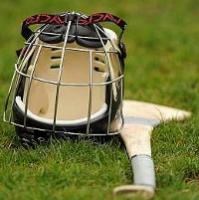
Waterford staged one of the most remarkable turnarounds in recent Munster championship history yesterday, (April 26th 2026), to snatch a dramatic draw with Tipperary at Walsh Park grounds, (Páirc an Bhreathnaigh), Keane’s Rd, Lisduggan, Waterford, finishing level on 3-24(33 pts) to 1-30(33 pts) after a breathtaking contest.
First-half dominance from Tipperary. Tipperary looked every inch the All-Ireland champions during a commanding opening period. After an early score from Waterford, the visitors seized control and dictated the tempo with sharp, clinical attacking play. Their forwards cut through the home defence repeatedly, with Andrew Ormond’s goal and a stream of points helping them surge into a massive lead. By the interval, Tipp were 1-18(21 pts) to 1-7 (10 pts) ahead; an 11-point cushion that fully reflected their superiority and Waterford’s lack of efficiency in front of goal. Waterford, despite moments from key attackers, struggled to cope with Tipp’s movement and intensity, while a string of missed chances compounded their problems.
Déise resurgence after the break. The second half saw a completely transformed Waterford side. Playing with far greater urgency and belief, they began to chip away at the deficit through improved work-rate and sharper finishing. A crucial turning point came when goalkeeper Billy Nolan denied a Tipperary penalty, keeping Waterford within reach. From there, momentum swung dramatically. Stephen Bennett led the charge with a superb scoring display, while teammates across the field stepped up as the gap steadily narrowed. It was when Bennett struck for a brilliant goal midway through the half, the comeback became truly ignited.
Waterford’s intensity overwhelmed Tipp for long stretches, and they eventually wiped out the deficit before pushing ahead; an extraordinary reversal from their half-time position.
Late drama at Walsh Park. Just when it seemed Waterford had completed an unlikely victory, Tipperary rallied. A series of late scores edged them back in front during stoppage time, appearing to secure a hard-earned win. However, the drama was far from over. With the final play of the game, Waterford launched one last attack. The ball was worked into position, and Kevin Mahony produced a decisive finish to the net, rescuing a draw in stunning fashion and sparking wild celebrations among the home crowd.
A Munster classic. This pulsating encounter had everything; momentum swings, individual brilliance, missed chances, and a sensational finale. Tipperary’s dominance for long spells contrasted sharply with Waterford’s resilience and refusal to give in. In the end, both sides had to settle for a share of the spoils, but the match will be remembered as a classic; a game that perfectly captured the drama, intensity, and unpredictability of Munster championship hurling.
This website uses cookies to improve your experience. We'll assume you're ok with this, but you can opt-out if you wish.AcceptRead More
Privacy & Cookies Policy
Privacy Overview
This website uses cookies to improve your experience while you navigate through the website. Out of these, the cookies that are categorized as necessary are stored on your browser as they are essential for the working of basic functionalities of the website. We also use third-party cookies that help us analyze and understand how you use this website. These cookies will be stored in your browser only with your consent. You also have the option to opt-out of these cookies. But opting out of some of these cookies may affect your browsing experience.
Necessary cookies are absolutely essential for the website to function properly. This category only includes cookies that ensures basic functionalities and security features of the website. These cookies do not store any personal information.
Any cookies that may not be particularly necessary for the website to function and is used specifically to collect user personal data via analytics, ads, other embedded contents are termed as non-necessary cookies. It is mandatory to procure user consent prior to running these cookies on your website.








Recent Comments