“A society grows great when old men plant trees in whose shade they shall never sit” Above quote by the late American theologian and Quaker Elton Trueblood, (1900 – 1994). [From his 1951 book “The Life We Prize”].
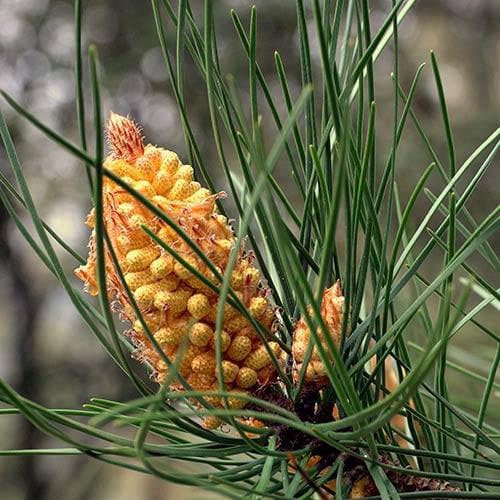
Scots Pine(Pinus sylvestris).
“Planting for the Planet,”
Primary schools across County Tipperary are being encouraged to get outdoors and get planting as National Tree Day returns on Thursday, October 1st 2026.
Organised by the Tree Council of Ireland and supported by Glennon Brothers, the initiative is making 2,000 free Scots Pine saplings available to primary schools nationwide, giving pupils throughout the Premier County an opportunity to take part.
This year’s theme, “Planting for the Planet,” highlights the contribution trees make to our environment. From storing carbon and protecting soil to providing food and shelter for wildlife, trees play an essential role in the world around us.
Schools can mark the occasion with tree planting, nature walks, tree identification and classroom activities. It is a chance for children to explore their surroundings, discover local wildlife and learn why caring for trees matters.
The Scots Pine (Pinus sylvestris) offers plenty for young nature enthusiasts to discover. An evergreen with distinctive needles and cones, it provides seeds for red squirrels and shelter for birds and insects. Planting a sapling can also create an ongoing learning opportunity as pupils watch their tree develop through the seasons.
Teachers and school leaders can request a free sapling through the online form HERE. Trees are available on a first-come, first-served basis, and the organisers advise that a similar variety may be substituted if demand requires it.
Get your school involved and help a new generation in Tipperary discover the value of planting, protecting and caring for trees.
Yesterday, September 20th 2026, marked fifty years since three men sadly lost their lives in a plane crash in the Galtee Mountains. A gathering at the aircraft monument on the Black Road remembered Jimmy Byrne, Tom Gannon and Dick O’Reilly, whose names remain closely connected with this place.
On Monday, September 20th 1976, the three men were returning to Abbeyshrule, County Longford, after visiting an airstrip at Kilbrittain in County Cork. All were founding members of Abbeyshrule Aero Club and shared a love of flying. Mr Tom Gannon, a solicitor aged 40, was piloting the aircraft. With him were Mr Jimmy Byrne, a farmer aged 56, and Mr Dick O’Reilly, a garage proprietor aged 63. Their journey ended tragically on the southern slopes of the Galtees, above Glengarra Wood, Cullenagh, County Tipperary.
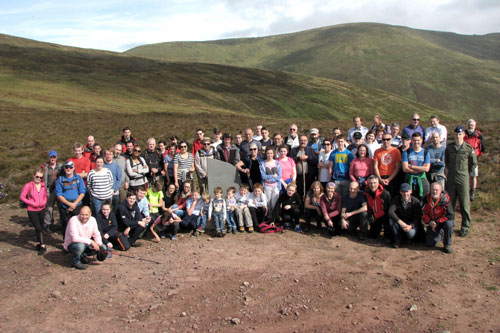
A group photo of family and friends of the three men, as well as local people and members of SEMRA at the 40th anniversary of the accident back in 2016. (Pic: Courtesy of Mr Jimmy Barry).
The aircraft was described as a single-engine, French-built Morane which crashed in thick cloud. Mr Jimmy Byrne had converted part of his farmland into an airfield, reflecting the practical commitment behind the men’s enthusiasm for aviation.
When the aircraft failed to reach its destination, an Air Corps helicopter searched the intended route and located the wreckage. There was no dedicated mountain rescue service in Co. Tipperary at the time, and the knowledge of local hill walkers proved vital in recovery.
The men’s bodies were recovered the following morning in an operation involving Gardaí, the Defence Forces, Civil Defence, relatives, members of Tipperary Adventure Sports Club and local volunteers. The tragedy helped prompt the development of formal mountain rescue structures in the South East in 1977, a lasting legacy associated with the South Eastern Mountain Rescue Association, SEMRA.
In 2006, on the thirtieth anniversary, a memorial made from Longford stone was erected beside the Black Road near Skeheenarinky, a townland in south-west Co. Tipperary. Shaped like an aircraft’s tail, it was unveiled by sons of the three men. Its presence has helped maintain a connection between their families, the Abbeyshrule community and those who came to their aid in the Galtees.
Fifty years later, the monument remains a place to pause and remember three lives, the families who mourned them, and the people who answered the call for help.
Remembering Jimmy Byrne, Tom Gannon and Dick O’Reilly. May they rest in peace.
Pre-deceased by his parents Basil and Rosameund Patricia Crofts Greene; Mr Crofts Greene passed away peacefully while in the care of staff at Fennor Care Facility, Urlingford, Co. Kilkenny.
His passing is most deeply regretted, sadly missed and lovingly remembered by the sorrowing immediate Crofts Greene family, cousins, kind neighbours and a close circle of very good friends.
The extended Crofts Greene family wish to express their appreciation for your understanding at this difficult time, and have made arrangements for those persons wishing to send messages of condolence, to use the link shown HERE.
Pre-deceased by his parents Richard and Winifred and his brother Dick (Richard); Mr Larkin passed away peacefully while in the care of staff in Unit B at the Community Hospital Assumption, Thurles.
His passing is most deeply regretted, sadly missed and lovingly remembered by his sorrowing family; loving cousins Paddy Purcell, Pakie Purcell, Sheila (Barry), Maudie (Ryan), Ann and Pat (Stynes) and the extended Purcell family, extended relatives, neighbours, staff at the Community Hospital of the Assumption and many friends.
The extended Larkin families wish to express their appreciation for your understanding at this difficult time, and have made arrangements for those persons wishing to send messages of condolence, to use the link shown HERE.
Ireland’s free hot school meals programme is set for changes aimed at improving nutrition, offering more suitable portions and reducing the amount of food left uneaten.
Minister for Social Protection Mr Dara Calleary outlined the proposed reforms after Cabinet discussed two Government-commissioned reviews of the scheme. A cold lunch option, a standardised three-week menu and better provision for children with additional dietary needs are among the measures being considered. Discussions with schools and suppliers will now take place, with changes intended for the 2027/28 cycle.
Attention Turns From Expansion to Food Quality Following its nationwide extension in September 2025, the programme covers approximately 3,200 primary schools and more than 550,000 school children. Mr Calleary defended the scheme’s rapid growth and said it continues to provide valuable support to families. However, he acknowledged that improving the food itself must now become a central priority. The programme is estimated to save a household with two primary school children about €1,152 annually. An Taoiseach Mr Micheál Martin also recognised the scheme’s benefits while accepting that its quality and waste levels need attention.
Uneaten Meals Raise Difficult Questions The reviews indicate that roughly one in five meals supplied; approximately 100,000 a day, goes uneaten when pupil absences are taken into account, the proportion falls to 11.1%. Mr Calleary said his department takes food waste seriously, while noting that children being absent explains part of the problem. There are also questions about how waste is measured. Food Policy Ireland chief executive Ms Ruth Hegarty cited an estimated 6.3 million kilogrammes of food wasted over a school year, but questioned the basis for the reported uneaten-meal percentage because direct food waste audits had not been conducted in schools. The parent survey suggests that unfinished lunches predate the programme; almost half of respondents said their children previously brought food home uneaten.
Smaller Portions for Younger Pupils, More for Older Children A nutritional assessment examined 360 meals from 15 suppliers and included visits to 54 schools. It identified a problem with serving the same portion size across different age groups. Meals that may be sufficient for younger pupils can provide too few calories for older children. The review also found that children tended to select foods higher in fat, salt and sugar when those choices appeared alongside healthier alternatives. Proposed changes would introduce portions suited to different ages and a standardised menu rotating over three weeks. Menus would also be adapted for special schools, special classes and children with specific dietary requirements.
Parents Want Greater Lunch Flexibility A possible cold lunch option emerged as a strong theme in the feedback, with 84% of parents supporting its availability. The review recommends allowing children to choose a hot or cold meal on a given day, suggesting that greater flexibility could help reduce waste. The Ipsos/Behaviour & Attitudes research gathered responses from 86,637 parents and guardians, 6,884 children, 2,420 teachers and principals, and 47 suppliers, with 747 schools participating. Three-quarters of children said they ate at least some of their meal, while 63% of teachers and principals considered the programme’s overall impact positive. Meal ordering was strongest among younger children. Participation averaged 97% from Junior Infants to First Class, compared with 81% in Fifth and Sixth Class. The overall average was 85%.
The Government remains committed to extending the programme to secondary schools during its term. Mr Calleary has yet to announce a timetable for that expansion.
This website uses cookies to improve your experience. We'll assume you're ok with this, but you can opt-out if you wish.AcceptRead More
Privacy & Cookies Policy
Privacy Overview
This website uses cookies to improve your experience while you navigate through the website. Out of these, the cookies that are categorized as necessary are stored on your browser as they are essential for the working of basic functionalities of the website. We also use third-party cookies that help us analyze and understand how you use this website. These cookies will be stored in your browser only with your consent. You also have the option to opt-out of these cookies. But opting out of some of these cookies may affect your browsing experience.
Necessary cookies are absolutely essential for the website to function properly. This category only includes cookies that ensures basic functionalities and security features of the website. These cookies do not store any personal information.
Any cookies that may not be particularly necessary for the website to function and is used specifically to collect user personal data via analytics, ads, other embedded contents are termed as non-necessary cookies. It is mandatory to procure user consent prior to running these cookies on your website.





Recent Comments