Recall of several ready-to-eat Marks and Spencer products due to the possible presence of Salmonella in pistachios.
Alert Summary dated Thursday, 8th October 2026.
Category 1: For Action. Alert Notification: 2026.62. Product Identification: Please see table below. Batch Code – Product name: Use-by date and Pack size: (1) M&S Super Nutty Wholefood with a Soy & Ginger Dressing All dates up to and including 10/10/2026 200g). (2) M&S Food Nutrient Dense Nutty Super Wholefood Salad All dates up to and including 11/10/2026 285g. (3) M&S Fresh Collection Pistachio and Parmigiano Reggiano Cheese Pesto All dates up to and including 13/10/2026 115g. Country Of Origin: United Kingdom.
Message: Greencore is recalling Marks and Spencer ready-to-eat products due to the possible presence of Salmonella in pistachios. Recall notices will be displayed at point-of-sale.
Nature Of Danger: People infected with Salmonella typically develop symptoms between 12 and 36 hours after infection, but this can range between 6 and 72 hours. The most common symptom is diarrhoea, which can sometimes be bloody. Other symptoms may include fever, headache and abdominal cramps. The illness usually lasts 4 to 7 days. Diarrhoea can occasionally be severe enough to require hospital admission. The elderly, infants, and those with impaired immune systems are more likely to have a severe illness.
Action Required: Manufacturers, Wholesalers, Distributors, Caterers and Retailers: Retailers: Same are requested to remove the implicated batches from sale and display recall notices at point-of-sale. Consumers: Consumers are advised not to eat the implicated batches.
New national guidelines and templates have been launched to ensure children’s voices are heard, respected and appropriately represented in private family law proceedings across Ireland.
Minister for Justice, Home Affairs and Migration, Mr Jim O’Callaghan, announced the introduction of the “Voice of the Child Report Guidelines and Templates”, marking an important step towards a more child-centred family justice system. Developed by the Voice of the Child Working Group, established in October 2024 under the Family Justice Strategy, the guidelines provide the first comprehensive national framework for preparing Voice of the Child Reports in private family law cases. The initiative aims to improve the experience of children involved in family law proceedings, strengthen confidence in the reporting process and establish consistent professional standards nationwide.
A central focus of the guidelines is ensuring children can express their views in a safe, supportive and age-appropriate environment. Based on the internationally recognised Lundy Model of participation, the framework acknowledges that children have a fundamental right to be heard while equally respecting their right to choose not to express an opinion. Children and young people were directly consulted during the development process, with their experiences and feedback helping to shape the final guidelines and templates.
The launch also forms part of wider reforms to Ireland’s family justice system. A new Children’s Court Advocate Pilot Project is due to be established in Waterford and Clonmel, testing an additional approach to supporting children’s participation in private family law proceedings. The Government has allocated €2.503 million in funding for 2027 to support the pilot initiative.
The new guidelines represent a significant development in promoting children’s rights, improving professional practice and ensuring that decisions affecting children are informed by their experiences, wishes and perspectives.
In her 102nd year and pre-deceased by her husband Richard (Dick) and their infant son Joseph; Mrs Brennan passed away peacefully, while in the care of staff at Bramleigh Lodge Nursing Home, Ballynastick, Co. Tipperary.
Her passing is most deeply regretted, sadly missed and lovingly remembered by her sorrowing family; loving sons and daughters Richard, Maureen (O’Mahony), Breda (Murphy), John, Leisha (Fahey), Joe, Paddy, Sadie (Tobin), Patricia (Moynihan), Jo, Annie and Bill, her 39 grandchildren, 45 great-grandchildren, sons-in-law, daughters-in-law, nieces, nephews, sisters-in-law, extended relatives, neighbours and friends.
For those persons who would wish to attend Requiem Mass for Mrs Brennan, but for reasons cannot, same can be viewed streamed live online, HERE.
The extended Brennan and Quinlan families wish to express their appreciation for your understanding at this difficult time, and have made arrangements for those persons wishing to send messages of condolence, to use the link shown HERE.
Government increases justice funding by €400 million, with major investment in Garda recruitment, prison expansion, legal aid, youth justice and domestic violence services.
The Minister for Justice, Home Affairs and Migration, Mr Jim O’Callaghan, has announced a €5.9 billion allocation for Ireland’s justice sector under Budget 2027, representing an increase of more than €400 million compared with 2026. The investment aims to strengthen frontline policing, improve public safety, expand prison capacity, enhance access to justice and support reforms within Ireland’s immigration system. Current expenditure will increase by €363 million to €5.46 billion, while capital expenditure will rise by €40 million to €430 million.
€2.76 Billion for Gardaí and Crime Prevention An Garda Síochána will receive €2.758 billion, an increase of €167 million, or 6.4%, to strengthen policing across the country. The additional funding will support the recruitment of up to 1,000 new Gardaí in 2027, alongside the continued rollout of body-worn cameras, enhanced training, cybersecurity and intelligence capabilities. The Criminal Assets Bureau will also receive an additional €1.9 million, bringing its total allocation to €15.7 million.
€686 Million to Expand Prison Capacity The Irish Prison Service will receive €686 million, an increase of €106 million, or 18%, compared with 2026. The prison capital budget will rise by approximately 40% to €95 million, supporting the Government’s commitment to delivering 1,500 additional prison spaces by 2031. Major projects include expansions at Midlands Prison, Castlerea, Cloverhill and Dóchas. The funding will also support the recruitment of more than 200 prison officers, improvements in training and digital infrastructure, and the introduction of electronic monitoring for certain prisoners. Investment in prisoner care and rehabilitation will increase by 22% to €66 million.
Major Investment in Legal Aid and Domestic Violence Services Budget 2027 includes an additional €14.5 million to begin reforming the Civil Legal Aid Scheme, making legal assistance accessible to more people through expanded financial eligibility. The Legal Aid Board will receive €74.6 million, while funding for Free Legal Advice Centres will increase by 67%. Overall, more than €90 million has been secured for civil legal aid and access-to-justice initiatives, described as a historic investment. Funding to combat domestic, sexual and gender-based violence will also increase by €5.3 million to €84.4 million. The allocation will support Cuan and frontline organisations providing refuge accommodation, protection and assistance to victims and survivors. The Courts Service will receive €228 million to support the administration of justice.
Migration Reforms to Deliver €682 Million in Savings The Government expects to save €682 million in migration-related accommodation expenditure during 2027, representing a 38% reduction in the overall migration budget. This includes €430 million in reduced accommodation costs for people from Ukraine receiving temporary protection and €252 million in savings within the International Protection Accommodation System. The reductions are linked to accommodation reforms, improved financial oversight and implementation of the EU Migration and Asylum Pact. Additional staffing resources will support faster processing of immigration, visa and international protection applications. Funding for immigration enforcement measures will also increase by €2 million, or 27%.
Increased Support for Youth Justice and Rehabilitation Youth justice initiatives will receive an additional €11.5 million, bringing total funding to almost €50 million. The investment will strengthen Youth Diversion Programmes, helping young people avoid criminal activity through early intervention and community-based support.
Other allocations include an additional €2.9 million for the Probation Service, €3.6 million for the Data Protection Commission and €3.2 million in current funding for Forensic Science Ireland.
Government Prioritises Safer Communities The Government is committed to reducing crime, strengthening public safety, improving access to justice and confronting domestic, sexual and gender-based violence. Mr Jim O’Callaghan highlighted Garda recruitment, prison expansion, modernised policing and immigration reform as central priorities.
The €5.9 billion investment represents a significant commitment to Ireland’s justice system, with its success depending on effective implementation, frontline recruitment and the timely delivery of planned reforms and infrastructure projects.
How many men and women in Tipperary were spotted, on Tuesday last, wearing an ivy leaf in their lapel?
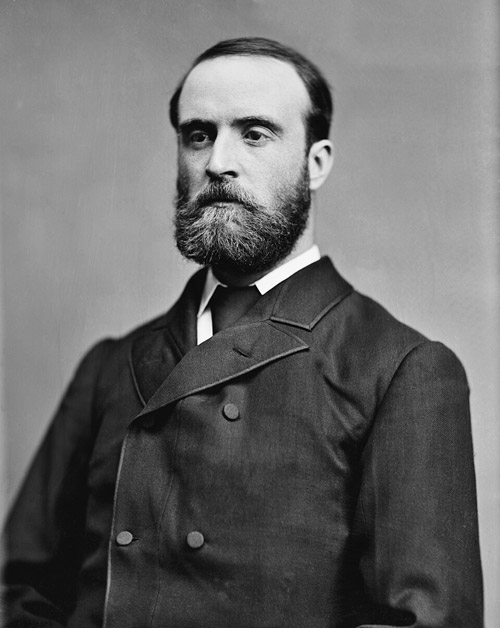
October 6th this year was Budget Day, yet amid the political grandstanding, as opposition politicians appeared more concerned with having their snouts in the trough and criticising a democratically elected government, few, if any, spared a thought for the anniversary of the death of one of Ireland’s greatest patriots, Charles Stewart Parnell.
It was on October 6th, 1891, exactly 135 years ago, that Parnell passed away. His extraordinary contribution to Ireland’s struggle for self-government helped lay the foundations for the independent, prosperous nation we enjoy today; a country that now ranks among the wealthiest in the world.
Surely, on such a significant anniversary, this remarkable Irishman deserved more than to be forgotten amid the political point-scoring of Budget Day.
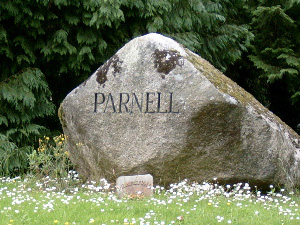
On October 6th 1891, Charles Stewart Parnell an Irish nationalist politician, died in Brighton, England, aged only 45. Ireland had lost the man remembered for generations as its “Uncrowned King.” Though an Anglican, his funeral on October 11th was at the Irish National non-denominational Glasnevin Cemetery in Dublin, and was attended by more than 200,000 people. His notability was such that his gravestone of unhewn Wicklow granite, erected in 1940, reads only “Parnell”.
Born at Avondale, Co. Wicklow, in 1846, Parnell came from a Protestant landowning family, yet became one of the most powerful leaders of Irish nationalism in the nineteenth century. He transformed the Irish Parliamentary Party into a disciplined political force at Westminster, supported the campaign for tenant farmers during the Land War and brought the demand for Home Rule to the very centre of British politics. His political career ended in tragedy. Following the public revelation of his long relationship with Mrs Katharine O’Shea during divorce proceedings in 1890, the Irish Parliamentary Party split bitterly. Parnell refused to surrender his leadership and continued campaigning throughout Ireland and Britain, while his health rapidly deteriorated.
But Thurles has its own important place in the Parnell story. In January 1885, Parnell travelled personally to Thurles during a dispute over the selection of a parliamentary candidate for Tipperary. Contemporary accounts record that he attended a Home Rule convention in the town and successfully pressed local supporters to accept his preferred candidate, Mr John O’Connor ♦. It was an extraordinary demonstration of the authority Parnell then exercised over the Irish nationalist movement.
♦ In January 1885, Parnell travelled personally to Thurles town to resolve a dispute over the selection of a parliamentary candidate for Tipperary. His preferred candidate was Mr John O’Connor, a Cork-born Fenian, prominent Land League activist and devoted supporter of the Home Rule movement. Local nationalists, however, favoured their own candidate, Mr John O’Ryan, (who previously had been imprisoned as a political suspect, demonstrating that he too had made sacrifices for the nationalist cause). Such was Parnell’s extraordinary authority that his intervention secured O’Ryan’s withdrawal and O’Connor’s unanimous selection. O’Connor subsequently entered Parliament unopposed and remained steadfastly loyal to Parnell, even during the bitter party split of 1890. This historic visit to Thurles stands as a powerful reminder of Parnell’s commanding influence and his determination to unite Irish nationalism in pursuit of self-government.
His name remains part of the everyday geography of Thurles. Parnell Street (Formerly New Street), still runs through the town today, its name appearing in current Tipperary County Council records. It is perhaps easy to pass along that street without stopping to consider the man whose name it carries or why an earlier generation considered his memory important enough to preserve in the streetscape of Thurles.
The Grave of Charles Stewart Parnell, Glasnevin Cemetery, Dublin.
In the Ireland of our great-grandparents, wearing a sprig of ivy, on October 6th, carried a meaning immediately understood by others. It represented remembrance, loyalty and continuing devotion to Parnell and to the political hopes associated with him. James Joyce later preserved that fading world in his famous short story Ivy Day in the Committee Room.
The tradition survives, but seemingly not in Thurles Co. Tipperary and numerous other places in our green land. However, remarkably, Ivy Day has not disappeared altogether. Only this week, marking the 135th anniversary of Parnell’s death, the Parnell Society held its annual commemoration. On Saturday, October 3rd 2026, historians and supporters gathered at Parnell’s ancestral home at Avondale, County Wicklow, for an Ivy Day symposium, examining his political legacy, his involvement in industry, landlord and tenant relations and the Irish Parliamentary Party. The following day, Sunday, October 4th, people again gathered around Parnell’s grave at Glasnevin Cemetery. A wreath was laid and Ms Claire Hanna MP, leader of the SDLP, delivered the annual Ivy Day oration. The ceremony continues a commemorative tradition which began on the first anniversary of Parnell’s death and is now held on the Sunday nearest October 6th each year. What is striking from a Thurles perspective, however, is how completely the old custom appears to have slipped from local public memory.
The Ivy Leaf and the “Dead Chief”. When Parnell was buried at Glasnevin Cemetery in October 1891, his funeral drew an enormous crowd. In the years that followed, October 6th became known as “Ivy Day”. The ivy leaf became the emblem of remembrance for Parnell. Accounts of the tradition tell how mourners took ivy from the walls of Glasnevin cemetery and wore it in their lapels, while another possible origin lies in an ivy wreath placed beside his remains. What is certain is that within a year of his death the ivy leaf had become firmly associated with those who remained loyal to his memory.
Despite Parnell’s documented visit to Thurles, despite a prominent street in the town still bearing his name, and despite the national Ivy Day tradition continuing in 2026, I can find no publicly advertised Ivy Day commemoration in Thurles this year and no obvious continuation locally of the old custom of wearing the ivy leaf on October 6th. That does not prove that no individual in Thurles remembered Parnell privately. But as a visible civic tradition, the wearing of the ivy appears to have disappeared from the town. Perhaps that is worth reflecting upon. There must once have been men and women walking the streets of Thurles on an October morning with a little piece of green ivy pinned to a coat or jacket. To their neighbours, no explanation would have been necessary.
The leaf says simply, Parnell is remembered. Today thousands of us travel along Parnell Street, Thurles, yet comparatively few may know why the street bears that name, that Parnell himself once came to the town, or that for generations October 6th was a special day of remembrance throughout Ireland. Parnell was neither a saint nor a man without controversy. His political career ended amid one of the bitterest divisions Ireland had known. But his historical importance remains beyond dispute. He helped give Irish nationalism political discipline and parliamentary power. He stood at the centre of the struggle that transformed the position of Ireland’s tenant farmers. And he brought the possibility of Irish self-government closer than it had been for generations. When he died, his followers chose a remarkably humble memorial. Not a flag. Not a medal. Not an elaborate badge. Just a small leaf of ivy, evergreen, clinging firmly through winter, and difficult to uproot. One hundred and thirty-five years later, a few people still gather at Glasnevin to remember the “Dead Chief”. Perhaps Thurles, a town which still carries his name on one of its streets and which once witnessed Parnell himself exercising his formidable political authority, might consider remembering ‘Ivy Day’ next year.
Perhaps next Sunday October 11th, the anniversary of Charles Stewart Parnell’s burial in 1891, we might all, including the landowning families of Ireland, pause to remember his extraordinary contribution to our nation. Let each of us pluck a sprig of ivy from the hedgerow and wear it proudly in our lapel or buttonhole, reviving a tradition of remembrance as a simple yet meaningful gesture of gratitude and respect for a man to whom Ireland owes so much.
A small sprig of ivy on October 11th would cost almost nothing. But it might remind another generation why Parnell Street is called Parnell Street and of the remarkable, complicated man who helped change the course of Irish history.
This website uses cookies to improve your experience. We'll assume you're ok with this, but you can opt-out if you wish.AcceptRead More
Privacy & Cookies Policy
Privacy Overview
This website uses cookies to improve your experience while you navigate through the website. Out of these, the cookies that are categorized as necessary are stored on your browser as they are essential for the working of basic functionalities of the website. We also use third-party cookies that help us analyze and understand how you use this website. These cookies will be stored in your browser only with your consent. You also have the option to opt-out of these cookies. But opting out of some of these cookies may affect your browsing experience.
Necessary cookies are absolutely essential for the website to function properly. This category only includes cookies that ensures basic functionalities and security features of the website. These cookies do not store any personal information.
Any cookies that may not be particularly necessary for the website to function and is used specifically to collect user personal data via analytics, ads, other embedded contents are termed as non-necessary cookies. It is mandatory to procure user consent prior to running these cookies on your website.




Recent Comments