ALDI Ireland has confirmed it is reducing retail prices across its private label butter range, with immediate effect, with the new prices now available nationwide, including at the ALDI store on Kickham Street, Thurles (Eircode E41 YP28).
This move follows a series of recent price reductions by the retailer on key household staples across its range, including milk, bread, fresh fruit and vegetables, lunchbox essentials and meat.
New Kilkeely butter prices (effective immediately): Kilkeely Pure Irish Creamery Butter 454g – €3.39 (down from €3.99). Kilkeely Pure Irish Creamery Butter 227g – €2.09 (down from €2.39). Kilkeely Unsalted Irish Butter 227g – €2.09 (down from €2.39).
ALDI have confirmed it will continue to review the market daily, to ensure it remains the best value retailer on price, noting it has cut prices on hundreds of products over recent months.
Mr Niall O’Connor, (Country Managing Director of ALDI Ireland), said the retailer was focused on helping shoppers after a costly Christmas period and reiterated ALDI’s commitment to value across its range.
This price reduction on butter is the latest in a wider programme of cuts by the discounter on everyday essentials in recent months.
* PAN Europe reports Trifluoroacetic acid (TFA) was detected in 81.8% of 66 cereal-based food samples across 16 European countries, with a peak reported value of 360 μg/kg in Irish-purchased breakfast cereals. * No brand names are provided in the publicly available PAN Europe press materials with products described by category and country of purchase.
Trifluoroacetic acid(TFA-chemical formula CF3CO2H), a highly persistent “forever chemical” linked to the PFAS family, has been detected in a wide range of cereal-based foods purchased across Europe, according to findings published this month by Pesticide Action Network (PAN) Europe. Read Full Report.
These findings provide compelling evidence that TFA has become deeply embedded in the European diet, demanding urgent regulatory action, with PAN Europe calling for an immediate ban on PFAS pesticides, alongside a protective acceptable daily intake (ADI) that accounts for current toxicological uncertainties and vulnerable populations such as children, according to the precautionary principle. This should be complemented by EU-wide monitoring of TFA in food and the environment, as well as support for farmers to transition towards safer, non-synthetic crop protection methods.
PAN Europe said its investigation analysed 66 conventional cereal products bought in 16 European countries, including breakfast cereals, breads, pasta and flour. It reported TFA was detected in 81.8%(54/66) of samples, with an average concentration of 78.9 μg/kg and peak values up to 360 μg/kg.
Among the highest results cited by PAN Europe was 360 μg/kg in breakfast cereals purchased in Ireland, with other high readings reported in products such as Belgian wholemeal bread and French bakery items. Important clarification: no product or supermarket brands are named.
While the findings have prompted significant public concern, sadly the published PAN Europe materials coverage fails to identify any specific product names or supermarket brands; only to some wheat-based breakfast cereals bought in Irish supermarkets noting that TFA was not detected in a popular brand of Irish porridge oats, without naming any brand. PAN Europe’s press release similarly lists results by food type and country of purchase [for example, “breakfast cereals (purchased in Ireland)”] rather than naming retail products.
Regulatory debate and calls for monitoring. PAN Europe argues the findings highlight the need for routine monitoring of TFA in food and water, the setting of a more protective safety limit, and a move to end sources of contamination including PFAS-related pesticides.
CropLife Europe, representing the pesticide industry, has responded that available assessments indicate no toxicological concern “under realistic conditions of exposure”, and is calling for a risk-based approach while EU assessment processes continue.
Unlike tobacco, whose harms are long-established, TFA is still moving through the EU classification system, a hazard-based step that does not, by itself, determine consumer risk, which depends on exposure.
Lyrics: American songwriter, author and guitarist Mark Elliott and late American country music songwriter Tim Johnson(1960–2012). Vocals: American country and bluegrass duo, husband-and-wife singer/songwriters Joey and Rory Feek.
Joey & Rory Feek.
This point of the song, sung hereunder, is simple: enjoy the presents, the lights and traditions, but don’t forget what Christmas is about celebrating Jesus Christ, latter born in humility in Bethlehem; laid in a manger; first welcomed by ordinary shepherds and later sought out by the Magi. “Remember me” is a reminder that the child of Christmas calls us to live with mercy and generosity, especially toward those with the least, not just to have a nicer-looking holiday.
Remember Me.
Remember Me
When you’re opening those presents, Underneath the Christmas tree, Remember me, When you’re setting out those cookies For Santa Claus to eat, Remember me. I was born in a manger, On a cold December night, With shepherds and three wise men, Underneath the stars so bright, The son of a lowly carpenter, From down in Galilee, Remember me. When you’re hangin’ up those Christmas lights, For the neighborhood to see, Remember me. When you’re gathered ’round the table, With all your family, Remember me. Cause I walked from town to town without, A place to lay my head, I even fed 5,000 with just a loaf of bread, And I helped the lame to walk again, I made the blind men see, Remember me. Remember me. I was only in my thirties, When they led me up that hill, With tears in my eyes I cried, But did my Father’s will, And there upon a cross of wood, I died to set you free, Remember me. When you’re opening those presents, Underneath your Christmas tree, Remember me.
Why An Electric Soup Maker Might Be The Smartest Buy This Black Friday.
The Kitchen Essential You’ll Want Before Black Friday: Why an Electric Soup Maker Is Worth Its Weight in Gold.
As the darker evenings draw in and the chill of winter settles over Tipperary, few things rival the comfort of a steaming bowl of homemade soup. It’s nourishing, cost-effective, and one of the simplest ways to ensure your five-a-day. Yet many households still rely on pre-prepared supermarket soups, often costing around €2.40 for just two portions, a habit that quickly adds up.
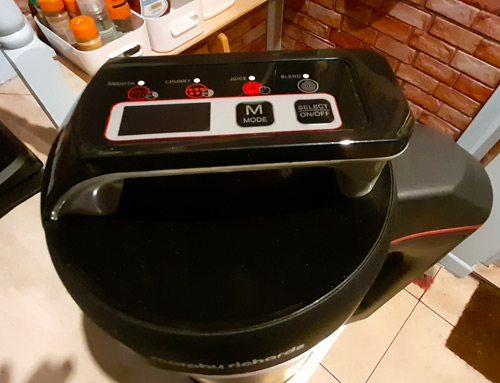
That’s where a good soup maker proves its worth[View Here]. Compact, efficient, and easy to use, a 1,600 ml model will quickly pay for itself, while helping households cut food waste and embrace healthier eating. With the right ingredients on hand, you can prepare delicious, nutritious soups in under half an hour; ideal for busy families or anyone looking for warmth and real sustenance during the winter months. With its fully sealed design, you’ll have it sparkling clean in seconds; just run it under tap water then dry and it’s ready to go!
Black Friday Bargains on the Horizon If you’ve been thinking about upgrading your kitchen gear, there’s good news. Black Friday, one of the biggest retail events of the year, takes place this year on Friday, November 28th, followed by Cyber Monday on December 1st.
While it’s not a public holiday in Ireland, the shopping event has grown enormously in recent years, with retailers offering discounts both in-store and online; often across the entire weekend. From electronics to homeware and kitchen gadgets, there’s no better time to pick up a few practical bargains that will see you through the winter season.
A soup maker, in particular, is one investment that will pay dividends long after the Black Friday sales are over. Not only does it make healthy eating easy, but it also delivers that simple satisfaction of homemade food, rich in flavour and free from those unnecessary perservatives/additives.
A Simple, Delicious Winter Soup: To show just how easy it can be, here’s a tried-and-tested recipe that serves six generous portions at a total cost of about €2.00, proof that real healthy eating for a family doesn’t have to be expensive.
Ingredients: 3 sticks celery. 4 carrots. 1 small parsnip. 1 medium onion. 1 medium potato. 3 pieces broccoli. 2 Knorr stock cubes. 800–900 ml boiling water. Salt and black pepper to taste. Adding a dash of turmeric is optional
Method: Slice all the vegetables into small pieces and place them into your 1,600 ml soup maker. Add the boiling water, stock cubes, seasoning, and turmeric (if using). Secure the lid into place and select your smooth-soup setting on the lid. About 21 minutes later, your delicious, piping-hot soup will be ready to serve, with the machine having done all the work including telling you it is ready and switching itself off.
Tip: Always follow the machine’s instructions regarding the ‘MAX’ fill marker, overfilling can affect performance.
A Feast Fit for Royalty Enjoy your fresh, homemade soup with a slice (or two) of fresh brown bread available fresh from Townhouse Deli on Slievenamon Road, Thurles, and your simple meal transforms into a feast fit for royalty. The deli’s warm, crusty loaves baked fresh daily, perfectly complement a hearty winter soup, bringing comfort and local flavour to the table.
The Smart Seasonal Investment Whether you’re cooking for one or feeding a family, a soup maker is one of the most practical, and rewarding, kitchen gadgets you can own. With Black Friday on the horizon, it’s well worth keeping an eye out for discounts. You’ll be saving money, eating better, and keeping warm all winter long, one bowl at a time.
For Ireland’s upcoming EU Presidency to carry real democratic weight, the Government must move beyond token consultation and create genuine channels for citizens to shape the nation’s European agenda.
How the Irish Public Can Engage Meaningfully in Ireland’s EU Presidency Consultation (2026).
From 1st July to 31st December 2026, Ireland will assume the Presidency of the Council of the European Union; a position that will place the Irish Government at the centre of EU policymaking for six crucial months. Ahead of this, the Department of Foreign Affairs has now invited views from domestic stakeholders and the public on the priorities that should shape Ireland’s Presidency programme.
Domestic stakeholders and the public who wish to express views – Please See HERE.
On paper, this is an admirable democratic exercise. In practice, however, the distance between the government and the citizen in Ireland has grown markedly, especially in recent years. Many people find it increasingly difficult to have queries answered by TDs or to receive substantive engagement from government Ministers and government Departments. Political dialogue has become one-directional with official statements flowing outward, but public input rarely finds its way back in.
To further prove this point I personally contacted 14 elected Irish TD’s, at the highest level, via email, during the time of this present government and, indeed, the previous government. I received acknowledgements from all 14, but sadly never any replys to the various queriesI thenhighlighted.
If this consultation is to be more than a box-ticking exercise, the Government must create mechanisms that allow citizens to contribute ideas, challenge assumptions, and hold policy-makers accountable for how their feedback is used.
A number of practical steps could make that possible: Regional Forums: Host open hearings in towns and cities across Ireland — akin to the Citizens’ Assembly format — where ordinary citizens, community organisations, and businesses can voice views on EU priorities such as energy security, migration, the digital economy, and climate policy. Online Platform: Establish a transparent online portal where individuals can submit policy suggestions, endorse others’ proposals, and see how those inputs are reflected in the final Presidency agenda. Sectoral Round-tables: Engage directly with universities, trade unions, youth groups, farmers, and SMEs to capture the breadth of Irish experience and expertise. Public Accountability: Publish a detailed summary showing which ideas were adopted or rejected, and why.
This kind of participatory approach would do more than enhance policy legitimacy. It would also help to restore public faith in democratic dialogue, at a time when trust in institutions and in politics itself is under strain.
An inclusive, transparent consultation process would ensure that Ireland’s EU Presidency is informed not only by officials in Dublin, but by the lived experience of Irish society. That would make the EU Presidency not merely an administrative duty, but a national expression of Ireland’s values and voice in Europe.
Note:The deadline for receipt of submissions is Friday 12th December 2025. If you have any questions, please send your query to the email address hereunder.
This website uses cookies to improve your experience. We'll assume you're ok with this, but you can opt-out if you wish.AcceptRead More
Privacy & Cookies Policy
Privacy Overview
This website uses cookies to improve your experience while you navigate through the website. Out of these, the cookies that are categorized as necessary are stored on your browser as they are essential for the working of basic functionalities of the website. We also use third-party cookies that help us analyze and understand how you use this website. These cookies will be stored in your browser only with your consent. You also have the option to opt-out of these cookies. But opting out of some of these cookies may affect your browsing experience.
Necessary cookies are absolutely essential for the website to function properly. This category only includes cookies that ensures basic functionalities and security features of the website. These cookies do not store any personal information.
Any cookies that may not be particularly necessary for the website to function and is used specifically to collect user personal data via analytics, ads, other embedded contents are termed as non-necessary cookies. It is mandatory to procure user consent prior to running these cookies on your website.





Recent Comments