The Government has announced Budget 2027, with a number of changes aimed at helping with the cost of living.
Here are some of the main points in simple terms:
Income Tax. The amount you can earn before paying the higher 40% rate of income tax is increasing to €46,500. The main personal and employee tax credits are also increasing by €125 each, meaning many workers should pay less income tax.
Minimum Wage The national minimum wage is increasing by 79 cent an hour to €14.94.
Pensions & Social Welfare The State Pension and most main weekly social welfare payments will increase by €10 per week. The Fuel Allowance is also increasing by €5 per week to €43.
Disability Support A new €500 cost-of-disability payment is being introduced, with the first payment expected in January 2027.
Renters The Rent Tax Credit is increasing to €1,150 for a single renter and up to €2,300 for a jointly assessed couple.
First-Time Buyers The maximum available under the Help-to-Buy Scheme is increasing from €30,000 to €35,000 for eligible first-time buyers purchasing or building a new home.
Childcare There will be increased childcare support, with the Government aiming to reduce costs for families. Childcare fees are to be capped at €550 per month under the new measures, with some families potentially saving around €1,000 a year per child.
Students Third-level student fees are expected to fall by a further €150, alongside additional supports for some families with more than one child attending college.
Petrol, Diesel & Heating Existing reductions in excise duty on petrol and diesel are being extended through the winter and into the spring. There will also be relief on carbon tax for home heating, with further increases on home heating oil and gas being paused.
Home Energy More than €650 million is being provided for home energy improvements, including solar panels, battery grants and other energy-efficiency measures.
Cigarettes A packet of 20 cigarettes will increase by €1, with additional taxation also being introduced on vaping products.
Overall Budget 2027 contains a mixture of tax cuts, higher welfare payments and additional supports for childcare, housing and energy costs. As always, how much you gain from the Budget will depend on your own circumstances, including your income, family situation and whether you rent, own a home or receive social welfare.
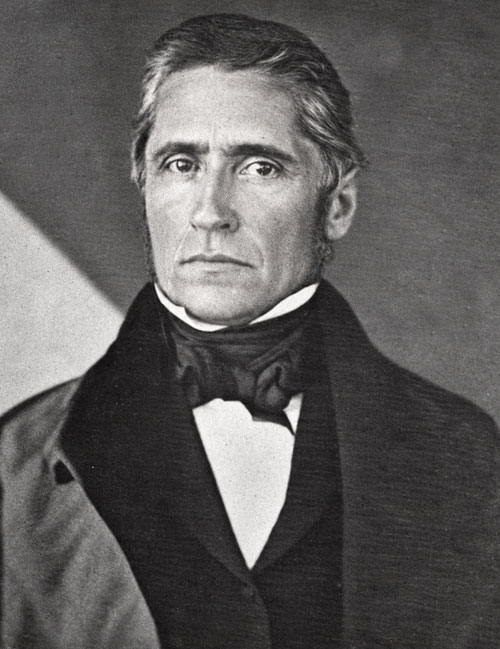
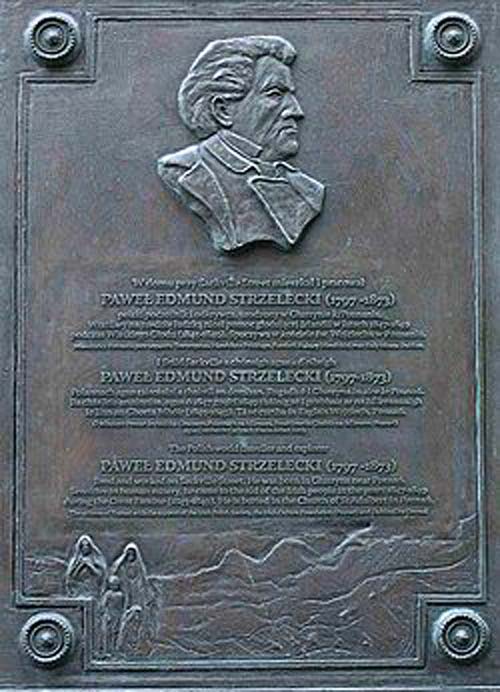
A plaque is being unveiled in Glenties, Co. Donegal, honouring one of the most remarkable humanitarian figures of the Irish Great Famine; the Polish explorer, scientist and relief worker Sir Paweł Edmund Strzelecki (KCMG CB FRS FRGS DC), also known as Paul Edmund de Strzelecki and Sir Paul Strzelecki, (1797–1873).
Strzelecki became the principal agent in Ireland for theBritish Association for the Relief of Distress in Ireland and Scotland, better known as the British Relief Association. Born near Poznań, capital of the Wielkopolska region, he was already internationally known as an explorer and scientist when, in January 1847, he volunteered for unpaid relief work in Ireland. He was initially given responsibility for the desperately affected western counties of Donegal, Mayo and Sligo, and based himself for a time in Westport, Co. Mayo. [Strzelecki was also later associated with Florence Nightingale and helped her in facilitating the publication of a series of her articles.]
Sir Paweł Edmund Strzelecki, (1797–1873)
There he saw at first hand the devastation caused by hunger, disease and the collapse of ordinary life. His most important humanitarian initiative was the development of a scheme to feed starving children directly through schools. By March 1848, nearly 200,000 children were receiving school meals, while clothing was also distributed. The scheme was non-denominational and contemporary colleagues believed that it saved many young lives.
The British Relief Association’s funds were largely exhausted by the summer of 1848, and its main operations came to an end. But Strzelecki’s work for Ireland did not. Following another disastrous potato failure, he returned to Ireland in June 1849, using charitable money raised in Britain, through his own advocacy, and it is this return that raises a fascinating question for County Tipperary.
Did Strzelecki Visit the town of Cashel? Between June and September 1849, Strzelecki undertook an extraordinary relief journey. Research by historians Professor Peter Gray and Dr Emily Mark-FitzGerald records that he travelled approximately 2,700 miles across Connaught and Munster, distributing a further £6,400 (approximately £1,055,509.76 in 2026), in charitable aid. Strzelecki was not confined to the western counties he had first visited in 1847. In 1849 he was travelling extensively through Munster as well as Connacht, and County Tipperary, of course, is part of Munster. So could that 2,700-mile journey have brought him to Cashel? At present, we cannot say that it did. No document yet identified explicitly states that Strzelecki visited Cashel. No known letter headed “Cashel”; newspaper report of his arrival; or other contemporary source presently allows us to claim a visit as historical fact. But there is a genuine reason for asking the question.
At exactly the time Strzelecki was travelling through Connacht and Munster, Cashel Poor Law Union in Tipperary was itself facing a severe humanitarian and financial crisis and Cashel was being discussed in Parliament because of that crisis. It is important to be clear about this point. Parliament was not discussing Cashel because Strzelecki was known to have visited. Cashel was being discussed because thousands of people were dependent on poor relief and because the Union’s ability to finance that relief had become gravely strained.
On 17 May 1849, the House of Commons heard that 12,000 poor people in Cashel Union, Tipperary were receiving outdoor relief. The situation was described in stark terms: even this relief was said to be insufficient to keep people alive, and some recipients were reportedly selling part of their ration of yellow meal simply to obtain clothing. This was not merely a hunger crisis. It was also a crisis of the Poor Law system itself.
Poor Law Unions were expected to raise much of their money locally through rates, but years of famine had devastated tenants, occupiers, landlords and the productive capacity of the land. Large numbers remained dependent upon relief while the people expected to finance that relief were themselves increasingly impoverished. Cashel came before Parliament again on July 13th1849, right in the middle of Strzelecki’s 1849 journey. The House of Lords considered estimates for a number of distressed Poor Law Unions. For Cashel, Poor Law Commissioner Sir Edward Twisleton estimated that £20,000 might be collected in rates over the following six months.That estimate was strongly challenged in debate as unrealistic.
A memorial plaque can be found beside Clerys Department Store in Dublin. (Memorial text is in Polish, Irish and English).
The wider figures were alarming: thirty-two unions were said to have debts of about £231,000, (£38,097,298.65 in 2026), while their estimated expenditure for the next six months was £464,000, (£76,524,458 in 2026). Even if projected rate collections were achieved, an enormous deficit would remain.
So Cashel’s appearance in Parliament tells us something very important. The Union was part of the continuing famine emergency, a landscape of mass outdoor relief, indebted Poor Law Unions and exhausted local ratepayers, and at precisely that moment, Strzelecki was travelling 2,700 miles across Connacht and Munster distributing private charitable aid. That coincidence is what makes the Cashel question worth investigating.
The Surviving Cashel Records There is another important development. The original Cashel Poor Law Union Board of Guardians minute books for the famine period survive, and Tipperary Studies has digitised them for public access. The online Cashel collection includes both the 1848–1849 and 1849–1850 minute books, precisely the records covering Strzelecki’s return to Ireland. An original Cashel Rate Book for 1849 also survives online. It runs to 232 pages and records property and rating information for the Cashel electoral division, during the very year in question. Other 1849 rate books survive for electoral divisions within Cashel Union, including places/villages such as Fethard, Drangan, Graystown, Kilpatrick and Tullamain. So far, however, no reference to Strzelecki has been identified in the searchable or indexed portions of the Cashel records.
That does not settle the question. The Board of Guardians minute books are large handwritten manuscript volumes, and not every name, letter, visitor or donation can reliably be found through ordinary text searching. A reference could appear under a variant spelling, as “Count Strzelecki”, in a piece of incoming correspondence, in the record of a donation, or simply in handwriting that has never been indexed. The proper next stage is therefore a page-by-page examination of the Cashel Guardians’ minutes for the summer of 1849, particularly from July to early September. Historians should look not just for Strzelecki’s name but for:- letters from London or Dublin; private charitable donations; relief remittances; visiting relief agents; special grants; outside assistance; and references to individuals distributing charitable funds.
So, Did Strzelecki Come To Cashel, in Co. Tipperary? We still cannot say yes. But we can now state the historical circumstances much more clearly. In the summer of 1849 Paul Strzelecki travelled approximately 2,700 miles across Connacht and Munster distributing charitable aid. During those same months Cashel Poor Law Union was supporting around 12,000 people on outdoor relief and was being discussed in Parliament because of the enormous financial strain created by continuing famine distress. The original Cashel Board of Guardians records for that period survive, and are publicly available for investigation. What remains missing is the final documentary link placing Strzelecki himself in Cashel.
So the responsible conclusion remains: Did Paul Strzelecki Visit Cashel In 1849? Possibly, but not yet proven. What makes the possibility so intriguing is that we now know the scale of his movements. This was not a short journey through a handful of familiar western districts. It was a 2,700-mile humanitarian journey across Connacht and Munster, undertaken during a summer when Cashel was experiencing exactly the type of continuing distress Strzelecki had returned to Ireland to relieve. As Glenties commemorates this remarkable Polish humanitarian, perhaps it is also an appropriate time for Cashel and County Tipperary to examine their own surviving famine records.
Somewhere in those handwritten pages may yet lie the answer to one fascinating local question; “Did Paul Strzelecki Travel To Cashel?“
Thurles Deserves Delivery – Not More Delays, Excuses And Failed Announcements.
The continuing delay recently announced on the redevelopment of Liberty Square, (Part 2) and Slievenamon Road raises a much wider question about infrastructure delivery in Thurles town, and about what our political representatives are actually achieving for the town in Dáil Éireann. How much longer is Thurles expected to wait for basic infrastructure that other major towns would regard as essential?
The first phase of the Liberty Square redevelopment commenced in August 2020 and was officially opened in June 2022. Yet the adjoining N62 Slievenamon Road Phase 2 project; from Liberty Square to the Shopping Centre roundabout, is now not expected to begin until 2027 at least, with completion potentially stretching to the the final weeks of 2028. That is an extraordinary timescale for completing the redevelopment of the centre of one of Tipperary’s largest towns.
Promised completion since 2022 following part one completion in 2022.
Tipperary County Council points to dependencies involving Transport Infrastructure Ireland and Uisce Éireann. But after years of delay, the public is entitled to ask why these issues were not identified, coordinated and resolved far earlier. Even more difficult to understand is the condition of parts of Liberty Square itself. Potholes, eroded road surfaces and deteriorating sections should not have to await another multimillion-euro capital project. Basic maintenance is a separate responsibility. A promise that major works may eventually take place cannot justify leaving existing surfaces in poor condition in the meantime.
There is also another deeply unpleasant issue which deserves a proper public explanation. Sewer pipes were installed during the Liberty Square redevelopment works in 2021. Since then, complaints have been publicly reported about foul odours and what has been described as sewer gas or a sewage-type stench issuing from drains in parts of Liberty Square east. If these odours arose following the drainage works, the obvious questions must be asked; “Were the new drainage and sewer arrangements correctly designed and installed? “Have they been independently inspected and tested?” “What is causing the continuing smell, and why has it not been permanently rectified? Until Tipperary County Council or Uisce Éireann produces the technical evidence, it would be wrong to simply declare defective installation as proven. But equally, persistent reports of sewage-type odours following major drainage works cannot simply be ignored. The people working, shopping and living in the centre of Thurles deserve an explanation and a permanent solution.
Constant traffic congestion caused by failure to provide inner relief road and Thurles bypass.
And Liberty Square is only part of a much bigger infrastructure failure. The Thurles Inner Relief Road has been talked about for years, yet the town is still waiting for the level of funding necessary to turn plans, designs and consultancy work into actual construction. Then there is the Thurles Bypass; another project discussed for decades and repeatedly presented as essential to removing through-traffic and heavy vehicles from the town centre. Announcements, inclusion in plans, feasibility studies and ministerial visits are not roads. Funding, construction contracts, machinery on site and completed infrastructure are what matter.
Which brings us directly to political accountability. Thurles is represented in Dáil Éireann by Mr Michael Lowry TD and Mr Ryan O’Meara TD. Both are entitled to point to representations they have made, meetings attended and projects they have sought to advance.
But voters are equally entitled to ask a much tougher question: What are Mr Michael Lowry and Mr Ryan O’Meara actually achieving in Dáil Éireann for Thurles? Where is the construction funding for the Inner Relief Road? When will there be a fully funded programme and credible construction timetable for the Thurles Bypass? Why has completion of Liberty Square and Slievenamon Road been allowed to stretch towards 2028? And why, after millions of euro have already been spent on Liberty Square, are residents and businesses still having to complain about potholes, eroded surfaces and foul smells apparently emanating from the drainage system?
Political effectiveness should ultimately be measured by results. Not another series of video’s and press releases. Not another photograph taken standing beside a Minister or a wealthy business man. Not another announcement that a project is being “progressed”. Not another promise that funding will be sought.
Thurles needs funding secured, contracts signed, problems fixed and projects delivered. After years of waiting, that is hardly too much to ask.
That is also the test for Tipperary County Council, Mr Michael Lowry TD and Mr Ryan O’Meara TD. Thurles does not need another announcement. It needs delivery.
The National Children’s Hospital was supposed to be one of the great public investments of modern Ireland.
Instead, it has become synonymous with spiralling costs, missed deadlines, contractual disputes and public frustration. Construction at the St James’s Hospital site began in 2016. The hospital was expected to be completed by 2022. Four years after that original target, there is still no dependable date for substantial completion.
So who is responsible? The uncomfortable answer is that responsibility does not lie in just one place. The first major failure occurred before many of today’s construction disputes even arose. An independent PwC review published in 2019 found serious weaknesses in the project’s planning, budgeting, governance and execution. Crucially, it concluded that the vast majority of the initial €450 million cost increase arose because the true cost of building the hospital had been underestimated in the first place.
That places significant responsibility on the State. Government, the National Paediatric Hospital Development Board and their advisers proceeded with an extraordinarily complicated project without sufficient certainty over design, cost and risk. The original figures proved unrealistic.The project subsequently grew from an estimated cost of roughly €1 billion to an approved overall budget of approximately €2.24 billion.
But that does not absolve the main contractor, BAM. The present dispute is increasingly about delivery. The NPHDB told the Oireachtas earlier this year that BAM had changed its projected substantial-completion date 18 times over a five-year period. Its April 30th 2026 target represented a delay of approximately 40 months beyond the revised contractual completion date of December 2022. That April deadline was not met.
Minister for Health Ms Jennifer Carroll MacNeill has since sharply criticised BAM and its parent company, saying commitments on additional resources and delivery had been inadequately fulfilled. There are also disputes over workmanship and defects. Earlier this year the NPHDB described the scale of defects identified during the completion process as unprecedented, while BAM argued that much of this represented normal snagging on a project of exceptional size and complexity. Meanwhile, BAM has submitted claims totalling approximately €983 million for disputed additional costs. These are claims, not an accepted bill to the taxpayer, and large parts remain contested. BAM, for its part, disputes the State’s account of responsibility for delays and argues that design decisions, changes and other client-side issues have affected its ability to complete the job. That means we should distinguish between political responsibility, project-management responsibility and legal liability.
For the original cost escalation and poor project structure, the State must carry substantial responsibility. For many of the later construction delays, the NPHDB and Government now place much of the blame on BAM. But the final allocation of contractual liability cannot simply be decided by politicians, journalists or commentators. Some of it will ultimately be determined through the contract’s dispute-resolution procedures and possibly the courts.
The more important question now is: what should happen next? First, BAM must be required to produce and deliver against a credible, properly resourced completion programme with measurable weekly milestones. Second, the State must rigorously enforce the contract. Valid claims should be paid, invalid claims resisted, and damages for contractor-caused delay pursued where legally justified. Third, quality cannot be sacrificed simply to produce another politically attractive completion date. This is a national paediatric hospital containing operating theatres, intensive-care facilities and highly complex clinical systems. It must be finished properly. Fourth, Government should publish a simple public progress dashboard showing completed rooms, outstanding defects, testing of critical systems and verified milestones. After so many missed deadlines, the public needs measurable progress rather than another promise. And finally, when the hospital is delivered, there must be a comprehensive independent review of the entire project. Not simply another report to gather dust.
Ireland needs to know why such a vital national project was allowed to proceed with inadequate cost certainty, why governance failed, why completion dates repeatedly slipped, which additional contractor claims were justified, and which were not. Those lessons matter far beyond this hospital. Ireland is entering an era in which enormous sums will be spent on transport, housing, healthcare, energy and other infrastructure. The lasting scandal would not merely be that the National Children’s Hospital became extraordinarily expensive and extraordinarily late. It would be spending billions more on future projects without learning anything from it. The children who will eventually receive world-class care in this hospital deserve better than political point-scoring.
Taxpayers deserve something too; an honest account of what went wrong, who was responsible and guarantees that Ireland will not repeat the same mistakes again.
A €10-a-week increase in the State pension and core social welfare payments is now set to form part of Budget 2027, as Government leaders enter the final stages of negotiations ahead of Tuesday’s announcement.
The increase is expected to apply across the main welfare rates, including payments to pensioners, people with disabilities, carers and jobseekers. An earlier figure of €7.50 had been under consideration, but negotiations have since moved to the higher €10 increase. Energy and the cost of living remain central to the final Budget discussions.
Taoiseach Mr Micheál Martin has signalled that further carbon tax increases on home-heating oil will be halted for the remainder of the Government’s term. He has also confirmed that eligible pensioners and long-term welfare recipients can expect the traditional Christmas bonus payment this year.
Further targeted assistance for households facing high heating costs is still being discussed. One proposal under consideration is a once-off payment for Fuel Allowance recipients, with figures of around €300 mentioned during negotiations. However, the final form of this support has not yet been confirmed.
A new annual cost-of-disability payment is also expected, with current discussions putting its value in the region of €400 to €500. An increase in the Living Alone Allowance is among the measures expected to feature in the final package.
The Government is also examining ways of reducing household energy costs, while final decisions on childcare supports are being worked out during talks in Government Buildings today.
Budget 2027 is scheduled to be announced on Tuesday next, October 6th, with the overall package expected to include approximately €7 billion in additional spending and €1.5 billion in tax reductions.
Final decisions on several measures are still being made, so figures relating to Fuel Allowance, disability supports, childcare and other cost-of-living measures should be treated as proposals until formally announced on Budget Day.
This website uses cookies to improve your experience. We'll assume you're ok with this, but you can opt-out if you wish.AcceptRead More
Privacy & Cookies Policy
Privacy Overview
This website uses cookies to improve your experience while you navigate through the website. Out of these, the cookies that are categorized as necessary are stored on your browser as they are essential for the working of basic functionalities of the website. We also use third-party cookies that help us analyze and understand how you use this website. These cookies will be stored in your browser only with your consent. You also have the option to opt-out of these cookies. But opting out of some of these cookies may affect your browsing experience.
Necessary cookies are absolutely essential for the website to function properly. This category only includes cookies that ensures basic functionalities and security features of the website. These cookies do not store any personal information.
Any cookies that may not be particularly necessary for the website to function and is used specifically to collect user personal data via analytics, ads, other embedded contents are termed as non-necessary cookies. It is mandatory to procure user consent prior to running these cookies on your website.







Recent Comments