Two more, very healthy, mature trees on the sunny side, east on Liberty Square, Thurles, alas, have been removed courtesy of an unforgiving chainsaw massacre.
“They took all the trees, and put em in a tree museum And they charged the people a dollar and a half to see them No, no, no Don’t it always seem to go That you don’t know what you got ’til it’s gone They paved paradise, and put up a parking lot.” Extract from song ‘Big Yellow Taxi’ (Lyrics by singer Joni Mitchell).
Same were 7 year old trees initially, when sown by myself and 4 others, all members of a Thurles Tidy Towns committee, back in 1988, giving them an age of just 40 years.
On the day we sowed them some 5 members of Thurles Chamber of Commerce, came along to protest, claiming that their window displays could no longer be observed by the general public.
These trees had been subjected to having gravel and resin replaced at their base late last year, which in turn left people with the hope they would be retained. More money, again wasted, but rate payers have very deep pockets for such dainty projects.
While promising to return trees to the now, new look, upgrading of Liberty Square, one wonders why no unpaved areas are being left to accommodate new replacement trees. Then again, maybe same are to be planted where the old street ESB standards are waiting to be removed. Who knows? As many will attest, there has been only a token public consultation with residents within the town; with local unqualified councillors calling the shots.
Temporary Road Closure on the R-660 Abbey Road, Thurles, Co. Tipperary.
Temporary Road Closure on the R-660 Abbey Road, Thurles, Co. Tipperary are expected from 07:00am on next Monday July 12th 2021, to 7:00pm on Friday August 20th 2021. This temporary unexpected closure, [the second this year] will be in place to facilitate road resurfacing and safety improvement works to the Abbey Road Roundabout, opposite Lidl Supermarket E41 N520. Traffic Management will be in place and major delays are to be expected.
Traffic Lights
Meanwhile, the newly erected perplex of traffic lights at the junction of Clongour Road and Slievenamon road, Thurles, will come into operation, (that is according to Tipperary County Council) on the morning of Tuesday July 13th next. (No local politician, armed with a scissors, has as yet volunteered to officially cut any ribbon). One wonders how long 12 wheeler trucks will delay traffic, as they wait to get around the junction leading south unto Clongour Road west, when forced to cross into oncoming lanes to avoid one traffic light column, latter erected unnecessarily too close to the corner on the Clongour Road section. (See left side of picture above).
Lidl Supermarket. The new Lidl Supermarket retail outlet, (also pictured in the background above), at the junction of Clongour Road and Slievenamon road, Thurles will open on Thursday July 15th next. We wish them well in their future endeavours, as a new town centre for Thurles sadly materialises, reducing the former status of Liberty Square, all courtesy of Tipperary Co. Council’s parking charges, sanctioned by Thurles elected officialdom.
The average Irish family will save €700 per year by taking simple steps to reduce their food waste.
Vegetables, fruit and salad are the foods that are thrown out most often in the home.
Ireland has committed to halving food waste by 2030.
Scientists estimate that food waste produces up to 10 per cent of all global carbon emissions.
Top Tips Include:
Store potatoes in a dry, dark place;
Keep tomatoes in the open air;
Store carrots loose in the bottom drawer of the fridge;
Keep strawberries in the fridge with their green tops on.
As the country prepares for an outdoor summer of picnics and barbeques, the Environmental Protection Agency (EPA) has launched a new campaign to encourage people to reduce their food waste, highlighting simple food storage steps to make their fresh food last longer. The EPA’s website has some great resources to support their ‘Stretch Out and Save‘ campaign and highlights the variety of ways in which different foods should be stored.
Findings from a 2020 EPA survey on food waste attitudes showed that around 40% of Irish people say they waste a lot of fruit and vegetables, and would like to make their fresh food last longer. Fresh fruit, vegetables and salads are Irish summer favourites – but also are the foods we waste the most.
Properly storing fresh fruit and vegetables can help both the environment and your budget, according to Mary Frances Rochford, [EPA Programme Manager]: “We are calling on everyone to support and share our Stretch Out and Save campaign on social media, and take a simple action to stop food waste. Irish households produce over 250,000 tonnes of food waste per year, at a cost of €700 per household. In addition, wasted food is a significant contributor to climate change – responsible for 8% to 10% of global greenhouse gas emissions. Cutting food waste reduces greenhouse gas emissions and also provides real savings to householders.”
The EPA’s Stop Food Waste top tips to stretch out and save your food this summer include:
Strawberries: Don’t put yourself in a jam; keep the strawberries in the fridge with the green tops intact. Washing strawberries in a mixture of water and vinegar (8 cups of water and 1 cup of white vinegar) will also keep them fresh by killing any spores on the fruit.
Tomatoes: Don’t see red when your tomatoes start to have mould spots; Store tomatoes in the open air to keep flavour and texture for longer. Did you know? Tomatoes are actually a fruit not a vegetable.
Potatoes An app-peeling staple in so many households, some people make the mistake of leaving the bag of potatoes out in the light. In fact, potatoes last longer when stored in a cool, dark and dry place. But don’t store them next to onions; the excess moisture in onions can result in potatoes sprouting faster.
Carrots: Keep carrots loose in the bottom drawer of the fridge to keep crisp. The most famous vegetable for improving your vision, ensure that you can see the carrots by removing them from plastic packaging. This avoids the ‘sweating’ that leads to mould formation. If your carrots come with the leaves intact, cut these off before storing. The leaves draw moisture out of the roots causing your carrots to become bendy much faster.
Environmental scientist with the EPA, Ms Odile Le Bolloch explains: “Summer is a time for enjoying lots of fresh produce and salads, but these are also the foods that we waste the most. With a few simple tips we can keep the food we buy that bit fresher for that bit longer. The Stop Food Waste A-Z of Foods is a useful online resource on how to best manage common foods at home to prevent food waste.”
As no two foods are the same, different produce will often have different storage requirements. Re-learning habits and implementing them as we put our shopping away will help to get the most out of groceries.
Find out how to store all of your favourite foods, learn about food date marking, and access resources to help reduce food waste in the home by visiting the EPA website.
Environmental scientist Ms Odile Le Bolloch is available for interview.
Further information: Ms Emily Williamson, (EPA Media Relations Office): Tel: 053-91 70770 (24 hours) and media@epa.ie
During our current Covid-19 pandemic the need to socially distance, has led people to take up a renewed interest in gardening here in Ireland. It has now been firmly proven; from health studies undertaken, that spending an hour or two, just three times a week, in our gardens will lead to better well-being and lower our stress levels.
This renewed interest in gardening has also shown up what are seen as ‘problems’ that previously had possibly gone unnoticed. Same brings us to the constantly asked question on social media, “How do we rid ourselves of unwanted ant populations?”.
First, we should remember that ants have been on our planet since the middle of the Cretaceous Period, same that lasted from about 145 to 66 million years ago. Their presence today means they have survived the mass extinction that eliminated our dinosaurs.
There are, at the very least, 14,000 different known species of ants that cover the terrestrial surface of our earth.
Down through the years humans have gathered an immense amount of knowledge about our ant populations, latter who remain the rivals of humans, as the dominant life form on our planet earth.
The Benefits of Ant Populations
Researchers down the years have discovered that ant insects greatly serve several key functions, which assists Mother Nature to prosper.
Ants aerate the soil digging widespread tunnels through the ground. These tunnels help moisture and air to work their way through the soil, thus assisting the roots of other plant life.
Ants help with pollination, as they travel about in their search for food, thus picking up pollens and thus inadvertently, pollinating plants.
Ants also fertilize plants, dragging decaying foliage to build their nests, thus adding nutrients to the soil.
But perhaps their biggest contribution to the environment is their ability to help control other insects. Since ants prefer to eat food, some like to prey on other insects. Their appetite has been known to help decrease the number of insects that wreak havoc on lawns and gardens. Being highly territorial, ants will fight off other insects and even animals who get too close to their established nests.
Ant Hill
By British-Canadian poet and writer Robert W. Service (Bard of the Yukon)
Black ants have made a musty mound My purple pine tree under, And I am often to be found, Regarding it with wonder. Yet as I watch, somehow it’s odd, Above their busy striving I feel like an ironic god Surveying human striving. Then one day came my serving maid, And just in time I caught her, For on each lusty arm she weighed A pail of boiling water. She said with glee: “When this I spill, Of life they’ll soon be lacking.” Said I: “If even one you kill, You bitch! I’ll send you packing.”
Just think – ten thousand eager lives In that toil-worn upcasting, Their homes, their babies and their wives Destroyed in one fell blasting! Imagine that swift-scalding hell! . . . And though, mayhap, it seems a Fantastic, far-fetched parallel – Remember . . . Hiroshima. END
Ants often invade private homes, through plaster cracks or other means, in their efforts to locate food, relying as they do on their perceptive sense of smell. Therefore to prevent ants infiltrating areas which contains food scraps, e.g. your kitchen, try wafting strong-smelling substances, like peppermint, eucalyptus or tea tree oils, all which are natural insect repellents. Ants are also repelled by cinnamon, black pepper and garlic, so storing the latter close to their points of entry, using perhaps small containers, will act as an invasion deterrent.
A common ant bait recipe is a combination of Borax (sodium borate widely used as a household cleaner) and sugar or peanut butter.
To set up the above mentioned bait, mix the stated ingredients together (one teaspoon of peanut butter or sugar to two teaspoons of borax) and place the mixture into a container which has a lid. Then punch several holes in the lid, and place the container, once again, near a visible ant trail, keeping in mind that it will take three to four days for the borax to work.
Do remember always to keep chemicals out of the reach of small children.
Turbine manufacturer Vestas, latter the energy industry’s global partner on sustainable energy solutions, yesterday confirmed it had secured a 29MW order from Ørsted for the Danish companies Lisheen 3 project here in County Tipperary.
Vestas design, manufacture, install, and service wind turbines right across the globe, and with +136 GW of wind turbines in 84 countries, they currently are regarded as the world leaders in wind power manufacture.
The Ørsted order will include supply, installation and servicing of eight 3.45MW turbines, each ramped up to 3.6MW operation.
This will be the third phase of Vestas-supplied wind parks at the Lisheen Co. Tipperary location, following the installation of 36MW and the 24MW extensions already put in place.
Vestas will continue to repair the turbines through a 20-year long-term Active Output Management 5000 (AOM 5000) service contract, which will provide energy efficiency assurance and Vestas’ industry-leading service experience.
This third phase of the Lisheen project will continue to deliver on the target set in Ireland’s Climate Action Plan of achieving 70% of electricity from renewable sources by 2030.
Deliveries are expected to begin in the third quarter of 2022, while commissioning is expected start in the final quarter of 2022.
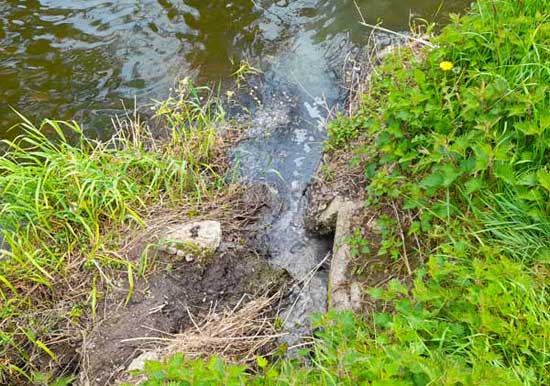
This is a review of 809 inspections of septic tanks and other domestic waste water treatment systems in 2020. Fifty-four per cent (433) of the systems failed inspection because they were not built or maintained properly.
Twenty-three per cent (182) of systems inspected were a risk to human health or the environment, as faulty systems can contaminate household wells and pollute rivers.
Commenting on the report, Dr. Tom Ryan, (Director of the EPA’s Office of Environmental Enforcement) said, “Householders should ensure effluent from their septic tank is not ponding in their garden, going to nearby streams or contaminating their drinking water well. Householders should visually check their septic tank and get their well tested at least annually to satisfy themselves that their septic tank is not posing a risk to the health of their families, their neighbours and the environment.”
Local authorities issue advisory notices to householders when septic tanks fail inspection. The report found there were 468 cases open more than two years at the end of 2020. The septic tank grant scheme, which was expanded in 2020, offers grants of €5,000 to assist in addressing malfunctioning systems. Mr Noel Byrne, (EPA Programme Manager) said, “It is important that householders fix septic tanks where problems are detected. There is a grant scheme available to assist householders to fix failing septic tanks. Local authorities should focus their efforts to resolve open cases to ensure human health and the environment are protected.”
This website uses cookies to improve your experience. We'll assume you're ok with this, but you can opt-out if you wish.AcceptRead More
Privacy & Cookies Policy
Privacy Overview
This website uses cookies to improve your experience while you navigate through the website. Out of these, the cookies that are categorized as necessary are stored on your browser as they are essential for the working of basic functionalities of the website. We also use third-party cookies that help us analyze and understand how you use this website. These cookies will be stored in your browser only with your consent. You also have the option to opt-out of these cookies. But opting out of some of these cookies may affect your browsing experience.
Necessary cookies are absolutely essential for the website to function properly. This category only includes cookies that ensures basic functionalities and security features of the website. These cookies do not store any personal information.
Any cookies that may not be particularly necessary for the website to function and is used specifically to collect user personal data via analytics, ads, other embedded contents are termed as non-necessary cookies. It is mandatory to procure user consent prior to running these cookies on your website.







Recent Comments