Nenagh Gaol Has Not Been Closed to Visitors for 100 Years – New Project Concerns a Separate Cell Block
Nenagh Gaol, Co. Tipperary.
A recent press report [Irish Independent shown here] announcing a new exhibition at Nenagh Gaol could give readers the mistaken impression that the entire historic site has been closed to the public for more than a century. That is not the case.
Nenagh Heritage Centre, situated within the former gaol complex, has welcomed thousands of visitors since 1984. It occupies the former Governor’s House and Gatehouse, where visitors can already explore the site’s history and see the condemned cells associated with the 17 men executed there between 1842 and 1858.
The new proposed development relates specifically to a separate three-storey cell block that has not previously formed part of the public visitor experience. Tipperary County Council’s planning documents describe this building as a former cell block currently used as a council storage area. The project will conserve and adapt this previously inaccessible block, connect it with the existing Heritage Centre and introduce a new visitor exhibition, featuring interpretation and audio-visual displays.
Therefore, while it may be correct to say that this particular cell block is being opened to visitors for the first time in more than 100 years, it is inaccurate to suggest that Nenagh Gaol or its Heritage Centre has been closed throughout that period.
There is also a difference in the figures being reported. The official eTenders notice gives the estimated contract value as €110,000 excluding VAT, rather than just under €130,000.
Tourists in the area are encouraged to visit this historic venue, which historically housed those sentenced to death by public hanging. See link shown HERE
Approximately 150 fish, mostly brown trout, have died in a stretch of the River Suir in the Templemore area.
The incident is understood to have been discovered around August 10th, 2026 during the week ending August 12th, 2026, reportedly by a staff member of the River Basin Management Service, latter the organisation formerly known as the Local Authority Waters Programme, or LAWPRO. The change of name is confirmed HERE.
At the time of writing, no official report establishing the cause of the deaths has been published. However, an initial examination reportedly suggested that the fish may have died from oxygen depletion, same associated with extensive aquatic vegetation and restricted flow. Dense reed growth is clearly visible along sections of the upper Suir, including from Barry’s Bridge in the heart of Thurles town centre. Nevertheless, visible vegetation does not prove what killed the fish.
The public requires evidence; dissolved-oxygen records, water and fish sample results, the extent of the affected stretch and an assessment of any pollution, temperature, flow or habitat factors.
Could dense vegetation deplete oxygen? It is scientifically plausible that excessive aquatic growth could contribute to dangerously low dissolved-oxygen levels. Plants, algae and microorganisms respire continuously, consuming oxygen. During daylight, photosynthesis can replace or exceed that consumption. At night, photosynthesis stops while respiration continues, causing dissolved oxygen to fall. Surveys undertaken confirms that plant, microbial and algal respiration reduces dissolved oxygen at night, while daylight photosynthesis increases it.
The risk is greatest where vegetation is abundant and the water is warm, shallow, slow-moving or stagnant. Dense growth can restrict mixing, while bacteria and fungi decomposing dead plant material consume additional oxygen, as observed when Thurles Municipal District undertook the strimming of rushes last year, leaving same in the water to rot. Warm water also holds less dissolved oxygen.
We can confirm that the above public meeting will take place, as stated above. Perhaps Minister of StateMr Kevin Moran, Independent TD Mr Michael Lowry, together withCouncillor Mr Micheál Lowry should receive invitations.
The US Environmental Protection Agency identifies excessive plant growth, nighttime respiration, decomposition, high temperatures and reduced flow as possible contributors to oxygen depletion. Emergent reeds can transport atmospheric oxygen through their stems, so their direct withdrawal of oxygen from the water may be less significant than that of submerged vegetation or algae. A dense reed bed may still create locally oxygen-poor conditions by slowing the flow and trapping decomposing organic material.
A healthy, fast-flowing river is continually re-aerated by turbulence. If oxygen depletion caused this fish kill, the investigation must determine what combination of vegetation, nutrient enrichment, low flow, temperature and decomposition produced it.
Testing must occur at the correct timeand a single daytime oxygen reading would be inadequate. Dissolved oxygen generally reaches its lowest level shortly before sunrise, following a night of respiration without photosynthesis. Monitoring should therefore be continuous or conducted immediately before dawn. Measurements should be taken inside dense vegetation, in nearby open water and both upstream and downstream. Temperature, flow, pH, weather conditions and readings close to the sediment should also be recorded.
Salmonids, including brown trout, are particularly sensitive to low oxygen. The investigation must establish whether oxygen depletion caused this incident rather than merely presenting it as a possibility.
Thirteen years of warnings As stated in a recent post on Thurles.Info, the deterioration of the River Suir cannot credibly be described as sudden or unforeseeable. For more than a decade, residents, anglers and environmental campaigners have raised concerns about pollution, excessive vegetation, restricted flow, sediment, litter and neglect. These concerns were documented in “River Suir Crisis—Thirteen Years of Warnings, But Still No Coordinated Action”.
Section ofUpper River Suir, viewed from Thurles Park in the heart of Thurles town centre, last week. Picture: G. Willoughby
13 years to late; the Minister of State Mr Kevin “Boxer” Moran recently visited sections of the Suir in Thurles and Holycross following representations from Independent TD Michael Lowry. It was stated that the Office of Public Works would support an application by Tipperary County Council under the enhanced Minor Flood Mitigation Works Scheme. Support for an application is welcome, but it is not a restoration programme. The public has not been shown the precise work proposed, the scientific evidence supporting it, the environmental assessments required, the anticipated cost and timetable or the body responsible for delivery and monitoring.
Political videos, visits and announcements cannot substitute for accountable work. Councillor Micheál Lowry, Deputy Michael Lowry and every other representative addressing the issue must be judged by measurable results. The same standard must apply to Tipperary County Council.
Reeds may be a symptom-not the underlying cause. The problem cannot be reduced to reeds, bulrushes or appearance. Previous catchment assessments have identified excess phosphorus from sources including wastewater, animal waste and fertilisers as a significant pressure. Nutrient enrichment can encourage excessive plant growth, while respiration and decomposition may subsequently reduce oxygen.
Low summer flows, high temperatures, pollution, sediment, obstructions and vegetation may interact. Removing reeds without identifying why they proliferated risks treating a symptom, while leaving the underlying causes untouched. Clearance without ecological assessment could also damage habitat or transfer problems downstream.
Any intervention must therefore be based on catchment science and agreed with the relevant environmental and fisheries authorities.
Too many agencies and too little accountability
Responsibility is divided among Tipperary County Council, the River Basin Management Service, Inland Fisheries Ireland, the EPA, the OPW, Uisce Éireann, the National Parks and Wildlife Service, Landowners and Angling organisations. That complexity cannot provide cover for delay or buck-passing.
The public should now be told:
which organisation is leading the investigation;
when and where the fish were discovered;
how many fish and species were affected;
when oxygen, temperature and flow were measured;
what samples were collected;
whether pollution sources were investigated;
when laboratory results will be available;
and which agency will publish the findings.
Community initiatives, including proposals to remove bulrushes or establish a River Suir trust, may make a valuable contribution. However, volunteers and anglers cannot be expected to replace statutory responsibility.
Publish the findings This fish kill must mark a turning point. The responsible agencies should provide a published scientific assessment, laboratory and monitoring results, continuous oxygen and temperature monitoring at vulnerable locations, investigation of pollution and nutrient sources, an environmentally assessed vegetation-management programme and a costed river restoration plan.
Responsibilities, deadlines and progress reports must be made public. The cause of this fish kill should not be prejudged; but uncertainty cannot become an excuse for inaction. After thirteen years of warnings, the questions are who will take responsibility, what the evidence shows and how quickly a credible recovery programme will begin.
“Look up at the stars, not down at your feet. Try to make sense of what you see, and be curious.” Quote: late Stephen Hawking [1942 – 2018]. “We are all in the gutter, but some of us are looking at the stars.” Late Irish author Oscar Wilde, [1854 – 1900], (Lady Windermere’s Fan).
Residents across Tipperary are being encouraged to look skyward this evening as Ireland prepares for one of its most memorable astronomical displays in decades.
A deep partial solar eclipse will unfold between approximately 6.10pm and 8.10pm, reaching its maximum shortly after 7pm. Exact timings and the amount of the Sun covered will vary slightly from place to place as the Moon’s shadow travels across the country.
Although Ireland lies outside the path of totality, the spectacle will still be dramatic. The Moon is expected to hide well over 90 per cent of the Sun from Irish observers. Only a thin, bright crescent will remain visible at the height of the event, producing an unusual change in daylight and possibly a noticeable dip in temperature.
The eclipse is especially important because Ireland will not experience another comparable solar event until 2090. It offers families, schools and amateur astronomers a rare opportunity to witness the movements of the Sun, Moon and Earth directly.
People in Tipperary should choose a viewing location with a clear outlook facing towards the western sky. Open countryside and elevated areas may provide better prospects, provided they can be reached safely. Clouds are forecast in parts of the Premier County, but even brief breaks could reveal the shrinking solar crescent.
Eye protection is essential throughout the eclipse. Looking directly at the Sun, even when most of it is hidden, can cause permanent damage to eyesight. Ordinary sunglasses, smoked glass and homemade filters are not safe. Observers should use undamaged eclipse glasses meeting the ISO 12312-2 safety standard or watch indirectly with a pinhole projector. Cameras, binoculars and telescopes require purpose-made solar filters attached securely to the front. Eclipse glasses alone do not make magnifying equipment safe.
Ireland will see a partial eclipse because the narrow path in which the Sun is completely concealed passes through areas including Greenland, Iceland and northern Spain. Nevertheless, the Royal Observatory Greenwich says roughly 90 to 96 per cent of the Sun will be covered across Ireland and the UK, making this the deepest partial eclipse seen from these islands in almost 27 years. Royal Observatory Greenwich
The entertainment will not end at sunset. During the night of August 12th into the morning of August 13th, the annual Perseid meteor shower will reach its peak. The Perseids occur when Earth passes through debris left behind by Comet 109P/Swift-Tuttle. Tiny particles strike the atmosphere at tremendous speed, heat up and produce the bright streaks commonly called shooting stars. Under ideal dark-sky conditions, observers may see dozens of meteors in an hour, although actual numbers can vary.
Conditions are unusually favourable in 2026 because the shower coincides with a new Moon. Thus, with virtually no strong moonlight washing out the fainter meteors, cloud cover and artificial lighting will only be the main obstacles. The strongest viewing window is expected between midnight and dawn.
No telescope is needed for the Perseids. Viewers should find a safe, dark location away from street lights; allow at least 20 minutes for their eyes to adjust and watch as much of the sky as possible. A reclining chair and patience will make the experience more comfortable.
If Tipperary’s clouds cooperate, residents could witness two remarkable spectacles within a matter of hours; an almost vanished Sun in the evening and a stream of meteors after midnight.
A brief pause at a junction could prevent a death on Ireland’s roads.
Above is the message behind a new Road Safety Authority campaign asking motorists to check twice for motorcycles before entering a road, particularly when pulling out from a T-junction.
Sixteen motorcyclists have already died on Irish roads this year, adding urgency to the campaign. The danger often develops in an instant. A driver reaches a junction, checks both directions and begins to move. An approaching motorcycle, however, may have blended into the background or appeared farther away than it really was.
Unlike a car or van, a motorcycle occupies very little of a driver’s field of vision. This can make both its presence and its approaching speed difficult to judge during a quick check. The RSA wants motorists to break that routine by pausing and looking once more before proceeding.
Evidence gathered between 2021 and 2025 shows why that extra check matters. During those five years, 954 motorcyclists suffered serious injuries, while 117 lost their lives. Around two-thirds of the riders seriously injured were involved in crashes with another vehicle. Road Safety Authority confirm that failure to observe was the action most frequently identified in those multi-vehicle incidents. Junctions were also the scene of 38% of serious motorcyclist injuries.
The campaign arrives during a period when greater numbers of motorcycles are likely to be on the road. Drivers are being asked to approach junctions slowly, remove distractions and allow themselves enough time to make a proper assessment. Motorcyclists may be smaller and less visible than other vehicles, but they have the same right to be seen and protected.
Before pulling out, pause and check again. The bike missed on the first look could be visible on the second.
The deteriorating condition of the River Suir cannot be treated as a new discovery.
For years, residents, anglers and environmental campaigners have raised concerns about pollution, excessive vegetation, restricted flows and the general neglect of the river through Thurles and surrounding areas. Yet meaningful, coordinated action by elected representatives, Tipperary County Council and the responsible State agencies has been painfully slow. VIEW HERE and note date, November 7th 2013.
Note the dates of the following links published over the past 13 years
Recent statements and a carefully produced publicity videos may create the impression of decisive political intervention. But inspections, promises and political photo opportunities are not substitutes for an agreed restoration programme, clear accountability and work on the ground.
Ministerial Visit Raises More Questions Than It Does Answers. Minister of State Mr Kevin Moran recently visited sections of the Suir in Thurles and Holycross following representations from Independent TD Mr Michael Lowry. Not for the first time Deputy Lowry says the Office of Public Works will support an application from Tipperary County Council, under the enhanced Minor Flood Mitigation Works Scheme. The expanded scheme reportedly allows councils to seek 95% funding for eligible works costing up to €2 million.
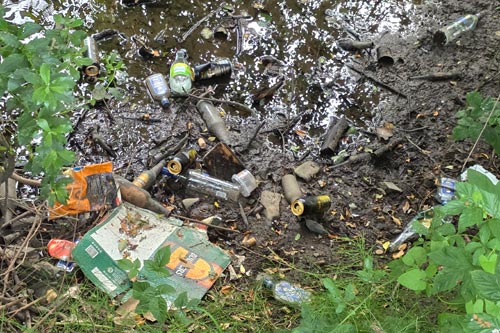
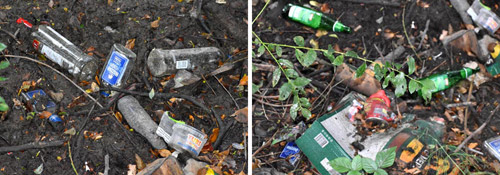
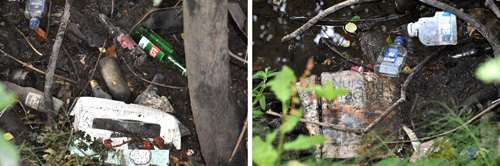
Pictures of the River Suir bed not shown in “Team Lowry’s” promotional video. The litter remains almost six weeks after the Liberty Music Festival, with no proper clean-up and no bin near “Wino’s Corner” despite repeated requests to Tipperary County Council.
All such commitments is welcome, but it remains only a commitment to support an application. The public has not yet been given a detailed proposal identifying:- The exact works to be undertaken. The evidence that those works will improve the river. The environmental assessments required. The project’s anticipated cost and timetable. The agencies responsible for delivering and monitoring it.
After years of warnings, the people of Tipperary are entitled to something more substantial than another announcement.
Where Have Our Representatives and Council Officials Been? The present condition of the Suir did not develop overnight. Local representatives and council officials have had ample opportunity to inspect the river, consult anglers and environmental groups, engage the relevant agencies and develop a long-term plan. Instead, the response has too often appeared fragmented and reactive.
Councillor Micheál Lowry and his father, Deputy Michael Lowry TD, are now drawing attention to conditions that local campaigners say have been evident for more than a decade. Their intervention must therefore be judged by what it delivers, not by the number of statements, videos or the ministerial visits it generates.
Other pictures of the River Suir bed not shown in “Team Lowry’s” promotional video. The litter remains in the river, together with 6 Supermarket trollies, almost six weeks after the Liberty Music Festival, with no proper clean-up and no bin near “Wino’s Corner” despite repeated requests to Tipperary County Council.
It should be noted:Thurles Town Park bye-laws were formally made by Tipperary County Council acting through the Templemore–Thurles Municipal District, and they came into operation on March 1st 2016. Available evidence indicates that those bye-laws then regulated alcohol consumption in the park, but this bye-law today remains totally ignored by all and sundry.
The same standard must be applied to Tipperary County Council. If the Council intends to seek OPW funding, it should publish its proposal and explain how any vegetation removal, blockage clearance or flood-related work will be reconciled with water quality, fisheries and habitat protection.
This Is More Than a Question of Appearance The problem cannot be reduced to reeds, bulrushes or an untidy riverbank. The Suir catchment covers approximately 3,500 square kilometres. Catchments.ie has previously identified excess phosphorus from sources including wastewater, animal waste and fertilisers as a major water-quality pressure. Excess nutrients can drive eutrophication, damaging aquatic habitats and reducing ecological quality. Catchments.ie’s Suir assessment also shows why pollution sources vary across the catchment and require targeted measures rather than a single cosmetic response.
Low summer flows, pollution, heavy plant growth, sediment and physical obstructions may interact, but they are not necessarily the same problem. Removing vegetation without identifying the underlying causes will not, by itself, restore the river. Any intervention must be scientifically informed and developed with the relevant environmental and fisheries authorities.
Too Many Agencies—and Too Little Accountability Responsibility for the Suir is spread across numerous organisations, including: Tipperary County Council. The River Basin Management Service, (formerly LAWPRO). The Environmental Protection Agency. Inland Fisheries Ireland. The Office of Public Works. Uisce Éireann. The National Parks and Wildlife Service. Local landowners, anglers and recreational organisations.
This above complicated structure cannot continue to provide cover for delay and buck-passing. The public needs to know which body is leading the response, what each agency is responsible for and when measurable improvements will be delivered. The failure to prominently involve or even acknowledge the River Basin Management Service in recent Lowry political presentations is particularly difficult to understand.
Community Initiatives Must Be Supported; but Properly Coordinated. The Cashel, Golden and Tipperary Anglers Association is reportedly considering seeking assistance to hire specialist equipment to remove bulrushes from parts of the riverbed. Separately, NoreVision is reported to be progressing proposals for River Suir and River Barrow trusts. Such trusts could help communities undertake practical restoration, education and awareness projects, provided they have appropriate scientific guidance, sustainable funding and constructive relationships with public agencies. Community organisations can make an enormous contribution, but volunteers should not be expected to compensate indefinitely for failures of statutory responsibility.
Public “Save Our Suir” Meeting in Cahir. A public information meeting is scheduled following a recent committee meeting of the Cashel, Golden and Tipperary Anglers Association. Date: Wednesday, August 26th, 2026. Time: 7:30pm. Venue: Cahir House Hotel. Tel.: 052 7443000. Admission: Open to all. Note: I could not independently locate an official online notice confirming the above event, thus intending attendees should check the organiser’s latest announcement before travelling.
The “Save Our Suir” proposed meeting offers residents, anglers, landowners, recreational users and environmental campaigners an opportunity to hear what is being proposed and to demand answers from those responsible.
The Suir Needs a Plan; NOT Another Vote Catching Publicity Exercise. The River Suir is an ecological, recreational and economic asset belonging to the entire community. Its future cannot be protected through disconnected funding announcements, short-term clearance projects or political sound-bites.
Those attending any Cahir meeting should demand: A published, science-based assessment of the river’s condition. Identification and investigation of pollution sources. A costed restoration and maintenance programme. A clear division of responsibility among the Council and State agencies. Meaningful consultation with anglers, environmental specialists, landowners and residents. Public reporting against firm delivery dates.
After years of warnings, elected representatives and council officials must be held accountable for the absence of effective action. The question is no longer whether the River Suir is under pressure. The question is who will take responsibility and how soon tangible work will begin.
This website uses cookies to improve your experience. We'll assume you're ok with this, but you can opt-out if you wish.AcceptRead More
Privacy & Cookies Policy
Privacy Overview
This website uses cookies to improve your experience while you navigate through the website. Out of these, the cookies that are categorized as necessary are stored on your browser as they are essential for the working of basic functionalities of the website. We also use third-party cookies that help us analyze and understand how you use this website. These cookies will be stored in your browser only with your consent. You also have the option to opt-out of these cookies. But opting out of some of these cookies may affect your browsing experience.
Necessary cookies are absolutely essential for the website to function properly. This category only includes cookies that ensures basic functionalities and security features of the website. These cookies do not store any personal information.
Any cookies that may not be particularly necessary for the website to function and is used specifically to collect user personal data via analytics, ads, other embedded contents are termed as non-necessary cookies. It is mandatory to procure user consent prior to running these cookies on your website.







Recent Comments