Mr Dermot O’Halloran, Public Relations Officer with Dualla Show, Cashel, Co. Tipperary Reports:
Free Shuttle Bus direct to Dualla Show 2025 from Thurles Town Centre.
A FREE shuttle bus will run from Thurles town centre to the Dualla Show, Cashel Co. Tipperary, on Sunday next, August 31st 2025.
First Bus:10.30am from outside the Arch Bar, No 66 Liberty Square, Thurles, Co. Tipperary, (Eircode E41 RH29). Service: Every hour throughout the day. Destination: Direct to the Dualla Showgrounds. Fare: Completely FREE
Do come along, leave your car at home, and enjoy a stress-free trip to one of Tipperary’s biggest family events.
NOTE: Hereunder see complete Bus times running from Thurles to Dualla Show: 10:30am – 11:30am – 12:30pm – 1:30pm – 2:30pm.
People who erect signs in neglected, often polluted areas, claiming that the area is being “Managed for Wildlife”, sadly in many cases suffer from delusions of adequacy. When opportunity permits or when you next exercise your dog, take a stroll along the pavement on Emmett Street in the town. Here over the stone wall two “Managed for Wildlife” signs exist. [Note this same area was ‘strimmed’, bare, twice this year, making walking and flying insects homeless, but the wildlifesigns continue to remain in place.]
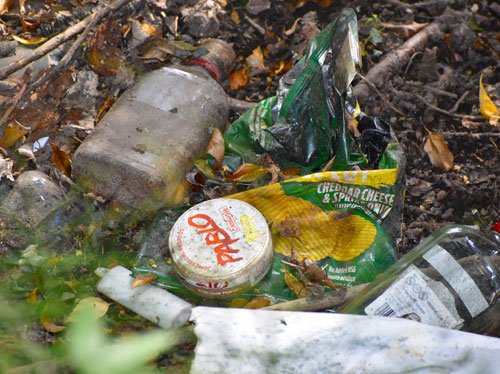
To those who claimed at a recent Local Authority Waters Programme (LAWPRO) meeting that they regularly entered the River Suir to remove discarded litter, sadly, the evidence seen by me today contradicts that claim. No one person has entered the river Suir, in the past 2 years, as images taken of litter today and in the past will confirm. See here and then view images shown in video, accompanying this report, (Note the timber pallets).
River Area In Thurles Town Centre “Managed for Wildlife”.
In an email sent to Thurles Municipal District Council requesting that for the sake of appearances, “a group of volunteers might be assembled to clean up the entirety of the River Suir from Barry’s Bridge to the Swinging gates at the junction of Emmett Street – Same work to include removal of sediment and reeds/weeds from the area“, alas the reply came back in the negative. Tipperary Co. Co. Council would have objections as would OPW and Inland Fisheries. We already were aware that LAWPRO would object. At least we now know the funded bodies responsible for the decline and destruction of our River Suir over the past 12 years.
At the junction at Emmett Street and Thomand Road, take a walk through the “Swinging Gates” entrance. Glance to your right to view dumped, strewn, sacks of what appears to be ladies assorted garments, which have lain there for months. This area is also “Managed for Wildlife”, as is the area travelling west from the children’s play park, close to the foot bridge. Here more garments are discarded; throw away, no longer wanted or needed. Yes, this is the work of an uncouth, uncaring resident, but nowadays we pay hefty community taxes to have such matters cleaned up in a timelier fashion. Again I ask the question, “For what exactly do we pay Property Tax?
The Need To Attract Tourism. Some weeks ago local councillors were making local headlines, seeking that a bus should immediately be funded by the government to transport passengers from Thurles Railway Station into Thurles town, latter now almost devoid of its once rich heritage, thanks to the same councillors and their officials. At Thurles Railway Station, regrettably yet another “Managed for Wildlife” sign is parked at the end of the platform, its deluded phizog guarding a small grassy area of ground 4.6mts(15ft) x 1.3mtrs(4ft). The terminally dehydrated grass here is no longer cut and since the sign was erected, this latter, flowerless plot, just described, together with the available quality flower pots strewn about the area; (latter previously voluntarily tended by locals,) today demonstrates a total lack of ambition for our town’s first impressions. (See Video). Truth is, if I were travelling to Thurles by rail, I would get back on the train.
Croke Street in Thurles for the most part has set an example for the rest of the town. Despite local residences being landed with hideosity and dereliction, facing unto their homes, they have introduced flowers, in an effort to distract eyes from an unsightly, ugly, unfinished, concrete structure.
Protecting Biodiversity – A Polite Name For Lack Of Motivation And Neglect. In Thurles, Co. Tipperary, ‘protecting biodiversity’ has become a polite name for neglect. As I stated on August 19th last, when it comes to areas within Thurles town, an outsider could be forgiven for thinking that our supposed “protection of biodiversity” is little more than a convenient disguise for neglect. What greets the eye in many places is not thoughtful conservation, but total dereliction; footpaths with weeds, vacant sites left to rot and green spaces littered with rubbish. This isn’t stewardship of the natural world; it is abandonment dressed up as environmental concern. Where real biodiversity currently exists in Thurles is to be tarmacked over, to build a new Drive-Thru McDonald’s burger joint, supported by Tipperary Co. Council.
Genuine biodiversity protection requires care, planning and pride of place; what Thurles, too often, shows is disregard, negligence and a shocking lack of ambition for our town’s appearance and well-being. If this is what passes for protecting our environment, then it is no wonder that so many residents feel our community is being failed at the most basic level.
It seems that the difference between the big business mindset and the mindset of environmentalists boils down to big business believing “I have rights” versus the environmentalists understanding “I have obligations”. Perhaps instead of thinking that we are “born with rights”, we should choose instead to think that we are “born with obligations”, thus requiring us to serve present and future generations, and while in doing so, serve the healthy needs of the planet on which we reside, each of us for a relatively short period.
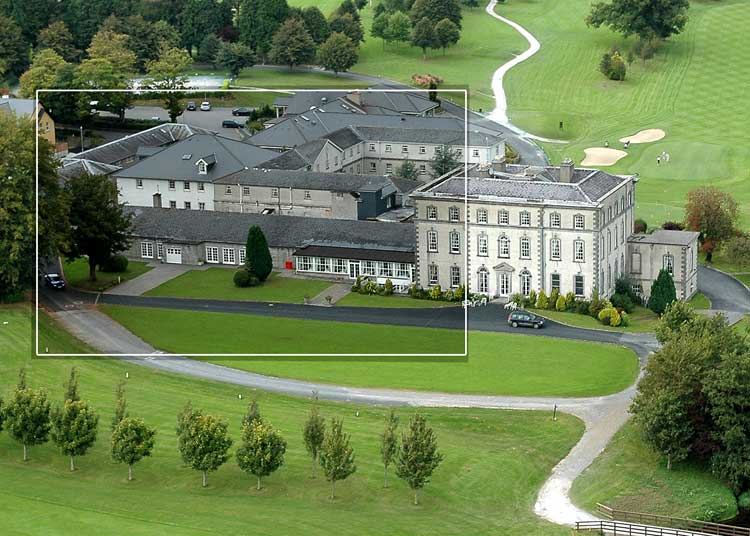
The Dundrum House Golf & Leisure Resort situated in Co Tipperary has been forced to close with immediate effect, resulting in the loss of 48 jobs.
The company said the business had continued to operate at a loss and was no longer able to meet its financial obligations. A 30-day collective redundancy consultation process with employees is expected to begin later this week.
Dundrum House Golf & Leisure Resort. Pic: G.Wlloughby.
An IPAS accommodation centre on the Dundrum House campus, which is operated independently, is not expected to be affected by the closure.
Brogan Capital Ventures, which owns and operates the golf resort, informed staff today that the company would cease trading. The decision affects the restaurant, bar, golf course, driving range, golf shop and leisure centre.
In a statement, Brogan Capital Ventures said it very much regretted the adverse impact of this decision on its valued employees, golf and leisure centre members, customers, suppliers, the local community and other stakeholders. However, they state that the closure is unavoidable given the state of the company’s current financial affairs.
This above stated proverb, is a long-standing, joke which specifically addresses staff working within the Public Service. Same captures how (and maybe why) progress remains crippled here in Ireland by obvious bureaucracy. Those who want to get things done, cannot, because of red tape and other ridiculous and elaborate procedures which must be gone through, on the whim of those in charge, who insist that such and such must be undertaken, before any objective is achieved. This can be clearly seen when monthly communication audits are taken to help monitor the workload and efficiency of communication processes, such as letters received, letters sent, or processed within a monthly time frame, here within our Civil Service. Indeed many a public service sewage system has been found to be heavily blocked by smiling plumbers, after public service staff members had attempted to reduce the content of their heavily stacked ‘Correspondence Inwards Trays’.
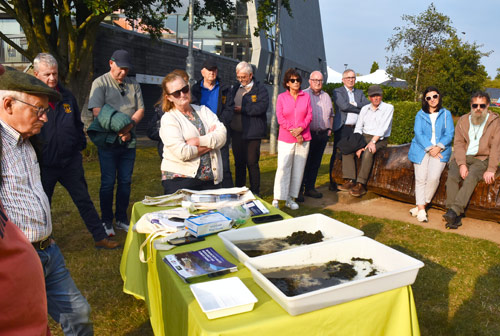
Speaking of sewage systems, this same overall attitude was confirmed last evening to a 40 person gathering on the scented, down wind side of the River Suir. The informative meeting came as a result of an event organised, through the good auspices of Thurles Lions Club as part of Irish Heritage Week. Here representatives from varying local organisations were gathered together, to hearken to officials from our Local Authority Waters Programme (LAWPRO).
To tell the truth LAWPRO officials did give a good account of themselves; explaining their actual remit and their progress in solving the unacceptable state of the upper river Suir region, to current date.
However, following a question and answer session, the meeting quickly revealed that the only people who really care about the river Suir were a small few well meaning civic minded locals, that give up their time weekly to wade through effluent, risking their health to pull out cans, bottles, discarded clothing item and supermarket trolleys from this waterway. However, after last night’s meeting, even their efforts may now be paralysed. They may get LAWPRO funding for waders, but efforts to actively clean the river are to be discouraged for a number of future years and for reasons that are difficult to understand.
This was evidenced in many ways, e.g. No elected politicians were present, despite Mr Michael Lowry (Ind) and Mr Ryan O’Meara (FF), both having offices in Thurles town. Since it wasn’t an election year, Mr Alan Kelly (Lab), as expected, was also conspicuous by his absence. No members of the local press, radio and local businesses, could be attracted either, to be in attendance. Only one local councillor, namely Fine Gael Cllr Ms Peggy Ryan, (recently elected Cathaoirleach of Thurles Municipal District), emerged into the light, anxious no doubt to demonstrate the capacity of women to succeed in politics, as she clearly states in her online internet profile.
So, what news was gleaned from ‘The Scented Side’ of the River Suir in Thurles last evening?
First, it is essential that our readers view HERE a report, received and accepted, in a press release, by journalist Mr Eoin Kelleher, published on line by the Irish Independent newspaper dated Thursday September 2024, time 15:18pm, also published by the Tipperary Star newspaper and broadcast on Local Radio.
This information, published above, was contradicted by Cllr Ms Peggy Ryan and sadly same is now confirmed, since almost one year later (Sept. 2024), no plan for this area currently exists; no discussions with local interested parties has taken place and no application for funding has ever been sought.
As a wise teacher once said to me as a pupil, “Walk your talk”, and yes, most people will agree that we can do more for the care of our local river Suir, than to dot a couple of biodiversity signs, showing a Bumble Bee stuck in the head of Knapweed flower, latter a non-existent plant to be found located anywhere along the Suir-side walk.
To be totally honest and to speak freely, when it comes to the River Suir, an outsider could be forgiven for thinking that protecting our biodiversity looks a lot like total dereliction; complete disregard for our local environment; utter negligence and deliberate carelessness.
All of the questions asked at yesterday’s meeting remained unanswered. However, based on the difficult progresses being experienced by LAWPRO as a consequence of trying to deal with Uisce Éireann (Irish Water), the Environmental Protection Agency (EPA), Inland Fisheries Ireland, the Farming Community and Tipperary Co. Council, the area of the river Suir, situated in the centre of Thurles, is unlikely to be cleaned up within the next 5 years.
Speaking privately, to one of the LAWPRO officials in attendance last evening, I was informed that Tipperary County Council were responsible for the current state of the River Suir, however were there any work to be undertaken by volunteers, LAWPRO stated, that if alerted, they would certainly raise objections.
That said, I wonder could we find 50 able-bodied persons to assemble with wellies, spades and other equipment at the ready, for an hour or so, after work – say 6:30pm – 8:00pm, to claim back our river. We could call ourselves “The Coalition Of The Willing”, pledged to the strengthening of our local environment. Anyone with guts and interested can contact me on Facebook, sure if we wore Covid-19 masks, we would have the job finished before Tipperary officials, not yet returned from their well deserved vacations and who would take a couple of weeks later, to realise what had actually happened.
We would like to express our sincere thanks to Thurles Lions Club, LAWPRO Officials and those who attended and expressed views at the event.
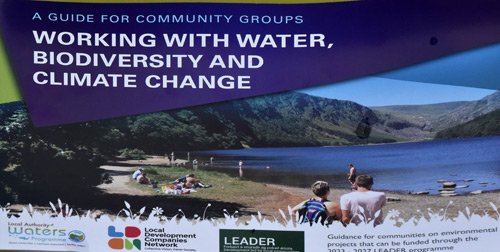
As part of 2025 National Heritage Week a ‘walk and talk‘ event will take place here in Thurles, Co. Tipperary, on Monday evening next, August 18th. Local Authority Waters Programme (LAWPRO) officials will hold this event on the banks of the River Suir, initially commencing in front of “The Source” building, at 6:30pmsharp. As part of this event, LAWPRO officials will explore the rivers history and its significance to the town of Thurles. LAWPRO was set up in 2016(Nine years ago) as a shared service on behalf of the 31 Local Authorities in Ireland. The Programme operates nationally out of 13 different Local Authority centres. LAWPRO is supposed to be driving public engagement, participation and consultation with communities and stakeholders at local level via its Communities Team; while delivering a programme of catchment assessment in priority areas for action via its Catchment Science Team and coordinating these activities across the relevant public sector via five Regional Operational Committees.
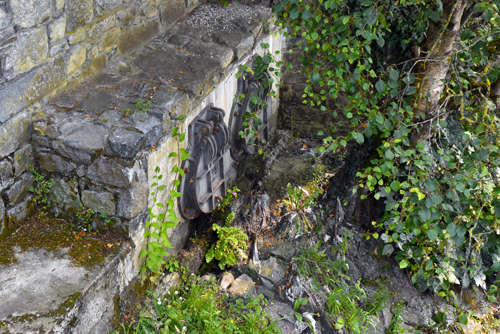
It has not rained in Thurles during the last 48 hours, yet today water and litter continues to flow from street drainage pipes into the river. Pic: George Willoughby.
We are informed that LAWPRO scientists will discuss the water quality within the river Suir and carry out a ‘kick sample‘*.
*Kick Sampling; Scientists can examine the amount of macro-invertebrates by kick sampling. Macro-invertebrates are the small aquatic animals such as insect larva, snails, worms, beetles etc. all of which are excellent indicators of water quality. Where a river is unpolluted these are to be found in abundance. Where a river has excessive amounts of nutrients and other pollutants, the numbers and types of macro-invertebrates are usually lower and many of the rare and sensitive species are therefore absent.
In September 2024 we were informed, 11 years later, following a video posted on Thurles.Info, on August 17th last, that a biologist, Mr Fran Igoe, a spokesperson representing the Local Authority Waters Programme (LAWPRO) has agreed that what is happening in Thurles and the river Suir is ‘shocking‘. Mr Igoe(LAWPRO) one year ago stated that test results, now show that while one should expect to find a broad range of aquatic insects and bugs, he could only find two species in our town’s river.
One year on, (the above video first published on August 17th2024)despite promises, nothing has changed.
Last September 2044, the public were informed that LAWPRO, alone, would be drawing up a plan of action which would involve input from all the relevant bodies within a 6 month time span to produce an agreed action plan. At that stage they would apply for funding to carry out all recommendations in this soon to be completed report. One year on, as far as the public is concerned, – silence – nothing – except the cutting of reeds, twice this year already, latter destroying Mother Nature’s method of cleaning badly polluted water. One must now assume that if only two species of aquatic insects and bugs reside here, then lack of funding must be the excuse for having to tolerate this deplorable state of our river.
If funding is the problem, where are our out of touch Tipperary elected TD’s namely Alan Kelly, Michael Lowry and Ryan O’Meara, latter two who enjoy offices within Thurles town and all three who enjoy speaking rights in Dáil Éireann.
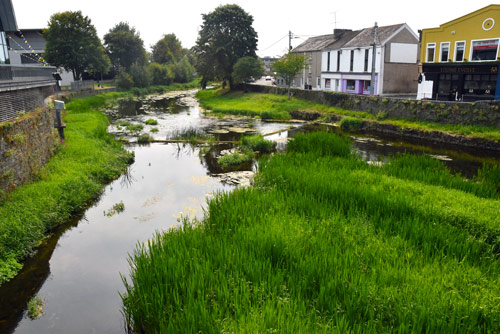
The deplorable smelly state of the River Suir today, photographed from Barry’s Bridge in the centre of Thurles. Pic: George Willoughby.
All ages, including elected councillors and politicians are welcome to attend at this event and for those residents of Thurles, who, rightly, find themselves greatly offended by the current deplorable state of the river Suir, your attendance is a must at this event.
This website uses cookies to improve your experience. We'll assume you're ok with this, but you can opt-out if you wish.AcceptRead More
Privacy & Cookies Policy
Privacy Overview
This website uses cookies to improve your experience while you navigate through the website. Out of these, the cookies that are categorized as necessary are stored on your browser as they are essential for the working of basic functionalities of the website. We also use third-party cookies that help us analyze and understand how you use this website. These cookies will be stored in your browser only with your consent. You also have the option to opt-out of these cookies. But opting out of some of these cookies may affect your browsing experience.
Necessary cookies are absolutely essential for the website to function properly. This category only includes cookies that ensures basic functionalities and security features of the website. These cookies do not store any personal information.
Any cookies that may not be particularly necessary for the website to function and is used specifically to collect user personal data via analytics, ads, other embedded contents are termed as non-necessary cookies. It is mandatory to procure user consent prior to running these cookies on your website.






Recent Comments