New study from Economic and Social Research Institute (ESRI) sheds fresh light on scale and complexity of energy poverty in Ireland, thus revealing the issue is far more widespread than traditional measures suggest.
€480 Could Make a Critical Difference.
According to the research, households experiencing energy poverty would need an average income boost of €480 per year to escape the condition. This relatively modest figure highlights how targeted financial supports could significantly improve living conditions for vulnerable groups, at a fraction of the cost of broader, universal schemes. The study estimates that delivering this targeted support would cost approximately €370 million, notably less than the €550–€575 million spent on universal electricity credits in 2024, suggesting more efficient policy solutions are within reach.
Energy Poverty Affects More Households Than Expected. While official figures indicate that just over 10% of households spend more than a tenth of their disposable income on energy, the ESRI warns this measure alone understates the reality. When multiple indicators are considered, the findings show that:
Around 14% of households report being unable to afford adequate warmth or fully pay utility bills.
More than 30% of households experience some form of energy affordability challenge.
This aligns with broader ESRI research showing energy costs place a disproportionate burden on lower-income households, where energy spending takes up a larger share of income.
Why Current Measures Fall Short. The report emphasises that relying on a single metric—such as income share spent on energy—fails to capture the full picture. Energy poverty is driven by a combination of:
Low disposable income.
High energy costs.
Poor housing quality.
A household may not appear “energy poor” by one definition, yet still struggle to heat their home adequately or cut back on essential energy use.
A Call for Smarter Monitoring. To better understand and address the issue, the ESRI recommends adopting a multidimensional monitoring system, focusing on three key indicators:
Inability to afford adequate warmth.
High energy costs relative to income.
Unusually low energy usage (often due to under-heating homes).
This approach would provide policymakers with a more accurate and actionable picture of need.
Who Is Most Affected. The research identifies several groups at higher risk of energy poverty, including:
Low-income households.
Renters.
Households with unemployed members.
Female-headed households.
Rural communities.
Single-adult families.
These findings reflect long-standing evidence that energy poverty is closely tied to income inequality and housing conditions, with disadvantaged groups often living in less energy efficient homes .
Policy Implications: Targeted Action Over Blanket Measures Experts behind the study stress that better coordination between social protection, housing, and energy policy is essential. Dr Andrés Estévez noted that tackling energy poverty requires recognising the multiple ways it is experienced, while Dr Miguel Tovar Reaños highlighted the importance of integrated policy responses to strengthen protections for vulnerable households.
Conclusion. This latest ESRI report makes one thing clear: energy poverty in Ireland is both more widespread and more complex than headline figures suggest. However, it also shows that targeted, data-driven interventions could deliver meaningful relief, efficiently and effectively. As Ireland continues its transition toward a cleaner energy future, ensuring that no household is left behind will require smarter measurement, sharper policy focus, and sustained investment in those who need it most.
The Irish Tricolour: A story of unity and the current struggle to keep it that way.
On a spring morning in Dublin, as the flag rises slowly above the General Post Office, it looks simple; three vertical bands of green, white, and orange catching the light, waving in the breeze. People pause, some out of habit, others out of respect. For a moment, it feels like a shared symbol, something steady in an ever changing Ireland. But the Irish tricolour has never been just a flag. It has always been an idea, and like all ideas, it is constantly being argued over.
The signature of Thomas Francis Meagher present at the ‘Ballingarry Uprising of 1848’, in Tipperary, who gave us ‘The Irish Tricolour’. His signature is written on the inside cover of a book found in Richmond prison, Tasmania. The book is entitled “Wreath of Friendship” and dated 26th February 1849.
Its meaning was set down long before the modern state existed. When it emerged in the 19th century and later became central during the Easter Rising, it carried a message that was strikingly ambitious for its time. Green stood for the nationalist tradition. Orange stood for the Protestant, unionist tradition, associated with William of Orange. Between them, white promised something fragile but powerful: peace. It was, in essence, a proposal. Not for dominance or victory, but for coexistence.
When the Irish state was later formalised, the Constitution of Ireland gave the tricolour its official status. Yet the Constitution did not try to explain it. It didn’t need to. By then, the symbolism was already understood, or at least, it was supposed to be.
For much of the 20th century, the flag settled into everyday life. It flew over schools, appeared at sporting events, and marked national ceremonies. It became familiar, almost ordinary. But beneath that familiarity, its meaning never stopped evolving.
In Northern Ireland, the same flag carried a different weight. It was not neutral there. It marked identity, allegiance, and, at times, division. During the years of conflict, it could signal not just who you were, but where you stood. Even after the Good Friday Agreement, which recognised multiple identities on the island, the tricolour remained meaningful to some and contested by others. The promise of the white stripe; peace between traditions, was still a work in progress.
Back in the Republic, things seemed more settled, at least on the surface. The flag belonged to everyone. Or so it was said. But in recent years, something has shifted. The tricolour has begun to appear in new settings, at protests, in political movements, in moments of tension rather than unity. And with that, old questions have returned in new forms.
Taoiseach Mr Micheál Martin.
Who does the flag really represent? When our Taoiseach Mr Micheál Martin correctly speaks about people “dishonouring” the flag, he is not talking about how it is folded or whether it touches the ground. He is talking about something less visible, but far more significant. He is talking about “meaning“.
There are times now when the Irish flag is carried, not as an invitation, but as a statement. Not “this is ours together,” but “this is ours, not yours.” It appears alongside messages that draw lines, between insider and outsider, between those considered truly Irish and those who are not. In those moments, the flag begins to change. Not physically, but symbolically.
And this where the tension lies. Because the tricolour was never meant to settle arguments about identity by excluding people. It was meant to make room for difference. The green and the orange were not supposed to compete; they were supposed to coexist. The white was not just decoration; it was the point.
Yet symbols are powerful precisely because they are open. They can be claimed, reinterpreted, even reshaped. Across the world, flags go through the same struggle. They are waved in celebration and in anger, in unity and in division. Ireland is not unique in this. But its flag carries a particularly clear instruction from its origins; an instruction that makes its misuse, today, harder to ignore.
To use the tricolour well, does not require ceremony or perfection. It simply requires remembering what it stands for. It means recognising that it does not belong to one tradition, one belief, or one version of Irishness. It belongs, in theory and in practice, to everyone who calls Ireland their home.
That is an easy thing to say and a harder thing to live. As the flag continues to rise and fall over cities and towns, over quiet streets and crowded gatherings, its meaning is never entirely fixed. It is shaped, again and again, by the people who carry it.
And so the questions remains, not written in law, but woven into the very fabric itself: Will the tricolour be used as it was intended, as a bridge between differences? Or will it become, slowly and subtly, a line that sadly divides?
Forty years on from the events of April 26th, 1986, the Chernobyl disaster remains one of the defining catastrophes of the modern age; an event that reshaped attitudes to nuclear power, exposed systemic political failures, and left a human and environmental legacy that endures to this day.
In the early hours of that morning, Reactor 4 at the Chernobyl Nuclear Power Plant; then part of the Soviet Union, now in Ukraine, exploded during what was supposed to be a routine safety test. A combination of flawed reactor design and critical operator errors triggered a runaway reaction. At 1:23am, the reactor core was blown open, releasing vast quantities of radioactive material into the atmosphere.
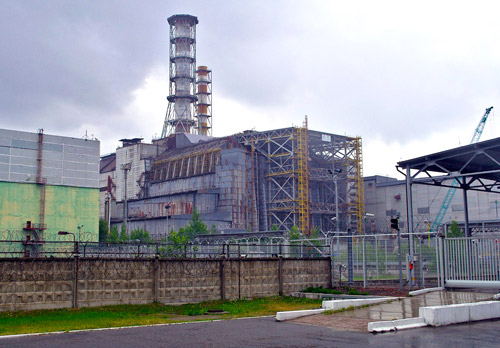
Chernobyl, forty years on from the events of April 26th, 1986.
The explosion lit up the night sky above the nearby city of Pripyat, but confusion reigned. Firefighters rushed to the scene believing they were tackling a conventional blaze. In reality, many were exposed to lethal doses of radiation within minutes. In the days that followed, the Soviet authorities delayed evacuation and initially downplayed the scale of the disaster.
The official death toll was listed as just 31, but that figure has long been disputed. Many estimates suggest that tens of thousands, perhaps more, suffered long-term health consequences, including increased cancer rates across Ukraine, Belarus and beyond. Radioactive fallout spread across Europe, carried by wind and weather patterns, reminding the world that nuclear accidents do not respect borders.
Yes, Ireland was affected by Chernobyl, but only lightly, while radioactive fallout did reach the country and caused temporary increases in radiation, the overall impact was limited and far less severe than in areas closer to the disaster. These effects in Ireland were influenced heavily by rainfall. Where it rained, radioactive particles were washed out of the air and deposited onto the land. Some western and northern counties (such as Galway, Mayo and Sligo) saw higher levels because of heavier rain. However, overall contamination levels were much lower than in mainland Europe.
Impact on Irish food and farming. The main concern in Ireland was agriculture, particularly milk and livestock. Low levels of radioactive iodine were detected in milk, though they were far below the extreme levels seen elsewhere in Europe. Some farmland and livestock were contaminated after animals grazed on affected grass. In later years, radioactivity lingered in certain upland sheep, especially in the west and northwest, although it was not considered a major health risk.
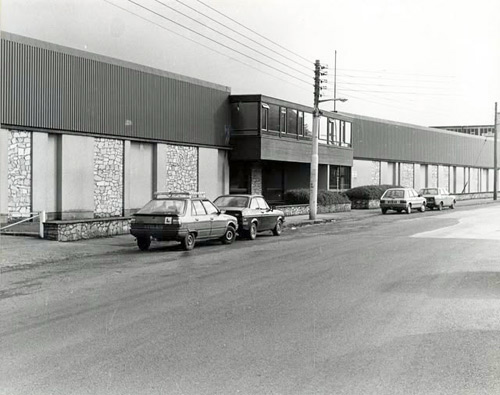
Phoenix Yarns, Thurles, now the site of Thurles Shopping centre.
However, it did help to bring about the closure of Phoenix Yarns, here in Thurles. Yarn sold to Russia was paid for by vegetables sent for sale in Belgium from Russia. Vegetables were then no longer acceptable in Europe and sales of yarn to Russia came to an abrupt end.
One of the most remarkable aspects of the disaster was the vast human effort required to contain the disaster. Around 700,000“liquidators” – soldiers, engineers, miners and volunteers, were mobilised to limit the damage. They cleared radioactive debris, built a concrete sarcophagus around the destroyed reactor, and prevented further explosions that could have rendered large parts of Europe uninhabitable. Many paid for this work with their health or their lives.
Beyond the immediate devastation, Chernobyl exposed deeper truths about governance and secrecy. The Soviet system’s reluctance to admit failure contributed to delays that worsened the crisis. The disaster became a symbol of the dangers of suppressing scientific truth in favour of political control; a lesson that continues to resonate in discussions about energy, transparency and environmental risk.
Four decades later, the site itself remains a stark reminder. The surrounding “Exclusion Zone” is still largely uninhabited, though nature has begun to reclaim the area in unexpected ways. Chernobyl has also become a powerful cultural reference point, explored in documentaries, literature and drama.
One of the most acclaimed portrayals is the 2019 television drama Chernobyl, which brought renewed global attention to the disaster. The series dramatizes both the human stories and the systemic failures behind the catastrophe, highlighting the bravery of those who responded and the consequences of misinformation.
Notably, Irish talent played a significant film role in bringing these stories to life. Ms Jessie Buckley portrayed the character of ‘Lyudmilla Ignatenko‘, the wife of a firefighter who was among the first responders. [Film can be viewed currently on SKY GO]. Her performance captured the personal tragedy experienced by families caught in the disaster’s wake. Ms Buckley, who attended the Ursuline Convent in Thurles during her school years, has since become one of Ireland’s most celebrated actors, earning major international awards.
She appeared alongside Barry Keoghanwho played the role of ‘Pavel‘ another central figure in the story, together with Michael McElhatton who played the role of ‘Prosecutor Andrei Stepashin‘; Jared Harris(son of the Limerick-born actor Richard Harris), who played scientist ‘Valery Legasov‘; and Michael Colgan who appeared in the miniseries as ‘Mikhail Shchadov‘; each of their excellent performances helping to humanise a disaster often discussed in abstract terms.
As we mark forty years since Chernobyl, its legacy remains complex. It is a story of technological failure, but also of courage; of political secrecy, but also of truth eventually emerging. Above all, it serves as a warning, about the consequences of ignoring expertise, underestimating risk, and placing ideology above reality.
In remembering Chernobyl, we are not just looking back at history. We are being reminded of responsibilities that remain urgent today.
The number of individuals accessing emergency homeless accommodation has reached a record high, highlighting ongoing pressures within the housing system despite recent rental reforms.
New figures show that 17,517 people were using emergency accommodation in the final week of March, up from 17,308 the previous month. This total includes 11,946 adults and 5,571 children, both representing the highest levels recorded to date.
Tánaiste Mr Simon Harris acknowledged the severity of the situation, stating that homelessness in Ireland “is far too high” and emphasizing that the level of child homelessness “cannot be accepted.” He confirmed that a targeted action plan addressing child and family homelessness is expected to be published shortly.
The latest data reflects a 46% increase in homelessness since the removal of the pandemic-era ban on no-fault evictions in April 2023, when the total stood at 11,988 people. The upward trend has continued steadily in the years and months since.
Officials note that the figures account only for those in emergency accommodation and do not include individuals sleeping rough or those housed in settings such as hospitals, asylum centres, or domestic violence shelters.
This report marks the first assessment since the introduction of new rental regulations in March, including reforms around six-year tenancies. The government maintains that these measures are designed to enhance tenant security and encourage housing supply. However, critics argue the changes could lead to rising rents and increased eviction-related homelessness.
Under the updated rules, landlords with four or more tenancies are prohibited from issuing no-fault evictions for new leases starting from March. Smaller landlords may still terminate tenancies under specific conditions—such as financial hardship or accommodating a family member—but are restricted from resetting rent levels until the six-year tenancy period concludes.
The government has reiterated its commitment to addressing the housing crisis, with further policy measures anticipated in the coming weeks.
The Government has today published an Implementation Plan for the Family Courts Act 2024, setting out a major transformation of Ireland’s family justice system over the coming years. The reforms aim to create a more accessible, efficient, and child-focused system for families engaging with the courts. The plan has been approved by Cabinet and outlines how the new structure will be introduced on a phased basis, beginning in January 2027. At the core of the reforms is a commitment to improving the experience of families in the legal system. The new model will prioritise the needs and welfare of children, while also seeking to reduce costs, simplify processes, and make the courts more user-friendly.
New family court structure. The Family Courts Act 2024 provides for the establishment of dedicated family court divisions within the existing court system. These will include a Family District Court, Family Circuit Court, and Family High Court, each dealing specifically with family law matters. Under the new system, specialist judges with expertise in family law will be assigned to these courts on a full-time basis. Each division will be led by a Principal Judge, ensuring improved case management and consistency across the system. The reforms will also allow for greater flexibility in how cases are handled, including enabling certain family law applications, such as divorce proceedings, to be heard at different court levels.
Phased implementation from 2027. The implementation plan sets out a three-phase rollout designed to minimise disruption while ensuring effective delivery.
Phase 1 (January 2027): The first family courts will open in selected locations, each providing a full suite of family court services. Judges and staff will receive specialised training, and public awareness initiatives will be introduced. Phase 2 (January 2028): Additional locations will be brought into the system, building on lessons learned from the initial rollout. Phase 3 (January 2029): Full national implementation will be achieved, with family courts operating across the country. This staged approach reflects the complexity of the reforms and allows for ongoing evaluation and refinement at each stage.
Planning and oversight. A preparatory phase is already underway to ensure the first courts are operational by 2027. This includes infrastructure development, staff training, and coordination across the Courts Service, judiciary, and other stakeholders. To support delivery, an Implementation Steering Group has been established to oversee progress, monitor performance, and ensure collaboration between all parties involved.
A long-term transformation. The reforms represent one of the most significant changes to Ireland’s court system in decades. By introducing specialised court divisions, strengthening judicial expertise, and embedding child-centred principles, the new system aims to deliver a more responsive and effective family justice framework. Once fully implemented, the reformed system is expected to provide a more streamlined, supportive, and accessible experience for families, while ensuring that the best interests of children remain central to all proceedings.
This website uses cookies to improve your experience. We'll assume you're ok with this, but you can opt-out if you wish.AcceptRead More
Privacy & Cookies Policy
Privacy Overview
This website uses cookies to improve your experience while you navigate through the website. Out of these, the cookies that are categorized as necessary are stored on your browser as they are essential for the working of basic functionalities of the website. We also use third-party cookies that help us analyze and understand how you use this website. These cookies will be stored in your browser only with your consent. You also have the option to opt-out of these cookies. But opting out of some of these cookies may affect your browsing experience.
Necessary cookies are absolutely essential for the website to function properly. This category only includes cookies that ensures basic functionalities and security features of the website. These cookies do not store any personal information.
Any cookies that may not be particularly necessary for the website to function and is used specifically to collect user personal data via analytics, ads, other embedded contents are termed as non-necessary cookies. It is mandatory to procure user consent prior to running these cookies on your website.









Recent Comments