The EPA announces funding of €10.5m for new environmental and climate research inviting innovative solutions to address medium- to longer-term environmental research needs.
Research proposals are invited for research across the following areas:
Addressing Climate Change Evidence Needs
Delivering a Healthy Environment
Facilitating a Green and Circular Economy
Protecting and Restoring our Natural Environment
Policy Implementation, Effective Regulation and Innovative Governance Models
Successful researchers will be supported by EPA to engage with policy makers to ensure that the research is impactful and effectively informs environmental policy in Ireland.
Yesterday, the Environmental Protection Agency (EPA)announces research funding of up to €10.5 million for new environmental research. The EPA is inviting proposals from the research community for innovative projects to support the development and implementation of environmental policies in Ireland. In particular, multi- and trans-disciplinary teams are welcomed to bring diverse perspectives to complex environmental challenges.
Announcing the EPA funding call, Ms Roni Hawe, Director of the EPA’s Office of Evidence and Assessment said: “The launch of the EPA Research Call 2026 marks a significant opportunity for the research community to contribute to addressing Ireland’s most pressing environmental challenges. This investment will support the generation of robust evidence needed for good policy and for more efficient and effective decision-making, as well as building skills and expertise in critical areas related to climate, the environment and sustainability.”
Opportunities for research are identified in areas such as how to bring mitigation and adaptation together to support Ireland achieving its climate and environmental goals; understanding antimicrobial resistance in the environment; how to accelerate our transition to a circular economy and how we can protect the environment while accelerating infrastructure and simplifying environmental regulation.
Dr Ms Caroline Wynne, EPA Research Manager, said: “This year, we are pleased to invite proposals for larger scale projects that will allow researchers to develop new and innovative solutions as well as supporting the recruitment and training of highly skilled PhD students. We are particularly interested in supporting a wide cohort of the research community to bring social, economic and environmental perspectives together, which is essential to address complex societal challenges.”
The EPA Research Programme is a Government of Ireland initiative funded by the Department of Climate, Energy and Environment. Under this year’s call, the EPA is delighted to be partnering with Met Éireann to co-fund projects in areas of mutual interest.
The deadline for proposals is May 28th 2026.
Further funding: Other EPA funding opportunities this year include EPA Fast-track to Policy Funding; Fulbright-EPA Scholarships and Fellowships; the Research Ireland Public Service Fellowship, as well as opportunities supported through EPA’s participation in European Partnerships. Details are available on our Research Funding webpage.
The Climate Change Advisory Council’s latest report finds that climate change, driven by greenhouse gases, is having measurable impacts in Ireland. There is clear evidence in 2025 of rising temperatures and more frequent extreme weather events, with growing risks for communities, infrastructure, essential services and the economy.
The Council today launched Our Changing Climate 2025, the first publication in its Annual Review 2026 series, highlighting accelerating climate trends and the urgent need for Ireland to simultaneously reduce its dependency on fossil fuels and strengthen its preparedness for climate impacts. Our continued reliance on economically volatile imported fossil fuels leaves households, communities and businesses acutely vulnerable to shocks such as the current conflict in the Middle East. The Council has repeatedly stressed that there are viable alternatives which must be urgently pursued that would increase our economic resilience, reduce our dependency on the actions of others and simultaneously reduce our contributions to global warming.
The Council has identified gaps in how the economic, social and environmental consequences of extreme weather events are monitored, noting that robust data and evidence are essential to inform effective policy, planning and investment.
New attribution capabilities highlight the direct link between continuing greenhouse gas emissions and the weather we are experiencing today. Rainfall during Storm Claudia in November 2025 for example was made twice as likely and nearly 12% more intense than it would have been in a pre-industrial climate. This points directly to the impact of climate change on our weather patterns. Extreme conditions continued into 2026, with Storm Chandra bringing prolonged rainfall and severe flooding, as saturated ground conditions significantly increased flood risk.
The report also identifies impacts across natural systems, including shifts in the seasonal lifecycles of insects and wildlife, signalling broader ecological change. This can result in an increased risk of outbreaks of diseases such as ash dieback and avian influenza, invasive species such as the Asian Hornet, harmful algal blooms, and an increased risk of wildfires.
Key climate observations from the report include:
2025 was the second warmest year on record, with average summer temperatures 1.94°C above the 1961–1990 long-term average
Seven of the ten warmest years have occurred since 2005.
The meteorological autumn was the fourth wettest on record, and six of the ten wettest autumns have occurred since 2001, pointing to a clear trend of increasing rainfall.
Ireland experienced record-breaking warm conditions in spring and summer, with Uisce Éireann declaring 49 water supplies in 15 counties to be in drought status.
Ireland recorded its highest ever wind gust of 184km/h in January 2025
A record high minimum temperature for any calendar month of 19.0°C was also recorded in June.
Storm Éowyn, an event with record-breaking wind speeds, was the most expensive storm-related insurance event in Irish history with claims in excess of €301m. The storm exposed vulnerabilities in critical infrastructure and essential services, including energy, water and telecommunications.
Globally, the 10 most costly extreme weather events in 2025 caused damage exceeding €100bn.
The Council has emphasised that adaptation must now become a central national priority, particularly in strengthening flood resilience and critical infrastructure. Protecting people, infrastructure and the economy will require sustained investment in climate resilience, alongside coordinated policy and long-term planning.
The report warns that future risks will intensify without action, with continued warming and more frequent and severe extreme weather events expected. Delaying action will increase future costs, risks and disruption for society.
Prof. Mr Peter Thorne, Chair of the Adaptation Committee of the Climate Change Advisory Council, said: “Climate change is no longer a future issue. Its damaging impacts are being felt across the environment, the economy and our communities. We are seeing clear evidence that a warming climate is leading to more frequent and severe extreme weather events. Ireland remains underprepared for these impacts. We must shift from reacting to extreme weather events to anticipating and preparing for them. Effective adaptation measures that tangibly increase resilience are essential to protect people, our economy and our way of life. This must be underpinned by better data, stronger infrastructure and sustained investment to ensure we are ready for the challenges ahead. Improving our resilience must also go hand-in-hand with reducing our reliance on fossil fuels, not only to address climate change, but also to protect households and businesses from volatile energy costs and strengthen Ireland’s energy security in an increasingly uncertain global context.”
As part of the Annual Review series in 2025, the Council has called for coordinated Government action, including investment in climate monitoring and infrastructure systems, strengthened policy and legislative frameworks, and a systemic approach to improving national resilience.
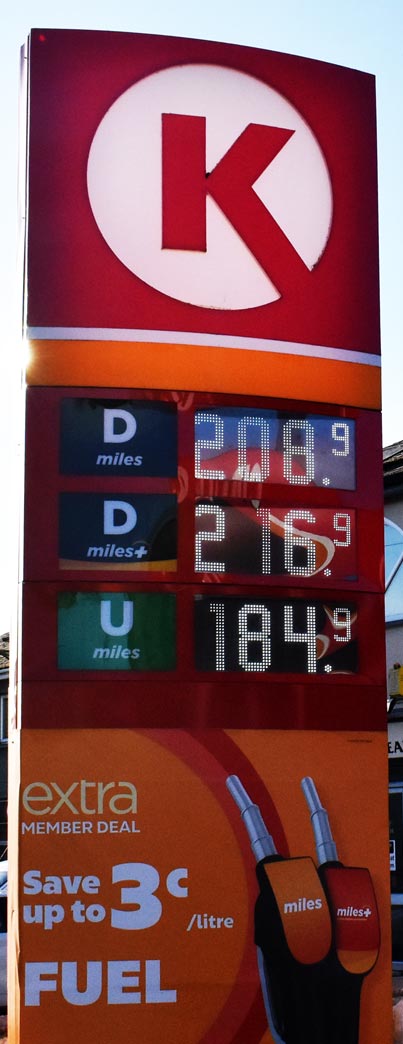
There is a familiar rhythm to fuel prices in Ireland. Costs rise sharply, headlines point to global crises, and frustration builds at petrol stations across the country. Recently, that cycle has repeated itself, with rising tensions involving Iran blamed for sudden spikes that pushed prices close to, and in some cases beyond, €2 per litre.
At first glance, the explanation seems straightforward. Oil is a global commodity, and when conflict threatens supply; particularly in critical regions like the Middle East, prices rise everywhere. In early 2026, motorists saw increases of over 30 cent per litre in a matter of days as markets reacted to geopolitical uncertainty.
But if global events are only part of the story, what explains why Ireland consistently feels more expensive than many of its neighbours? To understand that, you have to look beyond the headlines, and into the structure of the price itself.
The Price Beneath the Price. Strip away the pump display and something striking emerges. In Ireland, the majority of what drivers pay for fuel has little to do with oil at all. According to AA Ireland data, approximately 65% of the price of petrol and 60% of diesel is made up of taxes and levies.
Put simply, when you pay around €1.75 per litre:
Roughly 60 cent reflects the actual fuel cost.
More than €1 goes to the State.
This is not a marginal difference. It fundamentally changes how global shocks are experienced at a local level. If oil prices rise, Irish motorists don’t just pay more for fuel, they pay more tax on that higher price as well. Value Added Tax (VAT), set at 23%, is applied on top of the entire cost, including excise duty and carbon tax. The result is a compounding effect, often described as a “tax on tax,” where price increases are amplified rather than simply passed through. It is here that the gap between global explanation and domestic reality begins to widen.
Global Markets, Local Multipliers. There is no question that international events matter. The recent surge in prices, following Middle East tensions, reflects genuine concern about supply disruption. Oil markets are notoriously sensitive, and even the perception of risk can trigger immediate price increases. But the same global oil price applies across Europe. The difference lies in how each country translates that price into what consumers actually pay.
In Ireland, that Translation is Particularly Heavy. Before tax, Ireland sits roughly in the middle of European fuel costs. After tax, it often ranks among the most expensive. This explains a common experience for motorists near the border, as crossing into Northern Ireland can reduce the cost of a full tank by €15–€20, despite the fuel itself being sourced from the same global market. The conclusion is difficult to avoid, global events may set the baseline, but domestic policy determines the final impact.
The Case for High Taxes Of course, there is a logic behind Ireland’s approach. Fuel taxation is not simply a revenue tool, though it certainly provides substantial income for the Exchequer. It is also a central pillar of climate policy. Carbon tax, currently aligned with a rate equivalent to €71 per tonne of CO₂, is designed to discourage fossil fuel use and encourage a transition to cleaner alternatives. In theory, the principle is sound, make carbon-intensive behaviour more expensive, and people will gradually shift toward more sustainable choices. The revenue generated is also partially reinvested into Ireland’s energy efficiency programmes and social supports, aimed at offsetting fuel poverty. From a policy perspective, this reflects a broader European trend. Governments are increasingly using price signals to drive behavioural change.
Where Policy Meets Reality. The difficulty lies in how that theory plays out in practice. Ireland is not a country where driving is easily optional. Outside major urban centres, public transport options are limited, distances are longer, and reliance on private vehicles is often unavoidable. For many households, fuel is not a discretionary expense; it is a necessity. In this context, higher fuel prices do not significantly reduce consumption. Instead, they increase financial pressure. The burden is not evenly distributed either. Rural households, tradespeople, and lower-income workers are disproportionately affected. A commuter travelling 50 kilometres each day cannot simply switch to an electric vehicle overnight, nor can a small business absorb rising diesel costs indefinitely. What emerges is a tension between long-term policy goals and short-term lived experience.
The Ripple Effect Through the Economy. Fuel costs do not exist in isolation. They flow through the entire economy. When diesel prices rise, transport becomes more expensive. That, in turn, increases the cost of goods, food distribution, construction and services. A sustained increase of just 30 cent per litre can cost the average motorist over €300 per year, but the indirect costs spread far wider. This is why fuel prices often feel like a multiplier of the broader cost-of-living crisis. They do not just affect drivers; they affect everything.
Government Response: Reactive or Strategic? When prices spike sharply, governments tend to intervene. In recent weeks, temporary cuts to excise duty, (up to 20 cent per litre), have been introduced to ease pressure on households and businesses. These measures provide immediate relief, but they also highlight an uncomfortable truth; the government has significant control over fuel prices and can reduce them quickly when it chooses to do so. Critics argue that this reinforces the idea that high prices are, at least in part, a policy choice rather than an inevitability. Supporters counter that such interventions must remain temporary, or risk undermining climate commitments and public finances, and both perspectives have merit.
A System Under Strain – Ireland’s fuel pricing system is not broken, but it is under strain. On one side, there is a clear need to reduce emissions, meet climate targets, and transition toward a more sustainable energy system. On the other, there is the immediate reality of households struggling with rising costs in a country where alternatives are not yet fully in place. The current approach attempts to balance these competing pressures. But balance is difficult to maintain when external shocks, such as global conflicts, push prices sharply higher. In those moments, the structure of the system becomes more visible, and more contested.
So Who Is Responsible? The honest answer is not simple. Global events like the Iran conflict undeniably influence fuel prices. They set the direction of travel and can trigger rapid increases. But Ireland’s tax structure determines how steep that journey feels. It is not a question of either/or, it is both.
At a Crossroads Ireland now faces a deeper question about the future of its fuel policy. Should taxes remain high to drive long-term change, even if that increases short-term hardship? Or should the burden be eased, at least until viable alternatives are available for all? There are no easy answers. But one thing is clear: for many Irish drivers, the issue is no longer abstract. It is not about global markets or climate targets in isolation.
It is about the price on the pump, the cost of getting to work, and the growing sense that something in the system is no longer quite in balance.
There are many great engineering feats across the world. The Pyramids. The Great Wall of China. The Hoover Dam. And now, proudly joining that list… The Invisible Night-Time Car-Destroying Humps of Liberty Square, Thurles car park.
Yes, nestled in the thriving town of Thurles; a place known for its culture, history, and increasingly, its ability to test a car’s suspension beyond factory specifications; two magnificent road humps have been installed in the new car park situated south of Liberty Square. Not just any humps. Extremely high humps.The kind that don’t slow traffic; they redefine it.
Picture the scene. It’s dark. You’re driving home. All is calm. Then suddenly, BANG. Yes you’ve just discovered one of Thurles’ newest attractions; “Guess Where the Hump Is.” No reflective paint. No triangular hazard markings. No “hazard teeth.” Not even a polite hint. Just raw, unfiltered suspense. In fact, the lack of proper road markings is not even new to the area, concerns have previously been raised that road markings around Liberty Square are confusing and unsafe. But why stop at confusing when you can go full invisible ambush?
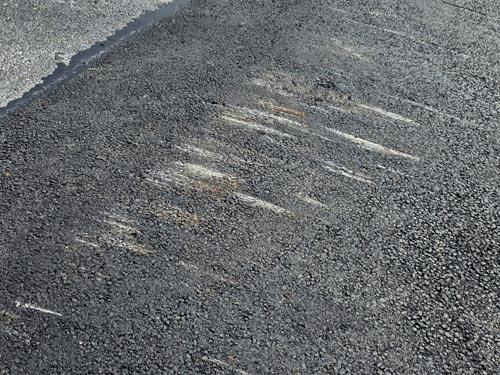
Vehicle Undercarriage Adjustment Programme, (V.U.A.P.). Locals report that cars are now receiving what engineers are calling: “Unscheduled structural realignment.” Others might call it: “The exhaust is now optional.” Between these humps and existing road issues, Thurles is quietly becoming Ireland’s leading centre for :- Suspension stress testing; Shock absorber retirement schemes, and spontaneous undercarriage redesign. And if you think that’s dramatic consider this: Tipperary has already seen over €50,000 paid out in compensation for pothole-related vehicle damage in recent years.
So clearly, the strategy is evolving; If potholes don’t finish the job, the humps will. While Thurles boldly pioneers the construction of Everest-sized speed ramps, meanwhile, the Potholes Live On. Oh, the potholes are heritage sites now. Protected. Preserved. Possibly getting listed. Residents have long complained about roads in poor condition, with some routes described as “full of potholes” and “very poor” , and even “deplorable” in broader Tipperary reports.
But filling them? Ah no, sure that would be reckless. Why eliminate a pothole when you can simply install a hump nearby and let drivers experience both?
It’s about balance. Engineering Brilliance (Or Something Like It), so let’s admire the process:-
Build two extremely aggressive road humps ✔️
Forget the hazard markings ✔️
Leave them practically invisible at night ✔️
Place them where unsuspecting drivers will absolutely hit them ✔️
This is not a mistake. This is performance art. A bold statement on modern infrastructure. A physical metaphor for life in Thurles: “You won’t see the problem… until it hits you.”
Final Thought:- Add a scoreboard; Give out prizes for best airborne moment, and rebrand the car park as: “Liberty Square Adventure Zone”.
At first glance, that can make insulation, heating upgrades, or a heat pump seem like poor value. But that would be the wrong conclusion, especially in a county like Tipperary, where many homes are older, more rural, more exposed to weather, and more likely to depend on oil, solid fuel, or outdated heating systems. The same CSO data that raised eyebrows also shows that better-rated homes generally use less energy per square metre, which remains one of the fairest ways to compare homes of very different sizes. In 2023, A and B rated homes using electricity for heating consumed 39 kWh per square metre, compared with 66 for C-rated homes and 58 for F and G rated homes.
That matters in Tipperary because house size and dwelling type play a big role in energy demand. Detached houses use far more energy overall than mid-terrace homes simply because there is more space to heat. The CSO found detached homes had the highest mean electricity consumption in 2023, at 7,388 kWh, 77% higher than mid-terrace houses. For a county with a large stock of detached and one-off rural homes, that makes efficiency upgrades especially relevant.
There is another reason this matters locally. CSO figures published in 2025 showed that Tipperary had one of the highest proportions of G-rated homes in the country, at 10%. That suggests a significant number of households in the county are living in homes that are harder and more expensive to keep comfortable. In practice, many families in lower-rated homes are not “saving” energy in a meaningful sense. They may simply be under-heating rooms, avoiding turning the heat on, or living with draughts and cold spots, because the cost of comfort is too high. That is very different from saying an upgrade has no value.
This is the key point often lost in the national argument: retrofitting is not only about cutting a bill on paper. It is also about comfort, health, resilience, and future-proofing. A warmer, drier home is easier to live in. It is healthier for children and older people. It is less exposed to fossil fuel price shocks. And it is more attractive in the property market. The BER is not a perfect measure of human behaviour, but it is still a useful measure of the building itself: its insulation, airtightness, and heating potential.
For Tipperary homeowners, the smarter question is not “Are upgrades worth it at all?” but “Which upgrades make sense for my house, my budget, and my timeline?” A full deep retrofit may not be realistic for every household. Nationally, the government supported 53,984 home energy upgrades in 2024, and more than €1.2 billion has been invested in 186,000 homes since 2019. Low-cost retrofit loans are also now available to help with upfront funding. That means households can often take a phased approach: attic insulation first, then wall insulation, then heating controls, solar PV, or eventually a heat pump.
And heat pumps should not be dismissed. SEAI says they use less than a third of the energy of an oil or gas boiler and work well in cold climates, which is why they are so common in countries like Sweden and Norway. In Tipperary Town, the local Sustainable Energy Community is already backing projects involving solar upgrades, public housing retrofit, and an air-to-water heat pump for a sports centre redevelopment.
So yes, the headlines deserve scrutiny. BER ratings do not tell the whole story. But for many homeowners in Co. Tipperary, energy upgrades are still a sound investment. Not because every retrofit instantly transforms the numbers, but because a better home is about more than a spreadsheet. It is about comfort, control, and making older Tipperary houses fit for the future.
This website uses cookies to improve your experience. We'll assume you're ok with this, but you can opt-out if you wish.AcceptRead More
Privacy & Cookies Policy
Privacy Overview
This website uses cookies to improve your experience while you navigate through the website. Out of these, the cookies that are categorized as necessary are stored on your browser as they are essential for the working of basic functionalities of the website. We also use third-party cookies that help us analyze and understand how you use this website. These cookies will be stored in your browser only with your consent. You also have the option to opt-out of these cookies. But opting out of some of these cookies may affect your browsing experience.
Necessary cookies are absolutely essential for the website to function properly. This category only includes cookies that ensures basic functionalities and security features of the website. These cookies do not store any personal information.
Any cookies that may not be particularly necessary for the website to function and is used specifically to collect user personal data via analytics, ads, other embedded contents are termed as non-necessary cookies. It is mandatory to procure user consent prior to running these cookies on your website.







Recent Comments